New Arrivals — Browse our catalog for the latest authentic Japanese sword arrivals. Browse →
Keicho 20 / Genna 1 (1615)
Osaka Castle (present-day Osaka) and elsewhere
Forces
Tokugawa side (shogunate)
Toyotomi side
About 9 min read
Genna Engu is the historical term for the end of the age of warfare, marked by the fall of the Toyotomi clan in the Summer Siege of Osaka in the fifth month of Keicho 20 (1615) and the change of era name from Keicho to Genna in the seventh month of the same year. The word engu derives from the Chinese classic Shujing (Book of Documents), in a passage that speaks of laying down arms and cultivating letters; it means putting weapons away in storage. When the phrase itself arose is unclear. It is presumed to have been coined by Confucian scholars from the middle of the Edo period onward to praise the shogunate's rule.
The event is also a major turning point for the history of the Japanese sword. Blades gradually shifted in emphasis from weapons used in real combat to symbols of samurai status and rank, and then to objects of artistic appreciation.
After the Battle of Sekigahara (1600), Tokugawa Ieyasu became shogun in 1603 and opened the shogunate in Edo. Two years later he handed the office to his son Tokugawa Hidetada, showing that it would pass by inheritance within the Tokugawa family. Meanwhile Toyotomi Hideyori, son of Toyotomi Hideyoshi, remained in Osaka Castle with considerable authority and wealth.
Tension between the shogunate and the Toyotomi side rose through episodes such as the Hoko-ji bell inscription incident of 1614, and the Winter Siege of Osaka broke out that same winter. It ended in a truce, but the moats of Osaka Castle were afterwards filled in, greatly weakening the Toyotomi defenses.
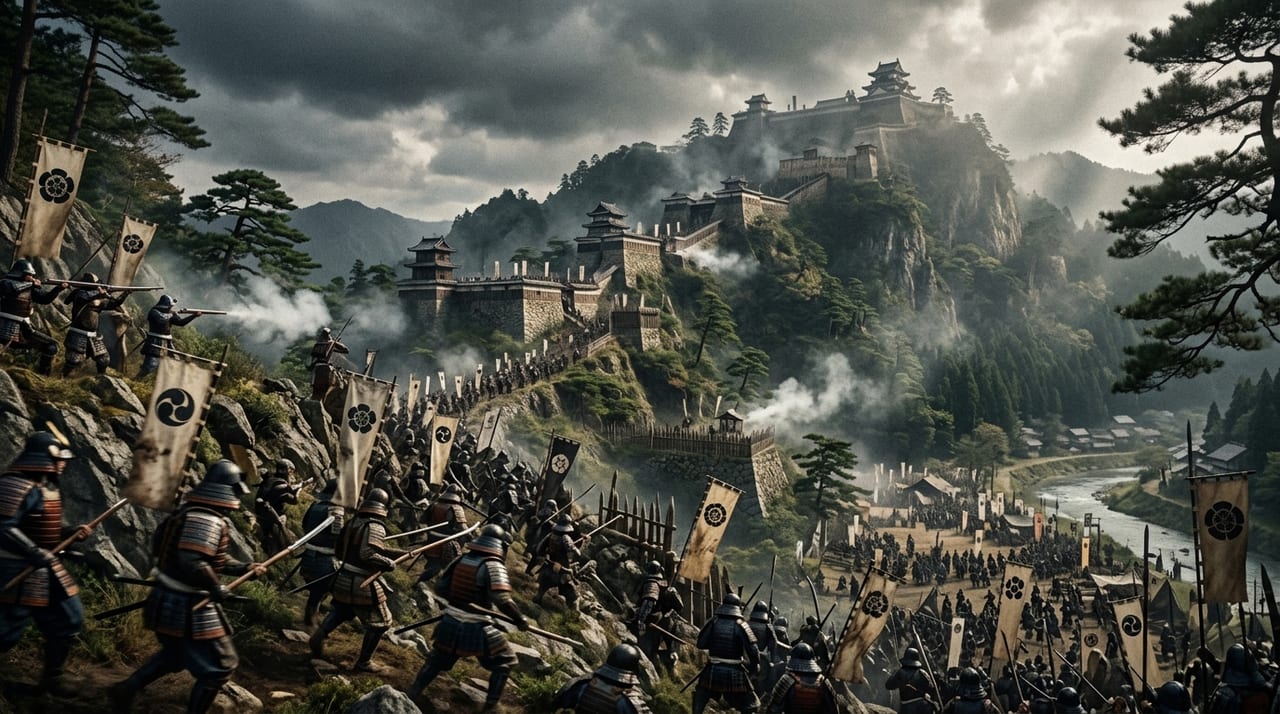
In the fifth month of 1615 hostilities resumed in the Summer Siege of Osaka. Shogunate forces closed in on the castle, which fell on the eighth day of the month; Toyotomi Hideyori and his mother Yodo-dono took their own lives, and the Toyotomi clan came to an end.
Events followed in quick succession that year. In the intercalary sixth month the One Province, One Castle order was issued, and on the seventh day of the seventh month the Buke Shohatto (Laws for the Military Houses) were promulgated at Fushimi Castle in the name of the second shogun, Hidetada. On the thirteenth day of the seventh month of Keicho 20 (5 September 1615 in the Gregorian calendar), the court changed the era name from Keicho to Genna. The change was made at the shogunate's initiative and is seen as a declaration that the realm had been pacified. On the seventeenth day the Laws for the Imperial Court and Nobility (Kinchu narabi ni kuge shohatto) were also issued.
Within a few months, therefore, the framework of shogunal rule was in place: control of the daimyo, control of the court, and the rationalization of castles. Ieyasu died in the fourth month of Genna 2 (1616).
The Siege of Osaka was the last large-scale battle of the kind fought since the Sengoku period. With its conclusion, the sword for the samurai moved from a tool to be drawn in battle toward an item of dress that signaled rank. Throughout the Edo period, wearing the paired long and short swords remained a mark of samurai status.
Some blades made in the Sengoku period were damaged in battles or in the fires of falling castles, losing the shape of the blade and its temper pattern; such blades are called yakemi. Cases in which these swords were re-tempered and restored appear in the provenance records of various pieces. The tradition of any individual sword should be checked against its own documentation.
As for castles, the One Province, One Castle order and the Buke Shohatto, issued the same year as Genna Engu, strictly limited new construction and repairs. Castles that had been built in competition across the country during the Sengoku period took on an increasingly administrative character.
After Genna Engu, armed clashes between daimyo ceased, and the era of peace lasted roughly 250 years. There were exceptions such as the Shimabara Rebellion (1637-38), but national rule centered on the shogunate was maintained for a long time.
This peace also changed culture. As demand for combat swords fell, swordsmiths came to value blade shapes and temper patterns that could stand up to appreciation, and related crafts such as sword fittings developed. The stream of blades from the early Edo period onward, later called shinto (new swords), took shape against this background.
Genna Engu is tied to the debate over where to place the end of the Sengoku period. There is a view that the Sengoku period ended with the destruction of the Toyotomi in the Siege of Osaka, and many textbooks and chronologies treat the first year of Genna as a dividing line. It has also been pointed out that the phrase carries later praise, and that warfare did not entirely vanish, as the Shimabara Rebellion shows.
Today sites and battlefields related to the Siege of Osaka remain in various places, and many visitors come to Osaka Castle. Genna Engu is an event indispensable for understanding the history of the sword, as the turning point at which the Japanese sword moved from a tool of fighting to a symbol of culture.