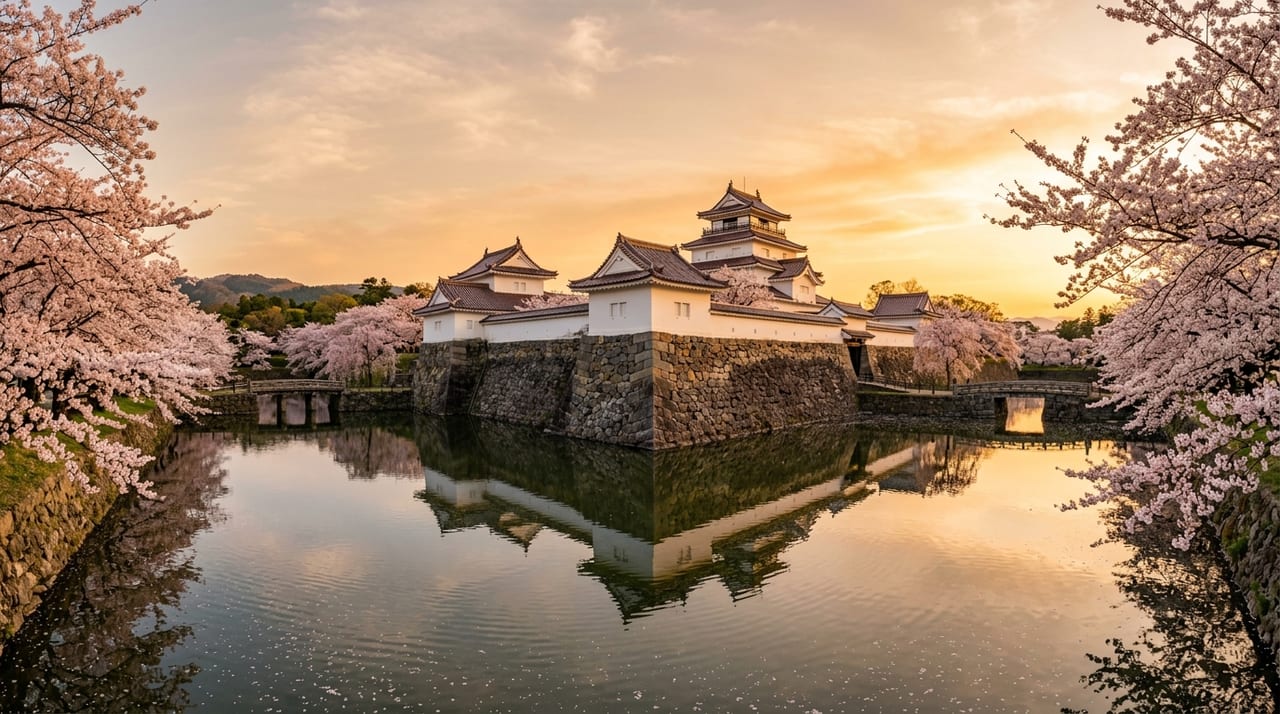
 * Image is for illustrative purposes only.
Tsuruoka Castle (Daihoji Castle)
鶴岡城(大宝寺城)
Tsuruoka Castle (Daihoji Castle) is a historic castle in the Tōhoku region (Founded in the early Kamakura period; developed by the Sakai clan in the early Edo period). Its lord was Daihoji clan / Uesugi clan / Mogami clan / Sakai clan.
Overview
Tsuruoka Castle is a hirajiro (flatland castle) located in Tsuruoka City, the central city of the Shonai region in Yamagata Prefecture. Throughout the Edo period, it served as the main castle of Shonai domain and the political and military center of the Sakai clan, which governed the Shonai region. The castle's history traces back to the early Kamakura period, when it is said to have been built by the Daihoji clan (also known as the Mutō clan). During the Sengoku period, it came under the control of Uesugi Kagekatsu, and after the Battle of Sekigahara, it passed through the Mogami clan before the Sakai clan—descendants of Tokugawa Ieyasu's chief retainer Sakai Tadatsugu—were enfeoffed.
As fudai daimyo, the Sakai clan governed the Shonai domain of 138,000 koku and maintained stable domain administration through the Bakumatsu period. Shonai domain was highly regarded as one of the leading domains in the Tohoku region, known for the exceptional knowledge and martial prowess of its samurai. In the Boshin War at the end of the Edo period, it took a pro-Shogunate stance and participated in the Alliance of Ouetsu Reppan.
Most of the castle's structures were lost due to the Meiji Abolition of Feudal Domains, but the castle site has been developed into Tsuruoka Park. In spring, approximately 700 cherry trees blossom, making it one of the premier cherry-blossom viewing sites in Tohoku. Southeast of the park stands the Shonai domain school "Chidokan" (National Historic Site), which preserves the scholarly culture of the Edo-period domain government. Adjacent to the castle site are the Shōnai Shrine and the Tsuruoka City Local History Museum, with the entire area developed as a cultural space.
Since the Meiji period, Tsuruoka has developed as a center of silk textiles, agriculture, and food culture. It has been designated a UNESCO Creative City of Gastronomy and nurtures a distinctive food culture.
Connection to Swords
The deep connection between Tsuruoka Castle and swords is rooted in the ethos of the Shonai domain and the warrior culture of the Sakai clan. Sakai Tadatsugu, founder of the Sakai house, was one of Tokugawa Ieyasu's "Four Heavenly Kings" and a renowned commander who distinguished himself in many battles, beginning with the Battle of Nagashino.
The domain school Chidōkan was founded in Bunka 2 (1805) by Sakai Tadaari and is designated a National Historic Site as the only surviving domain-school building in the Tōhoku region.
Today the Chidō Museum, which stands on the site of the castle's third bailey, holds the National Treasure tachi signed "Nobufusa saku" and tachi signed "Sanemitsu," as well as the Important Cultural Property tantō signed "Yoshimitsu" (Shinano Tōshirō), conveying the warrior culture of Shōnai to the present day.
Highlights
- Chidokan domain school (National Historic Site) — surviving Edo-period educational facility for martial arts and scholarship
- Tsuruoka Park cherry blossoms — approximately 700 trees, one of Tohoku's premier viewing spots
- Shonai Shrine — enshrines four members of the Sakai family: Tadatsugu, Ietsugu, Tadakatsu and Tadaari, spiritual heart of the castle grounds
- Chido Museum — Sakai clan swords, armor, and craft objects preserved
- Former Tsuruoka Police Station and Nishitagawa County Hall — Meiji-era Western-style architecture in the castle town
- UNESCO Creative City of Gastronomy — local ingredients and traditional food culture experiences
* Opening hours and admission fees are subject to change. Please check the official website before visiting.