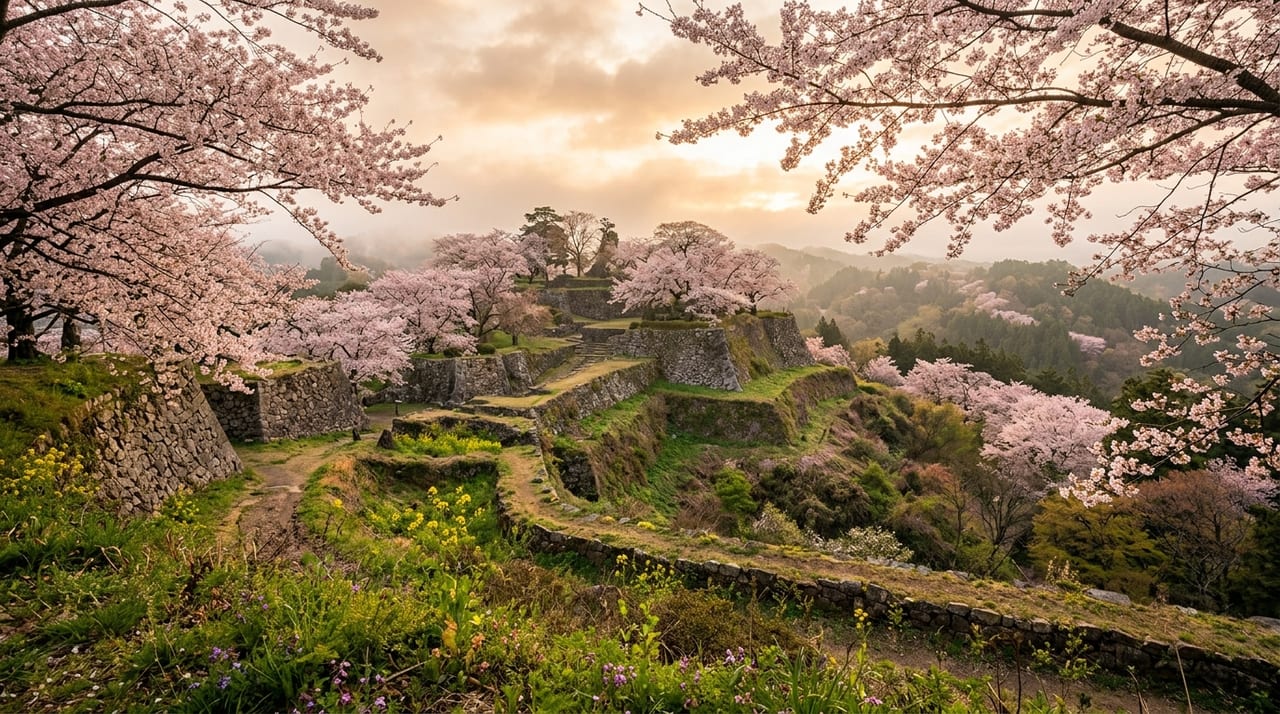
 * Image is for illustrative purposes only.
Miharu Castle
三春城
Miharu Castle is a historic castle in the Tōhoku region (Tamura Yoshiaki moved his base here from Moriyama Castle in the Eishō era (early 16th century); developed by the Akita clan in the Edo period). Its lord was Tamura clan / Gamō Ujisato / Matsushita Nagatsuna / Akita clan.
Overview
Miharu Castle is a mountain castle located in Miharu, Fukushima Prefecture, built upon the land of Miharu, renowned for the Miharu Takizakura and its numerous cherry blossoms. The place name "Miharu" derives from the simultaneous blooming of three flowers—plum, peach, and cherry—embodying the elegant character of early spring rich in blossoms, a poetic name etched into both the castle and the town.
When the castle was built is unclear, but the Sengoku daimyo Tamura Yoshiaki is said to have moved his headquarters here from Moriyama Castle in the Eishō era (early 16th century). The Tamura clan, a distinguished family claiming descent from the legendary general Sakanoue no Tamuramaro, wielded considerable influence as powerful regional lords of southern Mutsu throughout the Sengoku period and exercised deep involvement in Ōu politics. Tamura Kiyoaki in particular is remembered in history as the father-in-law of Date Masamune, having given his daughter Megohime in marriage to the great warlord.
Following the Toyotomi pacification of 1590 (Tenshō 18), the Tamura clan was removed from power, and the castle fell under the control of Gamo Ujisato, daimyo of Aizu with 920,000 koku. Thereafter, rulership of the castle passed in rapid succession through the Uesugi, Gamō, Katō and Matsushita clans. In Shōhō 1 (1644), Akita Toshisue became daimyo of Miharu Domain with 55,000 koku transferred from Hitachi, and the Akita family subsequently governed the domain until the end of the Edo period.
Miharu Castle is also known by the alternative name Maizuru Castle, a name deriving from the legend that a crane danced on the morning when Yoshiaki entered the castle. Today it exists as Miharu Castle Ruins Park, with the remains of the honmaru and other baileys preserved. Each spring, the Miharu Takizakura—a weeping cherry designated a National Natural Monument with an estimated age of 1,000 years—blooms with commanding presence, attracting numerous visitors. In the Boshin War of 1868, Miharu Domain notably surrendered early to the imperial forces, achieving a bloodless opening of the castle—a fact deserving of particular mention.
Connection to Swords
Miharu Castle's connection to swords is told through the ties between the Tamura and Date clans and through the history of the Akita family, lords of the Miharu Domain. Megohime, the only daughter of Tamura Kiyoaki, became the principal wife of Date Masamune, and in Tenshō 16 (1588) Masamune himself entered Miharu Castle to settle the affairs of the Tamura domain. The Akita family, lords of Miharu in the Edo period, were descendants of the Andō clan, which had flourished at Tosaminato in the Middle Ages; they were transferred from Shishido in Hitachi with 55,000 koku in Shōhō 1 (1644), later became a 50,000-koku domain after a division of land, and ruled until the end of the shogunate. In the Boshin War the domain left the Ōuetsu Reppan Dōmei and surrendered to the new government forces without bloodshed, so the castle and town were spared from fighting. After the Meiji Restoration, the Haitōrei (sword abolition edict) separated swords from samurai daily life, yet traces of the samurai culture of that era remain around Miharu Castle today.
Highlights
- Miharu Takizakura — a weeping cherry estimated at over 1,000 years old (National Natural Monument) in the Taki district of Miharu
- 'Three Springs' place name — coined from the simultaneous bloom of plum, peach, and cherry
- Birthplace of Megohime — mother castle of Date Masamune's principal consort
- Maizuru-jō (Dancing Crane Castle) — an alternative name from the legend that a crane danced on the morning Tamura Yoshiaki entered the castle
- Early Boshin War surrender — bloodless capitulation saved the town from Aizu's fate
- Miharu Castle Ruins Park — remains of the honmaru and other baileys on the hilltop
* Opening hours and admission fees are subject to change. Please check the official website before visiting.