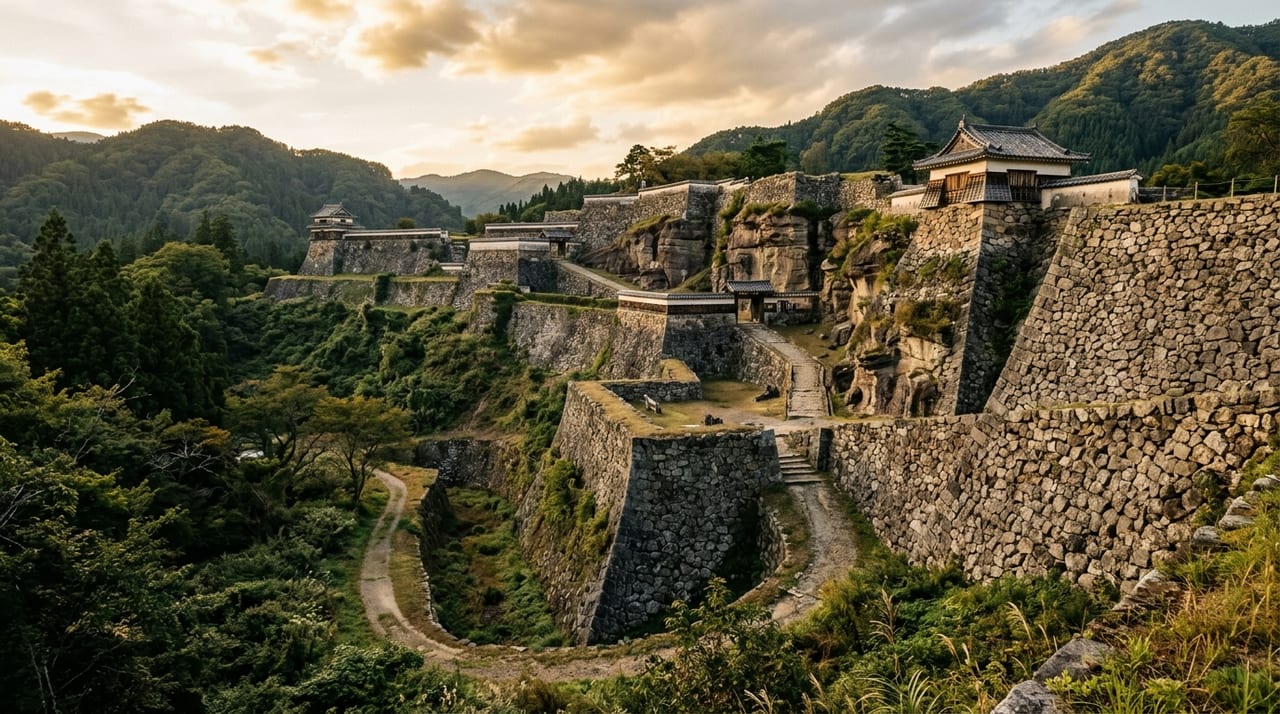
 * Image is for illustrative purposes only.
Sōma Nakamura Castle (Baryō Castle)
相馬中村城(馬陵城)
- Lord
- Sōma Toshitane (who moved from Odaka Castle and developed the site into a full-scale castle in 1611); thereafter the successive lords of the Sōma clan and the Nakamura domain, for about 260 years until the Meiji Restoration
- Era
- Edo period (construction begun in the seventh month of 1611 and completed by the twelfth month of the same year; served as the seat of the Nakamura domain until the Meiji Restoration)
- Designation
- Fukushima Prefectural Historic Site (designated February 4, 1955; designated area approximately 23 hectares)
- Location
- Nakamura, Sōma City, Fukushima Prefecture (on the site of a former Nakamura clan residence)
- Access
- About a 15–18 minute walk from Sōma Station on the JR Jōban Line
Sōma Nakamura Castle (Baryō Castle) is a historic castle in the Tōhoku region (Edo period (construction begun in the seventh month of 1611 and completed by the twelfth month of the same year; served as the seat of the Nakamura domain until the Meiji Restoration)). Its lord was Sōma Toshitane (who moved from Odaka Castle and developed the site into a full-scale castle in 1611); thereafter the successive lords of the Sōma clan and the Nakamura domain, for about 260 years until the Meiji Restoration.
Overview
Overview
Sōma Nakamura Castle (Baryō Castle) was a hilltop castle located in Nakamura, Sōma City, Fukushima Prefecture. It was one of the residences of the Sōma clan from the Sengoku period through the Edo period, and during the Edo period it served as the seat of the Nakamura domain (Sōma Nakamura domain) until the Meiji Restoration. The site is now Baryō Park, beloved by local residents.
Founding and History
Tradition holds that the site saw military use as early as the Enryaku 20 (801) campaigns against the northern peoples, and that the residence of the Nakamura family was located here in the medieval period. In the seventh month of Keichō 16 (1611), Sōma Toshitane moved from Odaka Castle to this site, and by the twelfth month of the same year had fully developed it into an early-modern castle. Thereafter, until the Meiji Restoration, it functioned for about 260 years as the residence of successive Sōma clan heads and as the seat of the Nakamura domain.
Structure and Remains
The castle precinct extends about 600 meters east to west and about 650 meters north to south, with a layout in which enclosures (kuruwa) and moats surround the main enclosure in multiple layers. In the castle abolition measures of the Meiji period, most of the structures were demolished, but the Soto-Ōte Ichi-no-Mon survives as the only extant structure, and the earthen ramparts and moats remain in good condition.
Connection to the Sōma Nomaoi
Sōma Nakamura Shrine is enshrined within the castle ruins, and the site is one of the ceremonial grounds for the Sōma Nomaoi (designated as an Important Intangible Folk Cultural Property of Japan), held annually in late May. The Sōma Nomaoi is a vigorous mounted ritual said to originate in the military training of the Sōma clan, known as a sacred ritual in which armored mounted warriors compete for sacred banners.
Present Status and Access
Designated as a Fukushima Prefecture Historic Site in 1955, it is now Baryō Park, also famous as a cherry blossom spot. About a 15–18 minute walk from JR Jōban Line's Sōma Station.
Highlights
- Developed into a full castle by Sōma Toshitane in 1611 after moving from Odaka Castle; seat of the Nakamura domain until the Meiji Restoration
- The outer main gate is the sole surviving structure; earthworks and moats remain in good condition
- Sōma Nakamura Shrine within the grounds is a ceremonial site for the Sōma Nomaoi, a National Important Intangible Folk Cultural Property
- Fukushima Prefectural Historic Site (designated 1955); now Baryō Park, known for cherry blossoms
* Opening hours and admission fees are subject to change. Please check the official website before visiting.