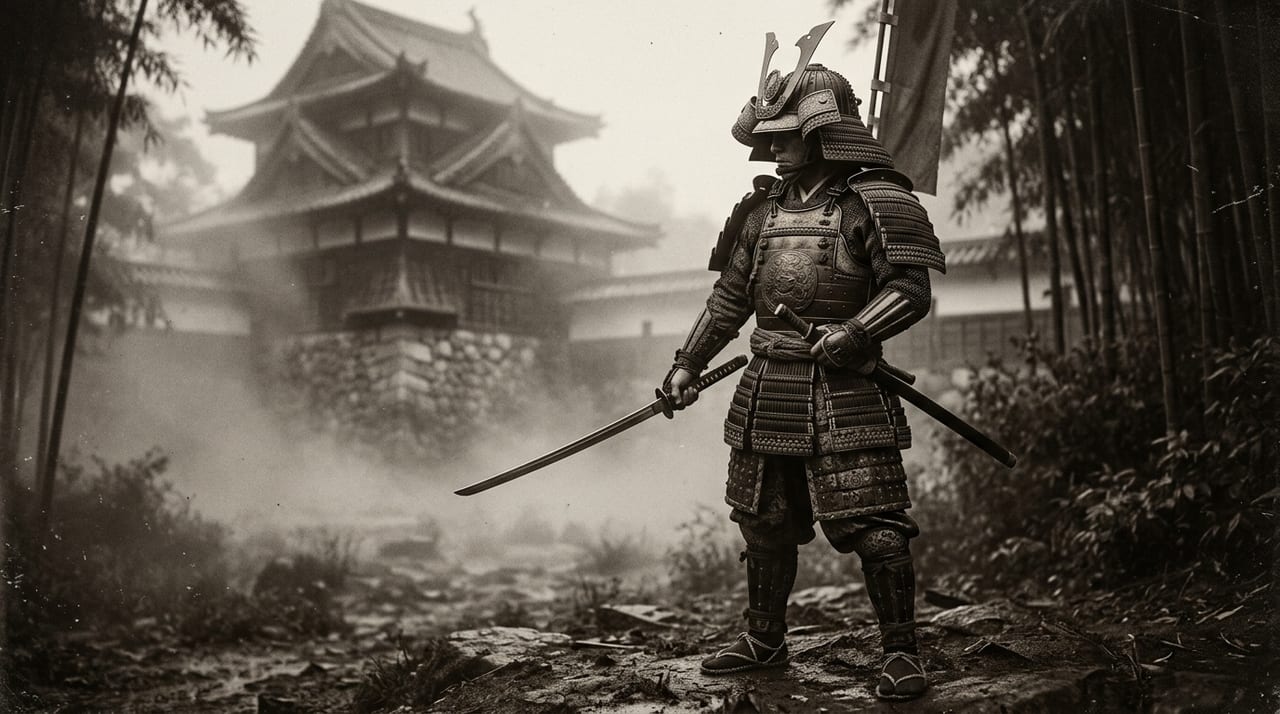
 * Image is for illustrative purposes only.
Uesugi Kenshin
上杉謙信
Dragon of Echigo, God of War
Description
The Birth of a War God
In Kyōroku 3 (1530), Uesugi Kenshin (Nagao Kagetora) was born at Kasugayama Castle in Echigo Province. He is counted among the strongest warlords of the Sengoku period, known as the "God of War" and the "Dragon of Echigo." He is said to have fought some seventy battles in his lifetime and won most of them, and his military talent overwhelmed the commanders of his era. What truly set Kenshin apart, however, was his spirit of righteousness. He valued moral principle over territorial ambition, sided with those who sought rescue, and refused to tolerate injustice. For this reason he was revered not merely as a skilled commander but as a sacred general who embodied the ideal of the warrior.
The Thirty-Five Swords Selected for the Uesugi House
Kenshin's sword collection is widely regarded as the finest in quality among the Sengoku daimyō. His adopted heir, Uesugi Kagekatsu, chose thirty-five blades he especially favored from among Kenshin's belongings and other items. The inventory of this selection is called the "Thirty-Five Swords Selected for the Uesugi House" and is known as one of the outstanding treasure groups in the history of Japanese swords. This group of thirty-five includes many blades of National Treasure and Important Cultural Property caliber.
Sanchōmō
The supreme treasure among the thirty-five is the National Treasure Sanchōmō. This tachi is regarded as the masterpiece of the Fukuoka Ichimonji school. Its ō-chōji-midare hamon spreads gloriously across the entire blade, placing it at the pinnacle of Bizen swords. There are various theories about the origin of the name Sanchōmō; some infer that the splendid hamon was likened to the feathers of a mountain pheasant. It is said to have been presented to Kenshin by Nagao Norikage, lord of Shiroi Castle in Jōshū. It also drew attention when, in Reiwa 2 (2020), Setouchi City in Okayama Prefecture raised funds through public donations and purchased it for about 500 million yen.
Himetsuru Ichimonji
Himetsuru Ichimonji is a famous blade known through a fantastical legend. The official in charge of the lord's swords and a sword polisher had been ordered to perform suriage (reshaping the blade to make it shorter). Two nights in a row, a princess who called herself Tsuru appeared in their dreams and pleaded for the work to be stopped. This anecdote symbolizes the Japanese sword faith, which believes that a spiritual power dwells in blades. The suriage was called off, and the tang (nakago) retains nearly its original form from the time of its creation. With the gorgeous chōji-midare hamon of the Ichimonji school, this tachi has, as its name suggests, the graceful form of a crane.
Azuki Nagamitsu and Kawanakajima
Azuki Nagamitsu is a work of Bizen Osafune Nagamitsu. It is said to be the sword Kenshin wielded when he personally charged into Takeda Shingen's main camp during the Battle of Kawanakajima. The one-on-one duel at the Fourth Battle of Kawanakajima, in Eiroku 4 (1561), is passed down as one of the most dramatic scenes in Japanese military history. Kenshin brings his sword down from horseback, and Shingen blocks it with his war fan (gunbai). It is said that the sword Kenshin gripped in this famous scene was Azuki Nagamitsu. The name's origin lies in an anecdote: azuki beans spilling from a farmer's bag struck the blade visible through a cracked scabbard and split in two. Nagamitsu's works are known for their upright form, which inherits the orthodox Bizen tradition, and for hamon that are gorgeous yet never lose their dignity. The present whereabouts of Azuki Nagamitsu are unknown.
Devotion to Bishamonten
Kenshin devoutly worshipped Bishamonten. Before every campaign he always shut himself in the Bishamondō to pray. He used the single character "Bi" as his battle banner, and he is also said to have called himself an incarnation of Bishamonten. This deep faith was reflected in his view of swords. He treated them not merely as weapons but as offerings to the gods and buddhas, and as sacred objects in which the soul of the warrior dwells. The reason the swords of the Uesugi house stand far above others in quality is likely that this spiritual view of the sword lay at its foundation.
His Final Years and the Swords He Left Behind
Kenshin remained unmarried all his life. He was a solitary warlord who loved sake and swords. In Tenshō 6 (1578), just before setting out for a campaign in the Kantō, he died suddenly at the age of 49. The cause of death is said to have been a stroke, but his sudden death leaves many mysteries. The sword collection Kenshin left behind has been carefully handed down within the Uesugi house, and as a treasure of Japanese swords it continues to delight us today.
Notable Swords
- Sanchōmō (National Treasure. A masterpiece of the Fukuoka Ichimonji school, with a magnificent ō-chōji-midare hamon spreading across the entire blade. The pinnacle of Bizen swords)
- Himetsuru Ichimonji (Important Cultural Property, held by the Uesugi Museum in Yonezawa. Said to have a princess appear in the dream of the man ordered to perform suriage and plead for it to be halted. Features the gorgeous chōji-midare of the Ichimonji school)
- Azuki Nagamitsu (said to be the work of Bizen Osafune Nagamitsu, and said to have been wielded in the one-on-one duel at Kawanakajima. Its name comes from an anecdote in which azuki beans striking the blade split in two. Its present whereabouts are unknown)