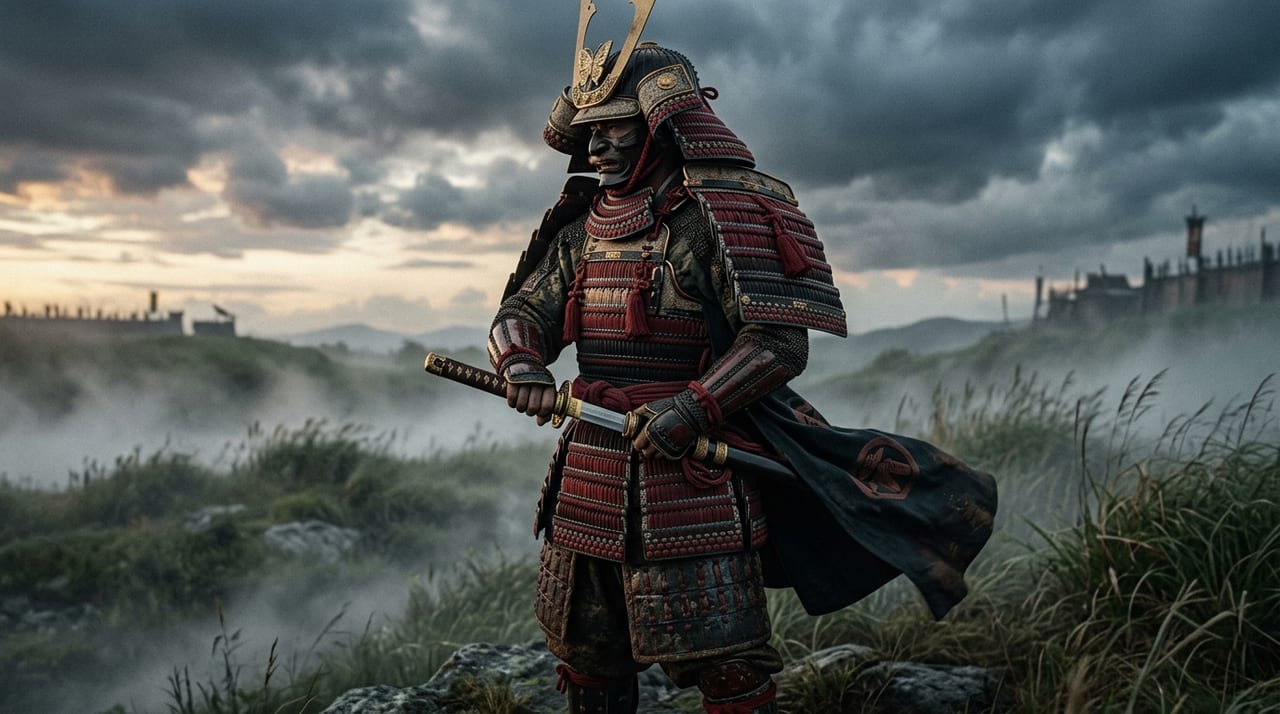
 * Image is for illustrative purposes only.
Kamiizumi Nobutsuna
上泉信綱
Sword Saint—the supreme swordmaster of the Sengoku period who founded Shinkage-ryū and elevated swordsmanship from the art of killing to the art of preserving life
Description
Birth of a Sword Saint
Kamiizumi Nobutsuna, said to have been born around Eishō 5 (1508) in Kamiizumi, Seta District, Kōzuke Province (present-day Kamiizumi-machi, Maebashi City, Gunma Prefecture), is one of the swordsmen later celebrated as the kensei (Sword Saint). The Kamiizumi family was a powerful local clan of Kōzuke Province, and Nobutsuna, while still young, studied the Kage-ryū of Aisu Ikōsai, mastered its inner secrets, and then carved out his own path and founded the Shinkage-ryū. The Shinkage-ryū became the source of many later swordsmanship schools and is still revered today as the pinnacle of Japanese swordsmanship.
Founding of Shinkage-ryū
The essence of the Shinkage-ryū that Nobutsuna founded lies in the philosophy of katsujinken (life-giving sword). Whereas earlier swordsmanship was a setsunintō (killing sword) whose main aim was to kill or injure enemies, Nobutsuna sought the purpose of swordsmanship in katsunin, that is, subduing an opponent without injuring them. This revolutionary shift in thinking was a philosophy of martial arts that went beyond mere technique. Nobutsuna expressed the essence of swordsmanship through profound concepts such as ken-tai-itchi, zanshin, and marobashi, and reached a state embodying the spiritual fusion of sword and Zen. It is also said that he devised the fukuro-shinai as a practice implement to replace the wooden sword.
Relationship with Takeda Shingen
Nobutsuna served Nagano Narimasa and Nagano Narimori at Minowa Castle in Kōzuke Province, and is said to have distinguished himself in battles against Takeda Shingen and Hōjō Ujiyasu. It is also said that Nagano Narimori issued him the 'Kōzuke-no-kuni Ippon-yari' (letter of commendation). On the battlefield, Nobutsuna honed his swordsmanship in actual combat and gained experience in many life-or-death duels with live blades. After the fall of Minowa Castle, Nobutsuna declined Takeda Shingen's invitation to enter his service. The Kōyō Gunkan records that Shingen, regretting the loss, gave him the character 'shin'. Nobutsuna is said to have then set out on a journey through various provinces with his disciples to spread the Shinkage-ryū. It was this journey that completed the Shinkage-ryū and decisively changed the history of Japanese swordsmanship.
Deep Connection with Swords
Nobutsuna was a swordsman who understood the essence of the sword more deeply than anyone. He was not merely a swordsman who wielded a blade; he grasped philosophically the essence of the Japanese sword as a tool and embodied the art of drawing out its latent capabilities to the utmost. Along with Tsukahara Bokuden, who is said to have won nineteen real-sword duels, he is called the strongest swordsman of the Sengoku period, but Nobutsuna's true distinction lay in the spirit of the sword that transcended victory and defeat.
Lineage of Disciples
Nobutsuna's swordsmanship was passed down to later generations by outstanding disciples. The most famous disciples were Hikita Bungorō Kagekane and Yagyū Munetoshi (Sekishūsai). Yagyū Munetoshi (Sekishūsai) demonstrated the mutō-dori (empty-handed technique) that Nobutsuna had entrusted to him, received the 'Ikkoku Ichinin Inka' (certificate), and transmitted the Shinkage-ryū to the Yagyū family. In the Edo period, the Yagyū family, serving as martial-arts instructors to the shogunal house, positioned the Shinkage-ryū as the swordsmanship officially sanctioned by the shogunate and spread Nobutsuna's teachings throughout the land. Meanwhile, Hikita Bungorō spread the techniques of the Shinkage-ryū across the country and trained many disciples in various regions. Further schools branched off from Nobutsuna's direct disciples, and as one of the sources of modern kendō, the influence of the Shinkage-ryū extends to the present day.
Later Years and Legacy
Nobutsuna is said to have shown his swordsmanship to the shogun Ashikaga Yoshiteru, and in Genki 1 (1570) he was granted the Junior Fourth Rank, Lower Grade. He is said to have died around Tenshō 5 (1577), but there are various theories about his year and place of death. His age at death is reportedly around seventy. His life was itself an exploration of the path to human perfection through the sword.
Notable Swords
- Fukuro-shinai (a practice weapon of split bamboo in a leather sleeve, said to have been devised by Nobutsuna for training)