New Arrivals — Browse our catalog for the latest authentic Japanese sword arrivals. Browse →
3rd month, Tenshō 6 (1578) – 3rd month, Tenshō 7 (1579)
Echigo Province (present-day Niigata Prefecture) and surrounding Uesugi domains
Forces
Kagekatsu Faction (Uesugi Kagekatsu)
Kagetora Faction (Hōjō Saburō / Uesugi Kagetora)
About 7 min read
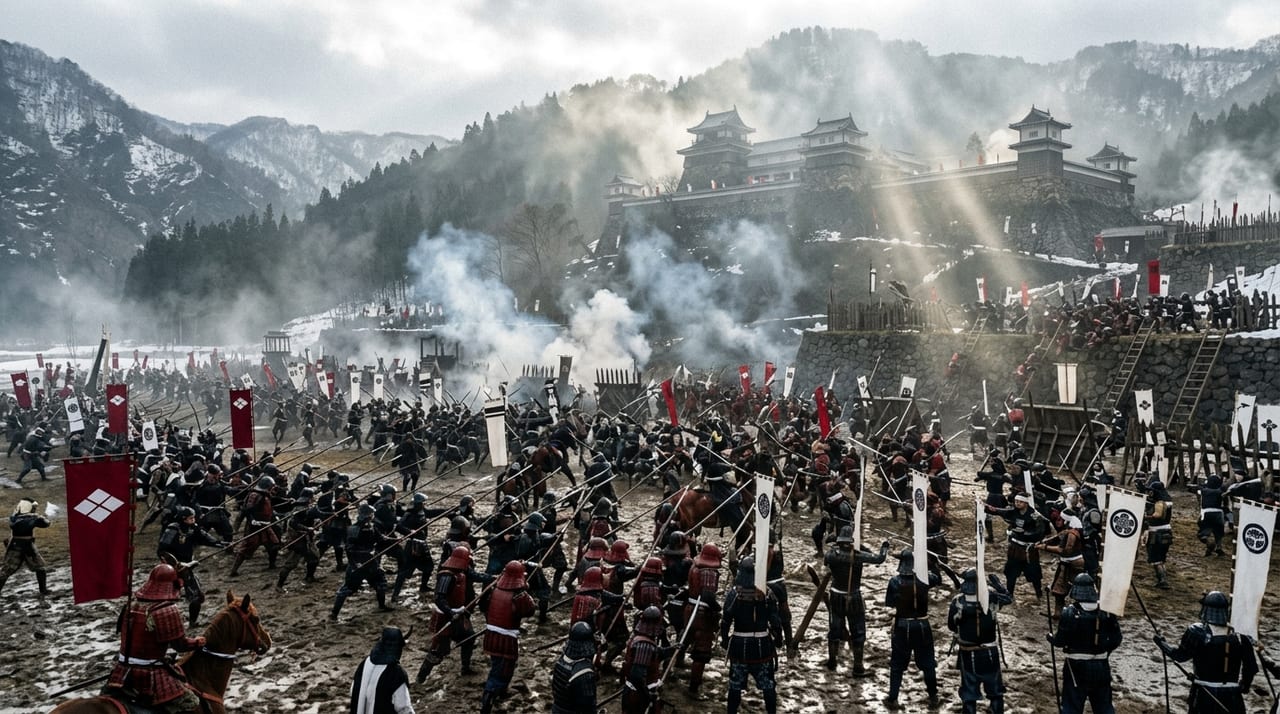
On the 13th day of the 3rd month of Tenshō 6 (1578), Uesugi Kenshin, the Dragon of Echigo, died suddenly at Kasugayama Castle at the age of 49. Kenshin remained unmarried for his entire life and left no legitimate biological children. The candidates for successor were two adopted sons: Uesugi Kagekatsu (Nagao Akikage), the son of Nagao Masakage, and Uesugi Kagetora (Hōjō Saburō), the seventh son of Hōjō Ujiyasu, who had been taken in as an adopted son. Kenshin's death immediately developed into a bitter struggle that split the Uesugi house in two and drew all of Echigo into a two-year civil war. This conflict is called the Ōtate Rebellion.
Among the famous swords associated with Uesugi Kenshin are the National Treasure Sanchōmō (also read Yamatorige) and the Important Cultural Property Himetsuru Ichimonji. These blades were passed on to Kagekatsu and remained in the possession of the Uesugi family.
Kenshin died without naming a successor, so the rivalry between the Kagekatsu and Kagetora factions surfaced at once. Kagekatsu quickly entered the main enclosure of Kasugayama Castle and seized the gold storehouse and the armory, establishing a military and financial advantage by taking possession of Kenshin's assets first. Kagetora, on the other hand, based himself at the Ōtate, the residence of the former Kantō Kanrei Uesugi Norimasa, and asked his birth family, Hōjō Ujimasa of Sagami, for reinforcements.
Among Kagekatsu's close aides was Higuchi Kanetsugu, who would later take the name Naoe Kanetsugu. In Tenshō 6, Kanetsugu was still a young man in his teens, but he later became the de facto leader of the Uesugi house.
The greatest external variable in the Ōtate Rebellion was the intervention of the Takeda clan. Takeda Katsuyori initially appeared to favor Kagetora's side, but he ultimately reached a settlement with Kagekatsu, receiving gold and the cession of territories such as the Numata territory in Kōzuke, which Kagekatsu offered. This "betrayal" left Kagetora's side decisively isolated, and the full reinforcements from the Hōjō clan arrived too late.
In the 3rd month of Tenshō 7 (1579), the Ōtate fell to an attack by Kagekatsu's forces. Uesugi Kagetora attempted to flee to Samegao Castle (present-day Myōkō City, Niigata Prefecture), but he was betrayed by the castellan Horie Munechika and took his own life. He was 26 years old. The tragic end of Kagetora is remembered for generations as an event that embodies the impermanence of the warlords of the Sengoku period.
Uesugi Kagekatsu, who had prevailed in the Ōtate Rebellion, became the head of the Uesugi house as Kenshin's successor. However, the rebellion greatly weakened the military strength of the Uesugi house, and the dissatisfaction over rewards also led to the rebellion of Shibata Shigeie. Kagekatsu himself was fond of swords, and a list of famous blades survives: the "Thirty-Five Swords of His Own Choosing" of the Uesugi family, the 35 swords he selected from Kenshin's belongings.
Naoe Kanetsugu also became a powerful figure responsible for domestic affairs, diplomacy, and military affairs within Kagekatsu's regime. At the Battle of Sekigahara (1600), Kagekatsu and Kanetsugu sided with the Western Army and came into conflict with Tokugawa Ieyasu. As a result, the Uesugi house was forced to accept a drastic reduction of its domain, moving from Aizu to Yonezawa.
Uesugi Kagekatsu
Won the Ōtate Rebellion and succeeded as head of the Uesugi clan
Naoe Kanetsugu
Kagekatsu's chief aide who administered the Uesugi domain after the rebellion
Uesugi Kenshin
His sudden death triggered the rebellion; owner of the Raikiri sword
Sanada Masayuki
Sided with Kagekatsu in the rebellion, securing Sanada clan's independence
Takeda Katsuyori
Switched from Kagetora's side to Kagekatsu's, deciding the rebellion's outcome
Hōjō Ujimasa
Kagetora's older brother who sent reinforcements too late