New Arrivals — Browse our catalog for the latest authentic Japanese sword arrivals. Browse →
Insights into Japanese sword knowledge and culture
Guide to participating in Japanese sword auctions for first-time bidders. Covers registration, catalog research, estimates and buyer's premiums (10-15% domestic, 20-25% international). Details auction-day bidding, post-purchase legal registration, and transportation considerations. Emphasizes preview attendance, firm budget limits, and thorough research for successful acquisition.
The zanbaatou (斬馬刀), a large sword supposedly designed to cut horses, occupies an ambiguous position between the nodachi (野太刀) and ōdachi (大太刀) in Japanese weaponry. This article examines structural characteristics including blade length, shallow sori (反り), and longer handle, documents its use in fourteenth-century warfare during the South-North Court period, and explores relationships between historical combat weapons and dedication swords (奉納刀) preserved in temples.
Exploring how the social upheaval following Perry's arrival affected swordsmiths, and how sonnō jōi ideology shaped the final high-quality classical blades of the late Edo period.
This explains the impact that iron working and forging techniques, brought by migrants from the Korean Peninsula (Baekje, Goguryeo, and Silla) and from China (Sui and Tang), had on weapons manufacturing in Yamato during the Asuka period of the Sixth to Seventh centuries. Through examination of continental-origin sword materials preserved in the Shōsōin (正倉院), analysis of swords in grave goods from burial mounds, and study of the evolution in daitō (大刀) forms, this traces the prototypes of the Japanese sword.
A detailed examination of the jintachi's physical characteristics, ceremonial significance, decorative mountings, and the masterpieces that survive to this day.
A comprehensive examination of sori (反り), the curvature types that define Japanese sword forms. Presents the expert authentication definitions of three principal categories—koshizori (腰反り), nakasori (中反り), and sakizori (先反り)—together with the historical periods and tactical contexts in which each developed, forging techniques for controlling sori, and the influence of sori variation on sword valuation. An in-depth exploration of the Japanese sword world through this singular, defining element.
A comprehensive guide to the registration certificate system required for legal ownership of Japanese swords (nihonto) in Japan. Covers provisions of the Firearms and Swords Control Law, notification procedures to prefectural education committees, handling of certificate loss, modifications, and inheritance, and permit procedures for overseas export—a practical guide encompassing all essential matters.
A detailed look at how swordmakers, polishers, and scabbard craftspeople are opening their workshops to young people through internships and experiential programs.
A detailed account of the career path from apprenticeship to independence for modern sword polishers, including income realities, seasonal workload, and the successor shortage.
A detailed explanation of the raw materials, mixing ratios, and preparation process for the clay coating applied before quenching, with analysis of how clay properties shape hamon patterns.
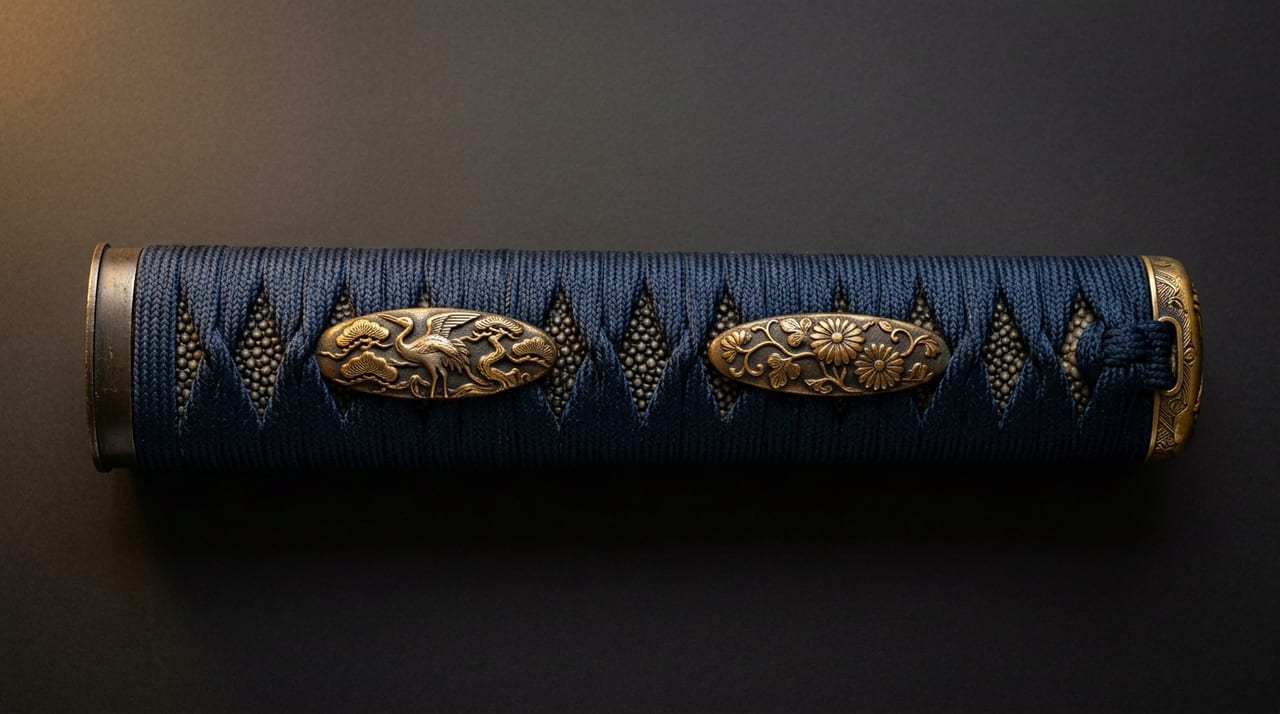
Explains the techniques of tsukamakishi (柄巻師), specialized craftspeople who wrap cord around the tsuka (柄) of Japanese swords. Covers the materials used for tsuka cord (silk, cotton, and deer leather), types and formal grades of wrapping methods including hishimaki (菱巻き), moroyori (諸撚り), and chidorimaki (千鳥巻き), techniques for securing menuki (目貫) ornaments to the tsuka wood, and discusses the current state of tsukamakishi succession and differences from martial-arts-oriented tsuka wrapping.
An explanation of the water used in yaki-ire (焼き入れ)—the most dramatic and irreversible moment in Japanese sword manufacturing—examining how water quality, water temperature, and quenching tank shape influence hamon (刃文) formation and blade hardness from scientific and practical perspectives. This explanation integrates the wisdom of sword makers' water selection, transmitted from the Edo period to the present day, with the mechanisms elucidated by modern chemistry.