The Age of Bizen Nagamitsu and Sōshū Hōdō — Tōkō Networks of the Eiroku Period and the Sword Policies of the Sengoku Daimyo
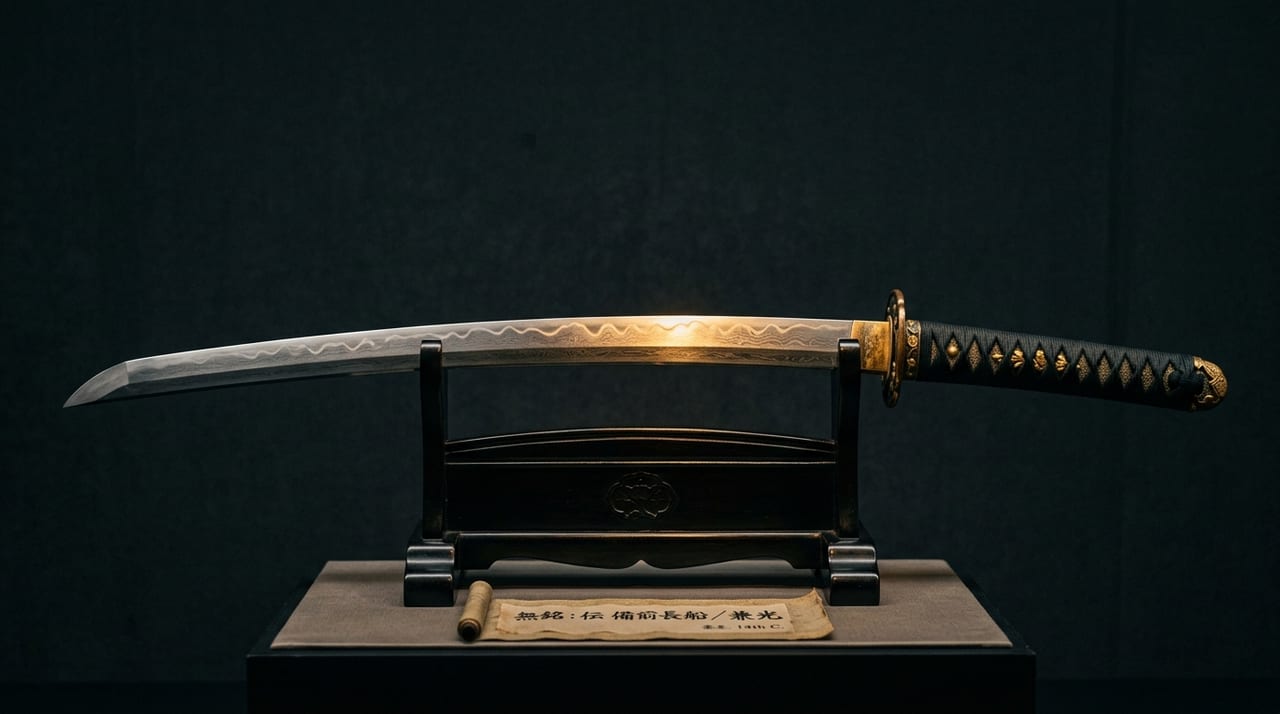 * Image is for illustrative purposes only.
Table of Contents
The Eiroku Period — Sword Demand and the Role of the Tōkō
The Eiroku period (1558–1570) was one of the most turbulent eras within the Sengoku period. Oda Nobunaga struck down Imagawa Yoshimoto at the Battle of Okehazama (1560), and thereafter the upheaval driving toward unification of the realm intensified in earnest. As daimyo across the provinces built up their forces and the frequency of battles increased, demand for swords capable of withstanding actual combat expanded rapidly.
In this era, tōkō were recognized as something beyond mere craftsmen — they were understood to be figures who underpinned the foundations of daimyo power. The sword was the soul of the warrior, and at the same time a symbol that made visible the status and loyalty of its bearer. The act of a daimyo bestowing a celebrated sword on a retainer was an important ritual for strengthening political bonds, and sword policy formed a part of domain governance.
Bizen (present-day southeastern Okayama Prefecture) and Sōshū (present-day Kanagawa Prefecture) displayed a striking presence in sword production during this period. The techniques and reputations cultivated in each region earned high regard from warriors across the country, and orders concentrated there as if in competition.
The Lineage of Bizen Tōkō — Succession of the Nagamitsu Name
Bizen is known as the home of Bizen-den, one of the Gokaden of the Japanese sword, and is a region that established advanced sword-making techniques from the late Heian period through the Kamakura period. The workshops centered on Osafune produced many celebrated smiths from the Kamakura period onward.
The mei "Nagamitsu" is a hereditary name that multiple tōkō have passed down through the generations, headed by the celebrated Kamakura-period smith Bizen Nagamitsu. The Kamakura-period Nagamitsu is considered to have been the son of Mitsutada, and his style is known for a variety of hamon including fine suguha and gunome-chōji. Thereafter, tōkō in the lineage of the Osafune school continued to inherit this mei and produce swords reflecting the demands and technical standards of each era.
The following points can be cited as characteristics of Bizen swords of the Sengoku period.
- Construction suited for actual combat, with wide blades and thick kasane
- Robust tanren able to withstand both cutting strikes and parries
- A fine surface quality making use of the properties of Bizen-sourced iron sand
- A mass-production system capable of meeting large orders, and a division of labor that did not compromise quality
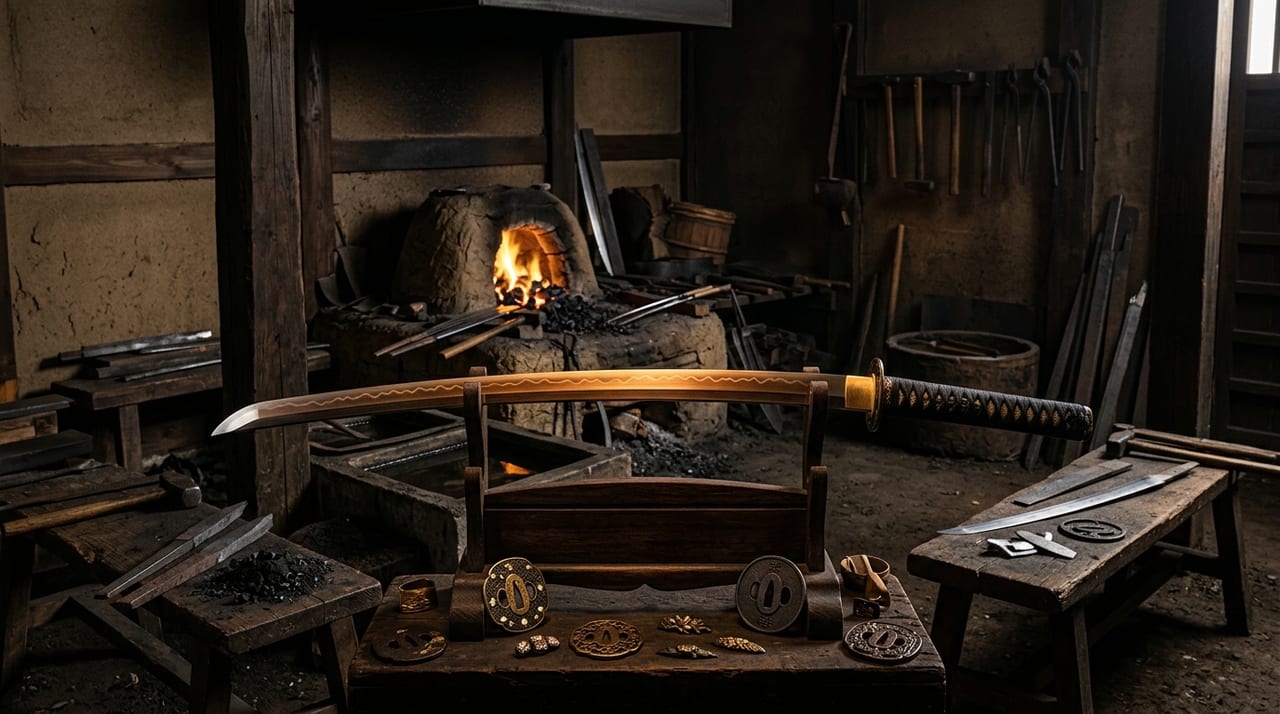
In Eiroku-period Bizen, the tōkō of the Osafune district organized systematic production arrangements in which masters and apprentices worked in coordination to fulfill orders from various daimyo houses. By dividing the work from selection of iron sand through tanren to finishing, they were able to supply large quantities of swords in a short period. This combination of mass-production capacity and quality maintenance can be said to be the primary reason Bizen tōkō earned nationwide trust.
The Technical Characteristics of Sōshū-den — What Hōdō Embodied
Sōshū is a region where sword culture took shape as the seat of the Kamakura shogunate. The origins of Sōshū-den lie in the Kamakura period, and it subsequently developed its own distinctive tanren techniques and hamon expression. Sōshū Hōdō also received this traditional lineage and was one of the tōkō who met the demand for combat swords of the Sengoku period.
The technical characteristics of Sōshū-den have a direction that contrasts with Bizen-den. Whereas Bizen emphasizes a fine tanren that draws out the qualities of iron sand, Sōshū is known for the following distinctive traits.
- Complex and varied hamon such as ō-midare and hako-midare
- Vigorous nie and nioi expression extending throughout the entire blade
- Kitae-hada combining toughness and flexibility
- A varied jigane in which itame and nagare-hada intermingle
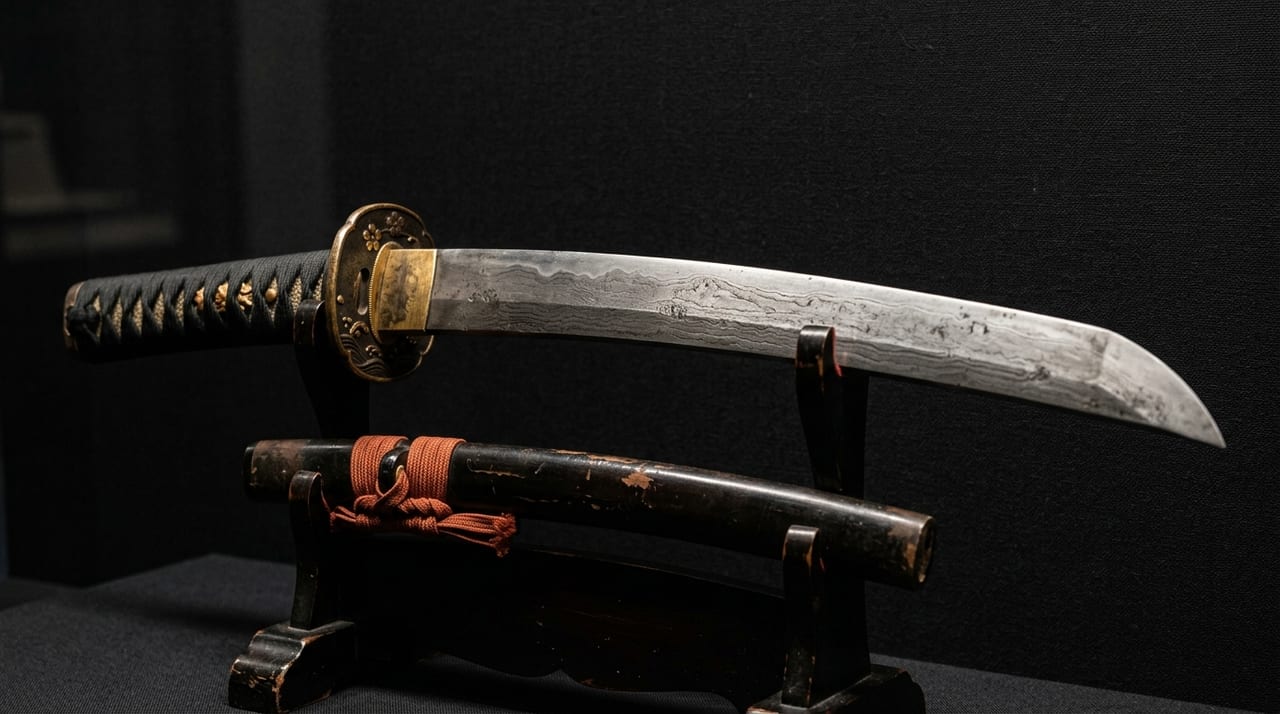
These characteristics emerged as a result of simultaneously pursuing aesthetic appeal and practical strength. The tōkō of Sōshū did not hesitate to attempt new techniques and maintained an attitude of constant refinement. The style transmitted under the name Hōdō also reflects that spirit, and among modern researchers and enthusiasts it is positioned as a figure that demonstrates the technical development of Sōshū-den. The complex beauty of the hamon is not mere decoration but also evidence of tanren that has drawn out the properties of the steel to the fullest.
Sword Policy of the Sengoku Daimyo — Mechanisms of Patronage and Distribution
Daimyo of the Eiroku period placed great importance on their relationships with skilled tōkō and supported their activities through patronage and economic backing. This was not merely a relationship of favor but a rational policy for simultaneously achieving the maintenance of military power and the symbolization of authority.
There were multiple meanings in a daimyo's protection of tōkō. First, it was possible to secure a stable supply of high-quality swords and maintain the standard of equipment among one's retainers. Second, by utilizing celebrated swords as gifts, one could obtain diplomatic and political resources for strengthening relations with allies and retainers. Third, having a celebrated tōkō under one's wing itself became a means of demonstrating the daimyo's cultural prestige.
This threefold significance elevated the social standing of tōkō during the Eiroku period. Skilled tōkō were technicians, but at the same time members constituting the network of daimyo power. Records have been transmitted showing that orders from multiple daimyo houses concentrated in the Osafune district of Bizen as if in competition, attesting to the state of excess demand in which the tōkō of the time found themselves. Even amid the flood of orders, tōkō called master smiths are said to have maintained a certain level of quality, and this became the basis for their evaluation in later generations.
The Spread of Tōkō Networks and Their Inheritance into the Modern Era
The sword market of the Eiroku period was not confined to any particular region. Tōkō of Bizen and Sōshū accepted orders from daimyo and warriors in distant provinces and sent swords to various parts of the country. Networks of people and information spread across the whole of Japan, and the movement of techniques occurred in parallel. There were also cases where tōkō who had mastered the techniques of Sōshū-den moved to rural areas and, by fusing those techniques with local iron sand, produced new styles. Cases have also been transmitted in which tōkō from other regions adopted organized divisions of labor by taking the Bizen mass-production system as a model. These mutual exchanges led to an overall raising of the level of sword-making technique in Japan.
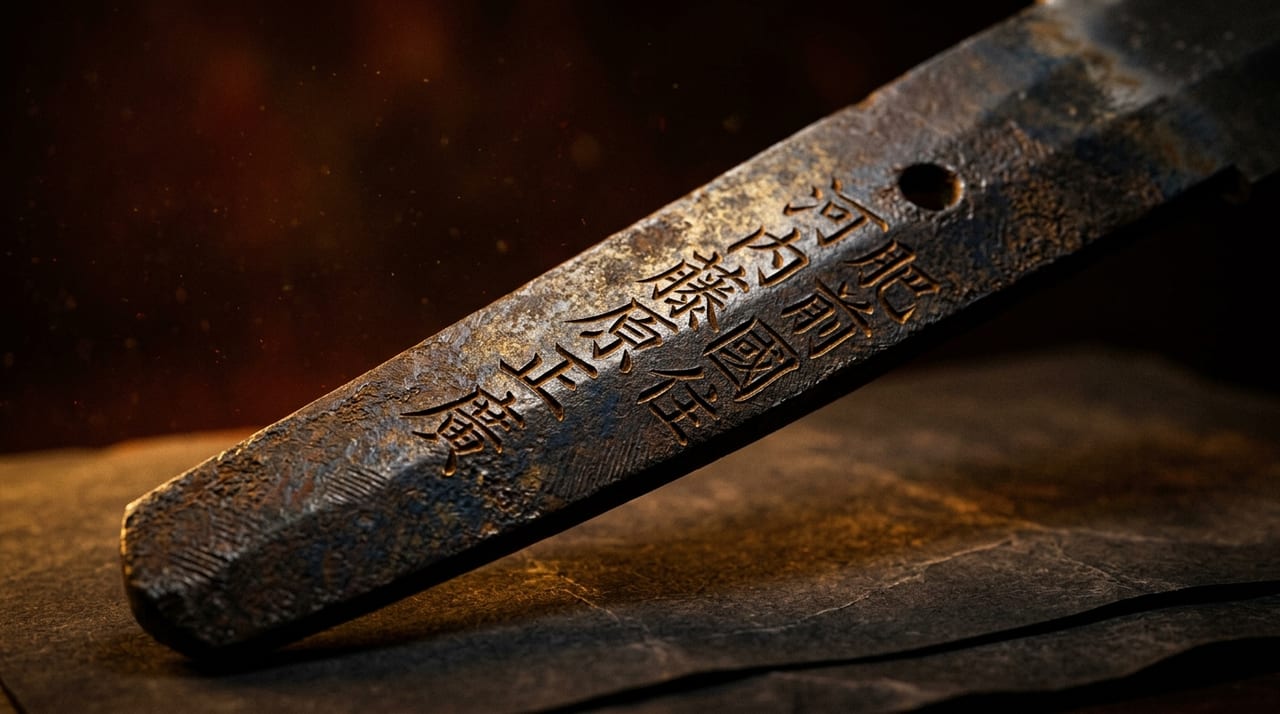
The technical level achieved by the tōkō of Bizen and Sōshū during the Eiroku period was later reassessed in the Edo period as "the essence of kotō." Modern tōkō also take works of this period as a standard and continue their research into tanren and hamon. Among the kotō transmitted to the present day, there are works that trace lineages from around the Eiroku period, and from their mei and styles one can read traces of the tōkō network.
The swords of the Eiroku period were actually worn by warriors who lived through the turbulence of the Sengoku era, and they are witnesses to history that inscribed the weight of that time into the blade. The unbroken lineage represented by the hereditary name of Bizen Nagamitsu and the spirit of innovation embodied by Sōshū Hōdō remain, even in the present day, indispensable coordinates for speaking of the appeal of the Japanese sword.