New Arrivals — Browse our catalog for the latest authentic Japanese sword arrivals. Browse →
Insights into Japanese sword knowledge and culture
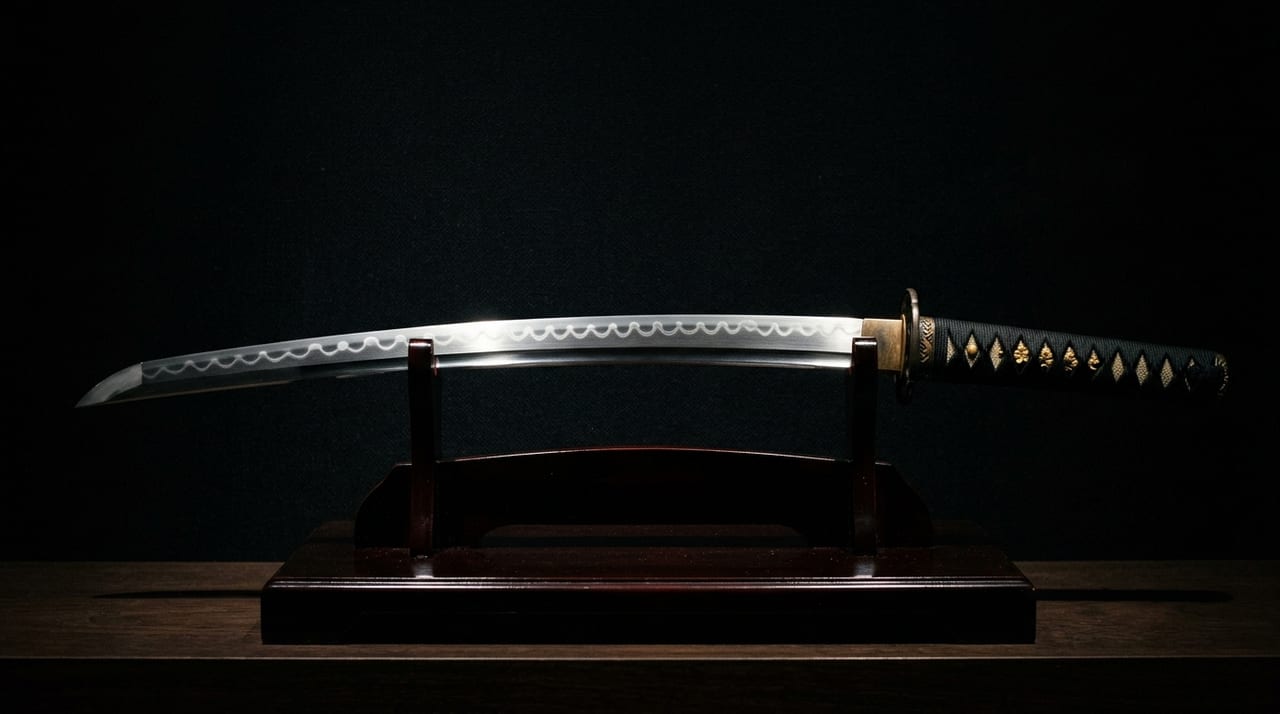
The choji hamon encompasses sophisticated variations such as juzuba and juko choji. This article explores how the Bizen tradition achieves the refined patterns of aligned heads and double-blooming flower landscapes through advanced selective tempering techniques.
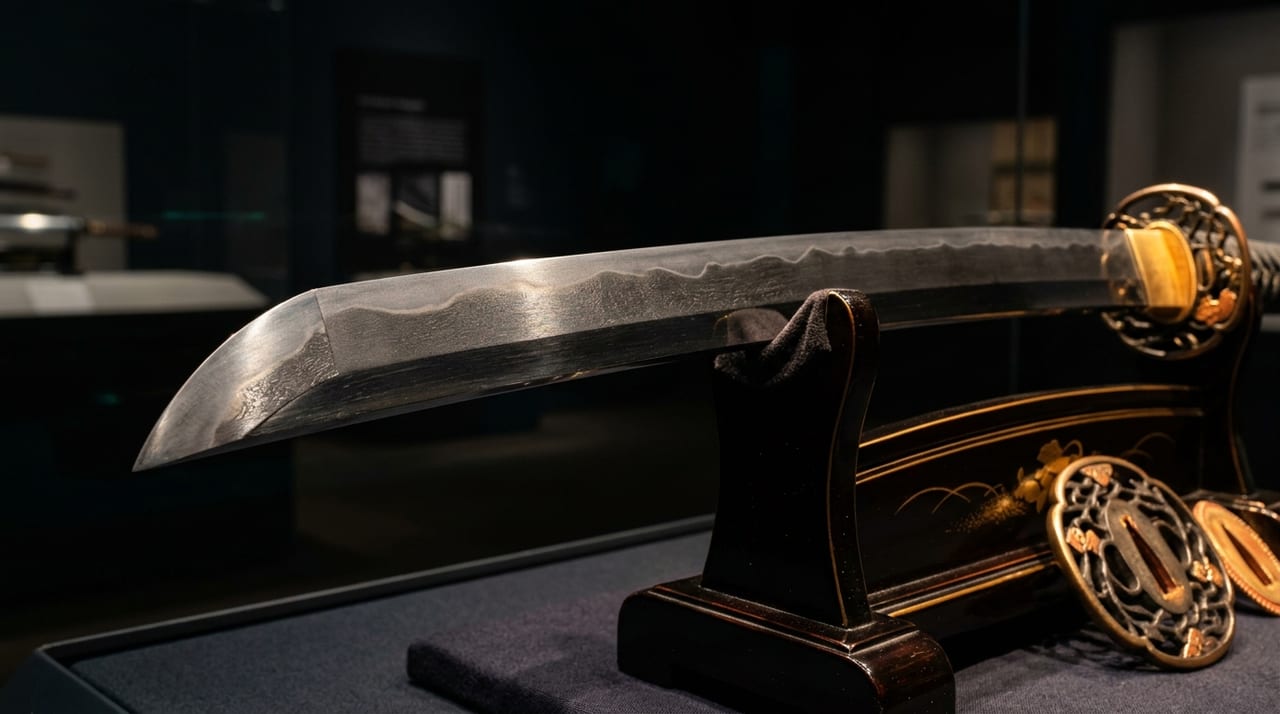
The boushi hamon at the kissaki is the most critical and unforgiving part of the quenching process. This article explains the techniques that determine the boushi's form, from clay placement and cooling methods to distinctive shapes like yakitsume and komaru.
During the Edo period, sword smiths incorporated imported iron known as nanban-tetsu into their craft. This article explores, from a technical standpoint, the differences in properties between Japanese steel and nanban-tetsu, the innovative forging methods employed by early-modern smiths, and the significance of nanban-tetsu signatures inscribed on blades.
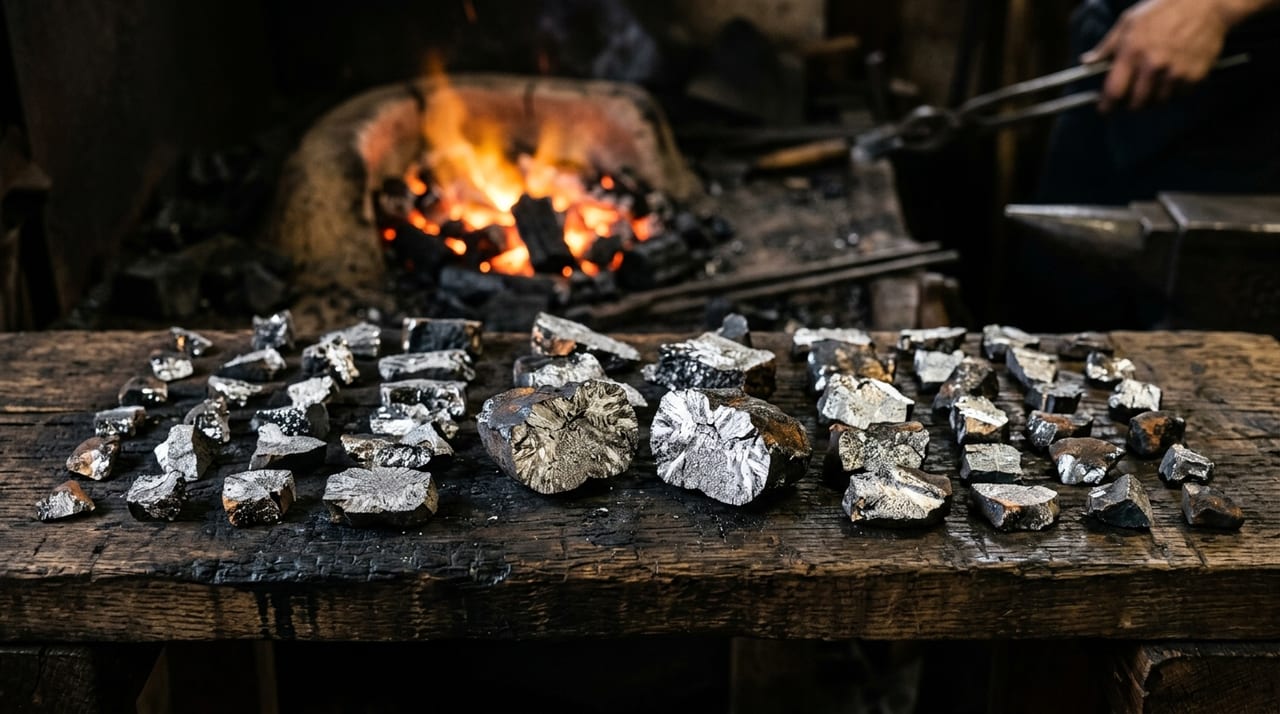
Before fold forging begins, tamahagane undergoes preliminary preparation through mizuheshi and kogiri. This article explains the swordsmith's initial assessment: flattening and breaking the ingot, then selecting and sorting pieces based on carbon content and quality.
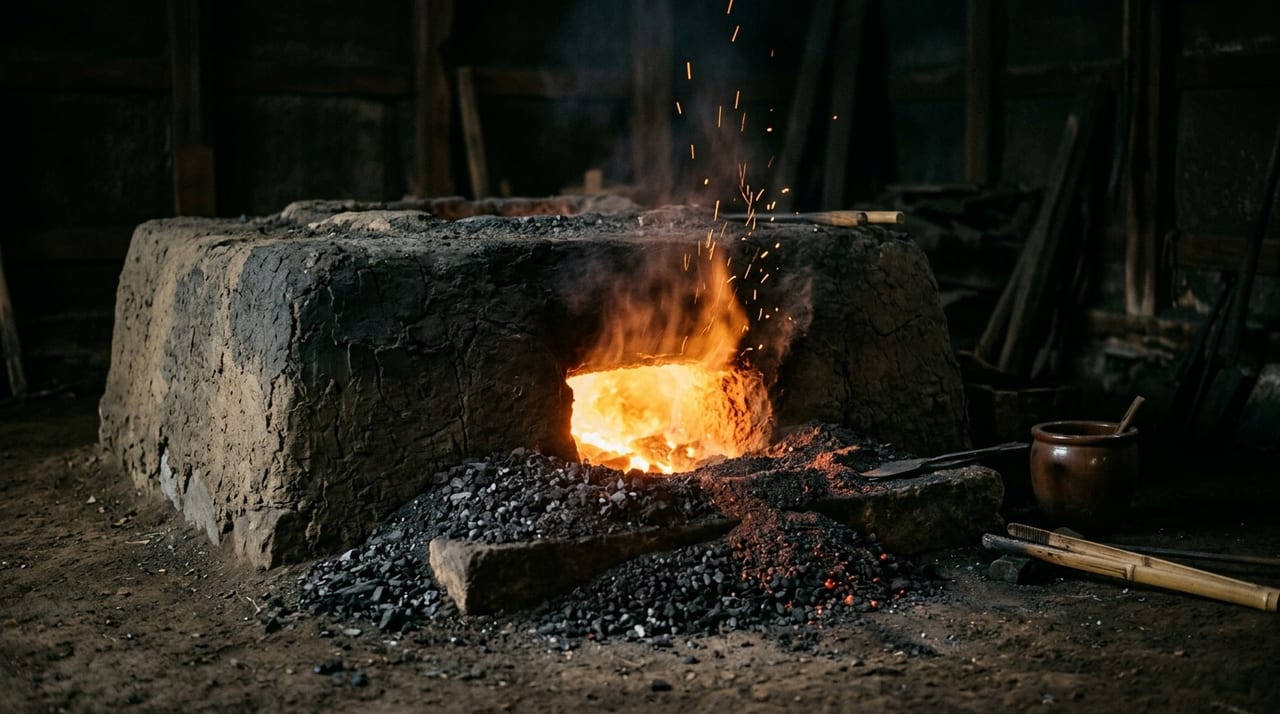
Tatara iron smelting employs two distinct operational methods: kera-oshi and zuku-oshi. We explain the primary product of each, how tamahagane is obtained from each technique, and the differences in temperature management and charcoal usage that distinguish them.
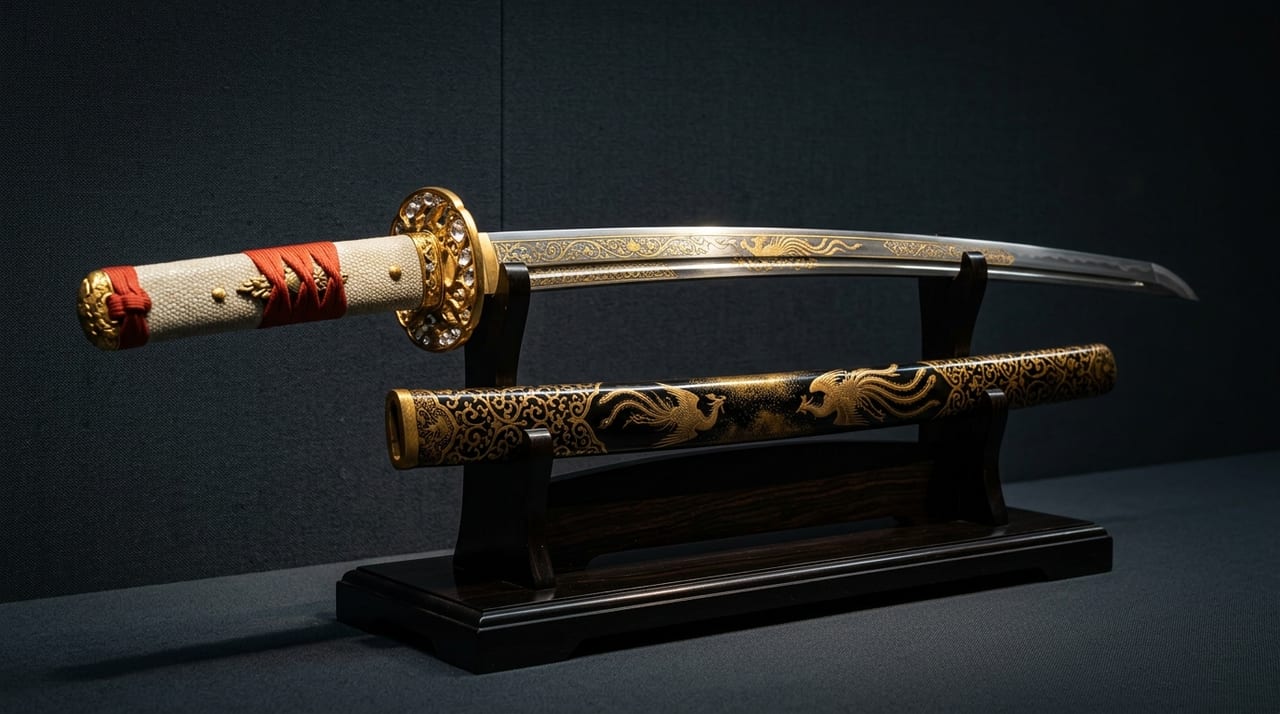
The treasured blades transmitted through the Shōsōin (正倉院) of Tōdai-ji (東大寺) are rooted in the beloved possessions of Emperor Shōmu (聖武天皇), and represent the finest achievements of Tempyo (天平) culture recorded in the Kokka Chinpo-chō (国家珍宝帳). This article introduces the lineage of ceremonial swords including the gold and silver inlaid kara-tachi (金銀鈿荘唐大刀), as well as the yo-hō-ken (陽宝剣) and in-hō-ken (陰宝剣), which were rediscovered in the Meiji period.
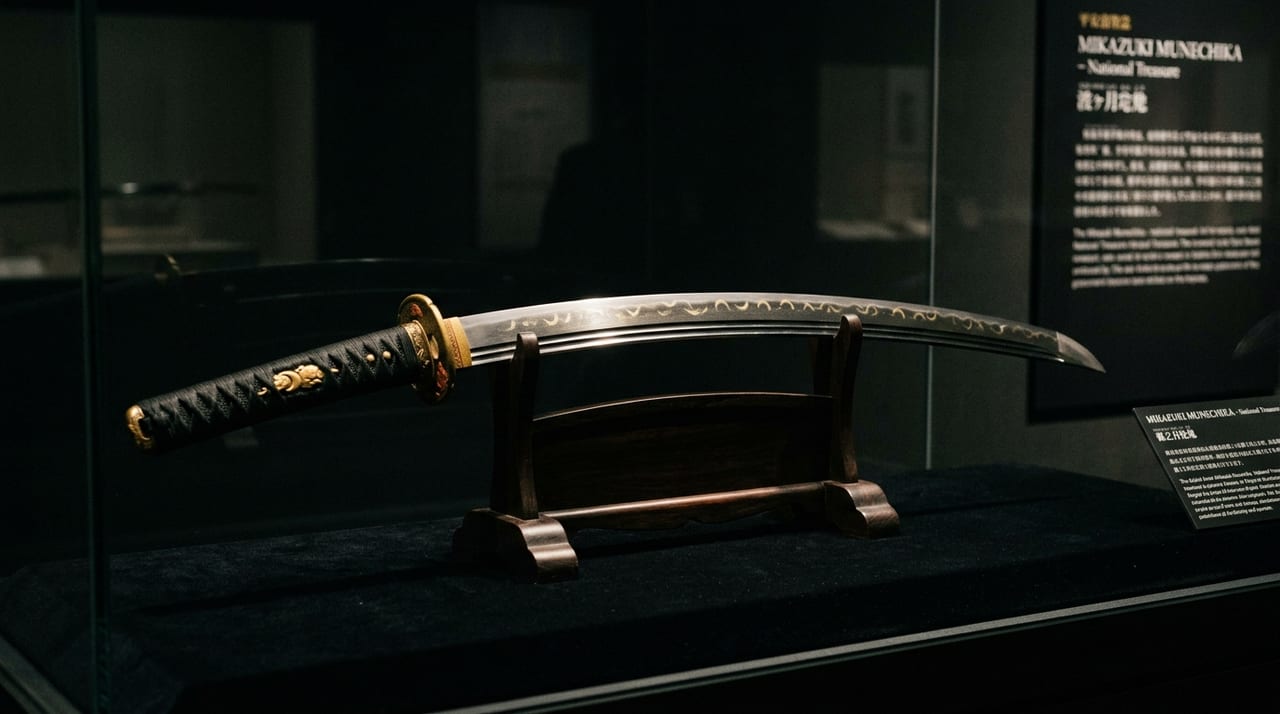
Mikazuki Munechikas (三日月宗近), one of the Five Heavenly Swords (天下五剣), is a National Treasure tachi said to have been made by Sanjō Munechikas (三条宗近), a master swordsmith of Kyoto during the Heian period, and is housed in the Tokyo National Museum. This article introduces the elegant hamon featuring a succession of crescent moon-shaped uchinosuke (打除) markings, and its transmission from Kōdai'in (高台院) to the Tokugawa shogunate.
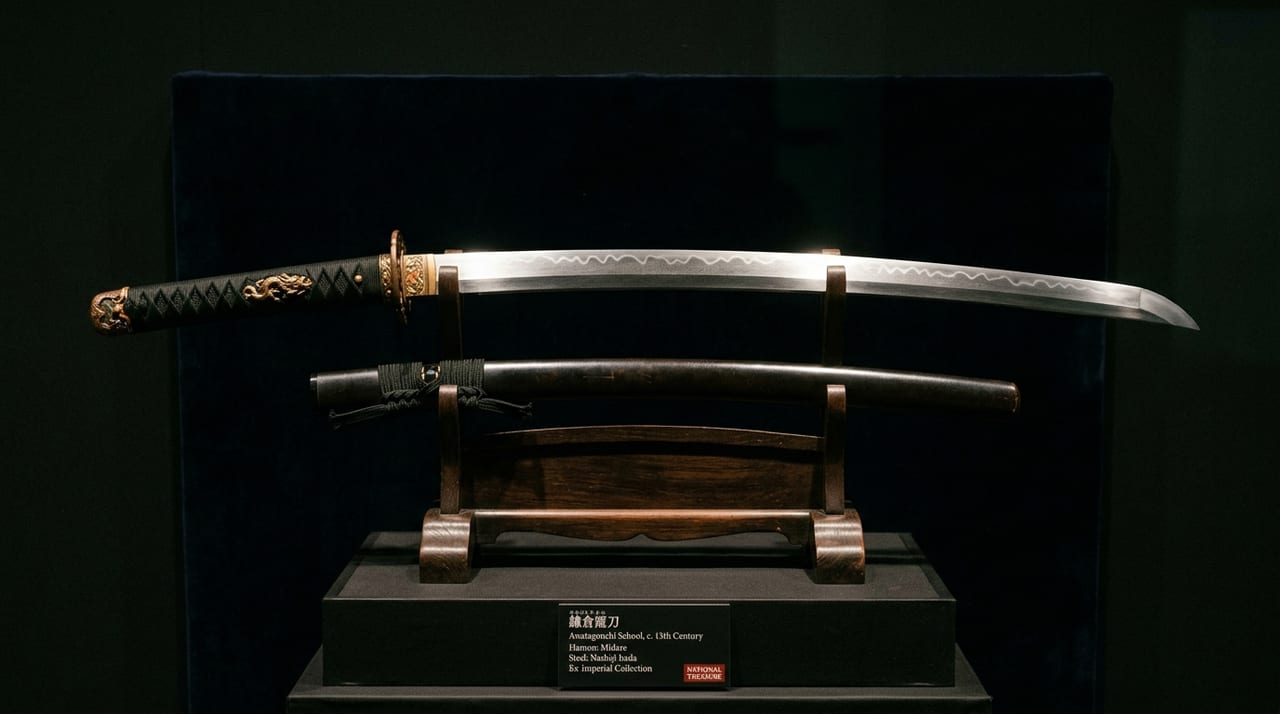
Onimaru Kunitsuna, one of the Tenka Goken (Five Swords Under Heaven), is a celebrated blade traditionally attributed to Kunitsuna, a master swordsmith of the Awatauchi school in Kyoto during the Kamakura period, and is currently held as an imperial possession and managed by the Imperial Household Agency. Its provenance spans centuries, passing from the Hojo clan through the Ashikaga, Oda, Toyotomi, and Tokugawa families to the Imperial household.
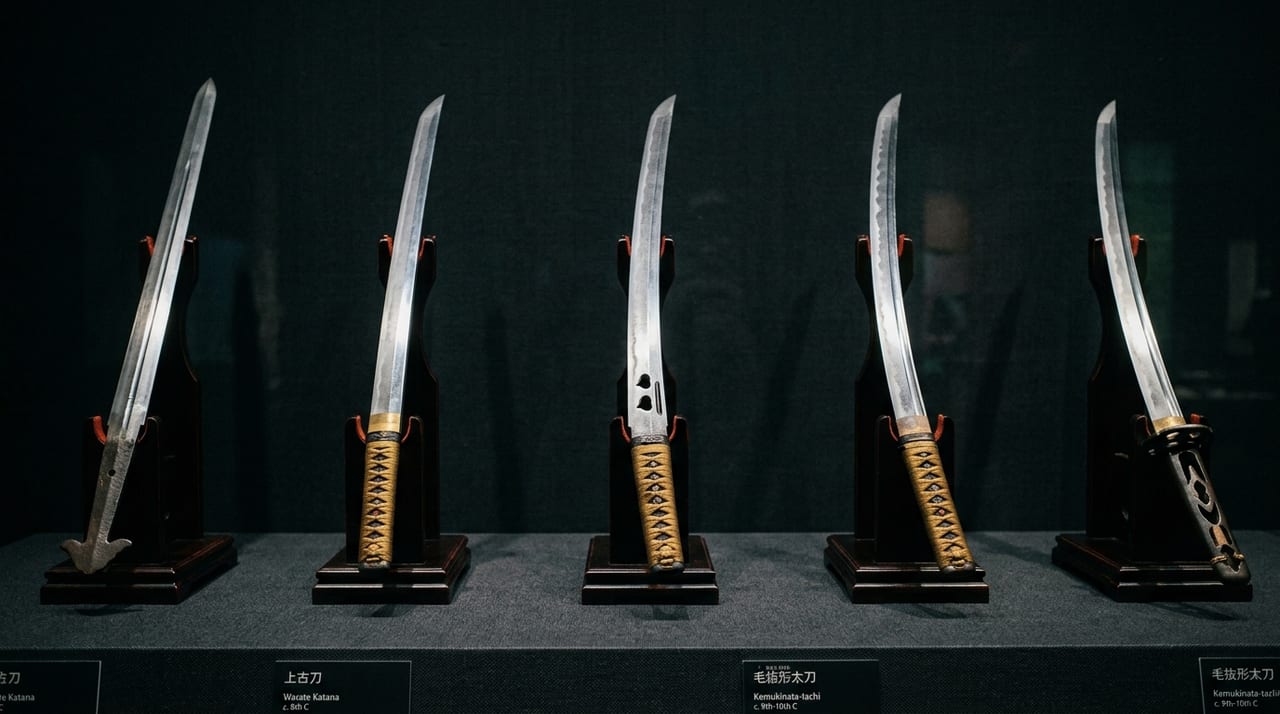
An overview of the relationship between Sakanoue no Tamuramaro, who as seii taishogun (征夷大将軍) led the conquest of the Emishi in the early Heian period, and the warabite sword (蕨手刀) employed in Emishi society of the northeastern regions. We examine the role that Eastern warrior culture played in the transitional period from straight swords to curved blades.
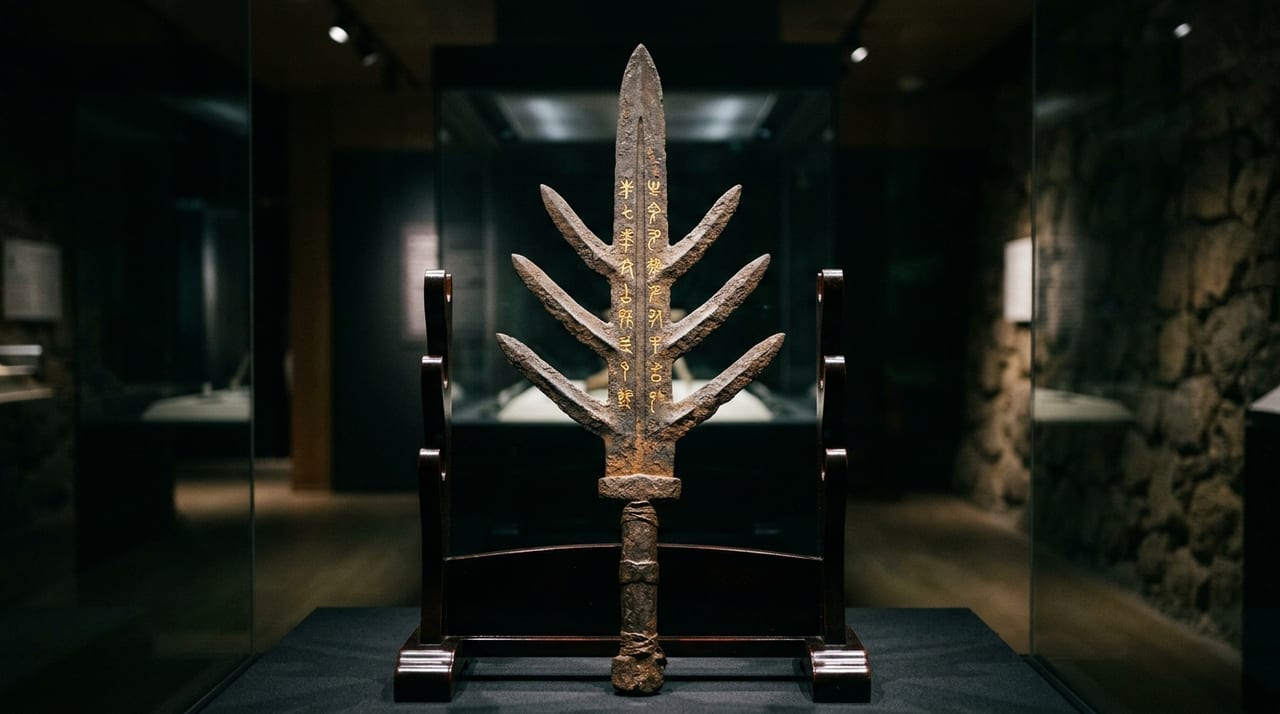
The Seven-Branched Sword (shichishi-tō / 七支刀), transmitted at Isonokami Shrine in Tenri City, Nara Prefecture, is an ancient blade designated as a National Treasure, known for its distinctive form bearing branch blades on both sides and inscribed characters rendered in gold inlay (kin'zōgan / 金象嵌). This article examines the circumstances of the gift from the Baekje king to the Yamato king as recorded in the inscription, and the international relations of 4th-century East Asia.
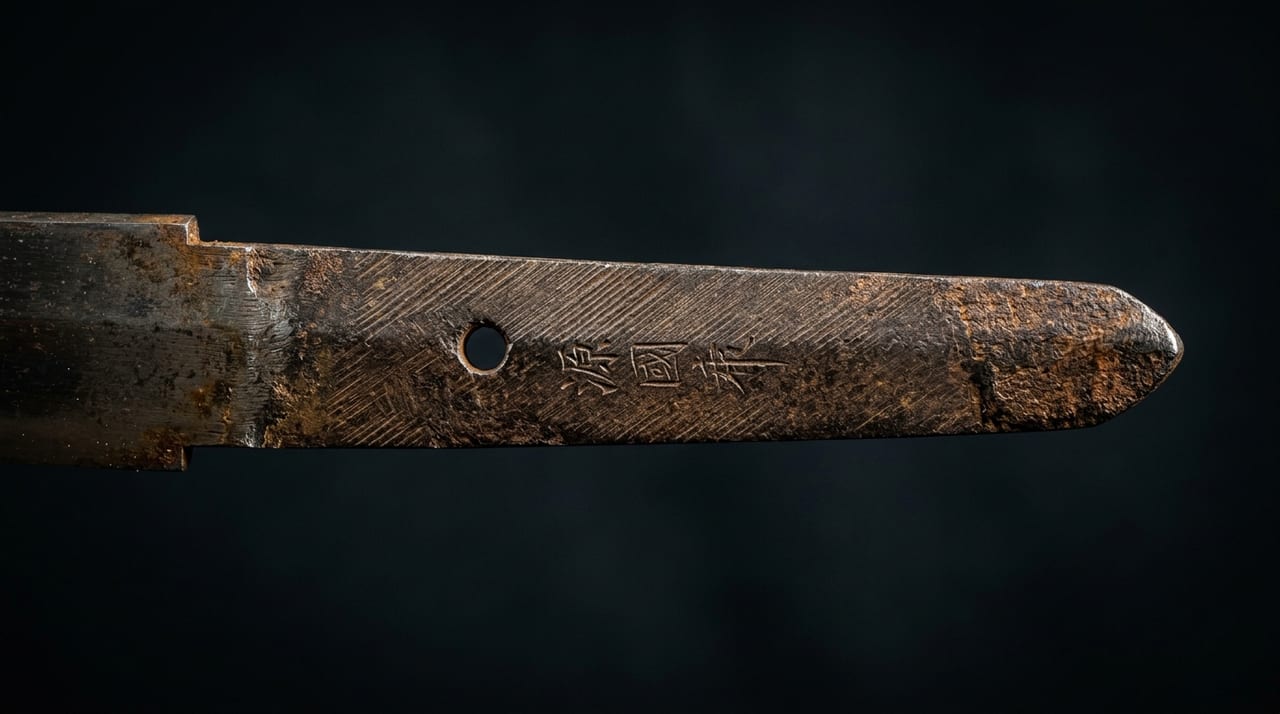
Organizes the shapes of nakago-jiri (茎尻), the end of the tang, into types such as kurijiri (栗尻), kengyō (剣形), ichimonji (一文字), iriyamagata (入山形), and furisodekata (振袖形), and explains their significance as clues for observing the sword's profile and their relationship to era and school.
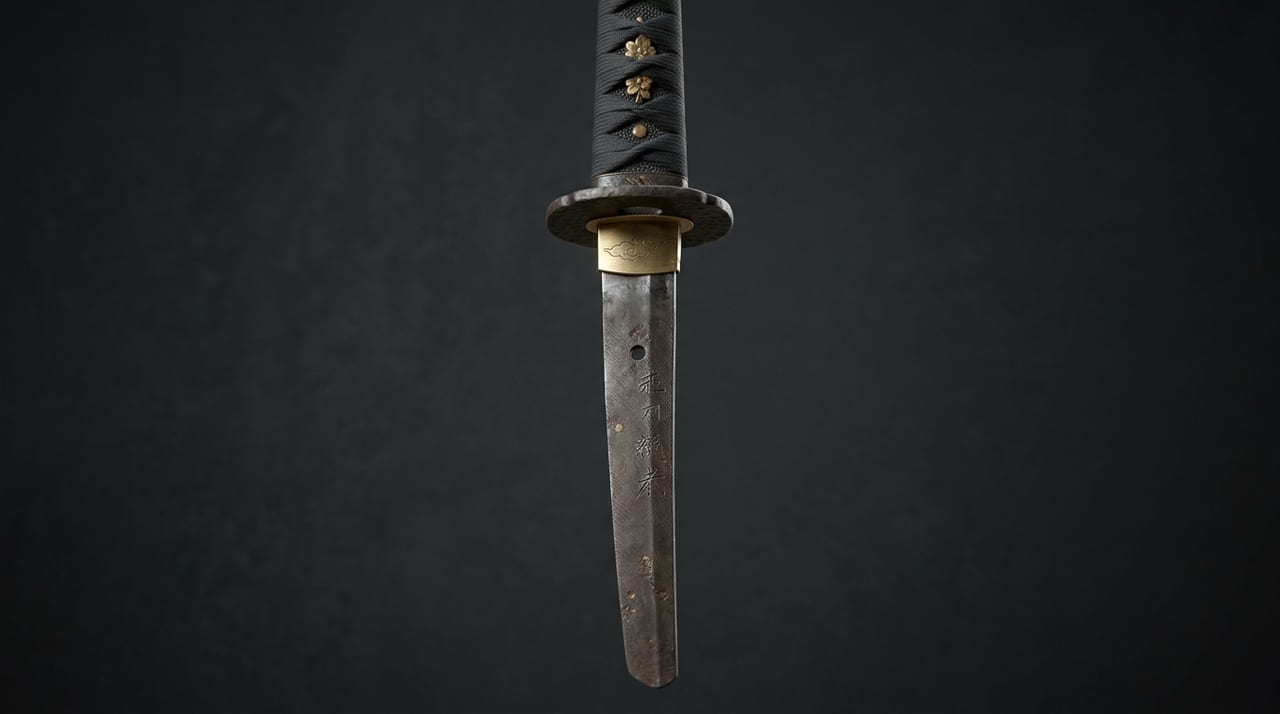
This article examines three distinctive tang (nakago/茎) shapes that depart from the typical contour: kiji-momo-gata (雉子股形), funazoko-gata (舟底形), and tanago-hara-gata (タナゴ腹形). It explains their characteristic profiles and their significance as indicators for determining period and school.