Nanban-tetsu and Imported Iron in Sword-Making: Early-Modern Smiths' Techniques and Innovation
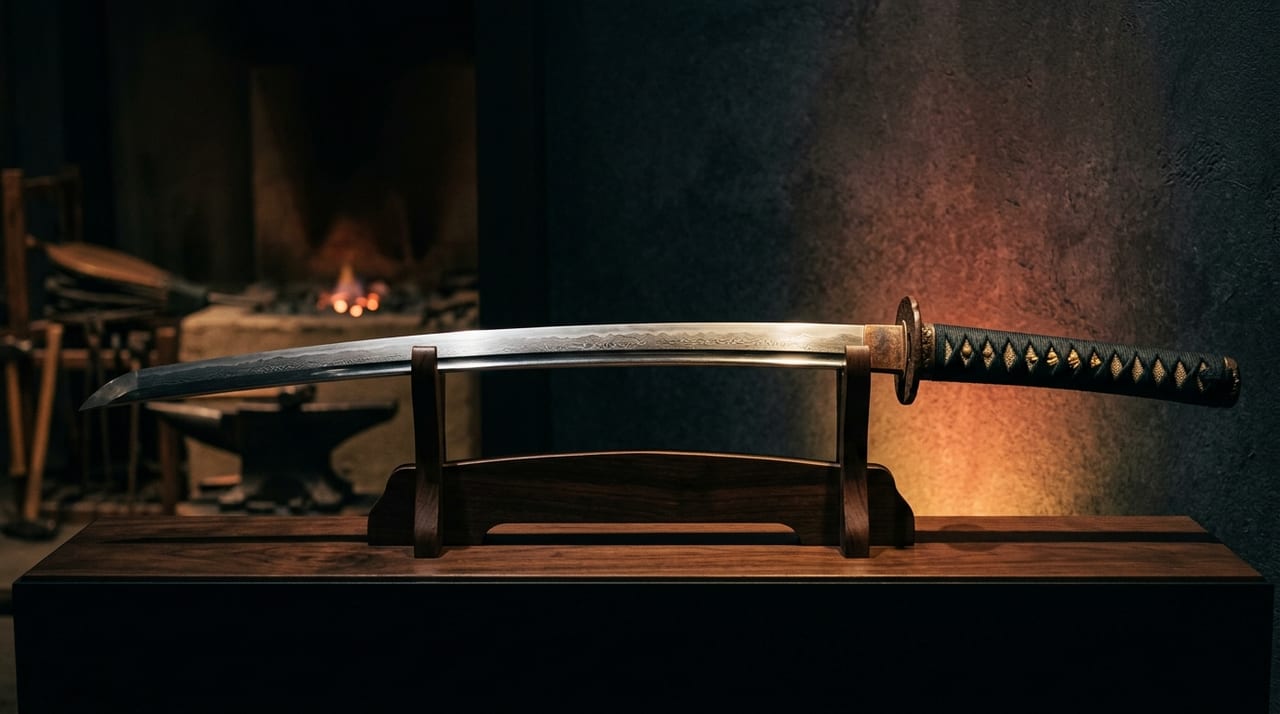 * Image is for illustrative purposes only.
Table of Contents
Iron That Crossed the Sea
The traditional material for Japanese swords is tamahagane (tamahagane = Japanese steel), produced through tatara smelting. However, from the early modern period, particularly with the advent of the Edo period, some swordsmiths began to use iron imported from overseas in blade-forging, commonly known as nanban-tetsu (foreign iron).
Nanban-tetsu is a collective term for foreign iron brought to Japan through nanban trade and the trade that followed it. It is believed to have included not only European-made iron but also iron transported via Southeast Asia and South Asia. How did swordsmiths work with this material, which differed from Japanese steel in both refining methods and composition?
Comparative Foundation—Tatara Smelting and Tamahagane
To understand nanban-tetsu, we must first understand how Japanese steel was made as a point of comparison. Tatara smelting is a traditional iron-making method in which iron sand and charcoal are alternately fed into a furnace, where they are reduced over several days at low temperatures to produce iron blooms (kera). Tamahagane is the high-quality portion selected from among the kera, which has a varying carbon content and is not completely free of impurities. Thus the swordsmith repeatedly performs folding and forging, heating and spreading the steel then folding it over, driving out impurities and adjusting the carbon content to create a layered, homogeneous material. In other words, Japanese sword-making developed as a system of using forging to control the unevenness in the material. It was because of this system that swordsmiths could apply the same principles when faced with imported iron of different properties. Note that in contemporary sword-making, tamahagane is used in principle, and the techniques of tatara smelting are also preserved and transmitted. The lineage of materials is not a matter of the past but is directly connected to current sword culture.
The Mark "Forged with Nanban-tetsu"
One well-known swordsmith who used nanban-tetsu is Echizen Yasutsugu (the first of that name), who served as bladesmith for the Tokugawa shogunal family. Among Yasutsugu's works, signatures reading "using nanban-tetsu" appear, suggesting that at the time, forging with nanban-tetsu was regarded as a kind of added value and talking point.
However, the fact that it is recorded in the signature does not necessarily mean the entire blade is made of nanban-tetsu; there are indications that it may have been combined with Japanese steel. Caution is necessary in interpreting signatures, but it is certain that swordsmiths of the time showed strong interest in foreign materials and sought to showcase them.
Differences in Properties from Japanese Steel and Forging Techniques
Because nanban-tetsu followed different refining processes than Japanese steel, the types and quantities of impurities and trace elements it contained are believed to have differed. Whereas tamahagane from tatara contains relatively many impurities and is an uneven material, imported iron did not have uniform properties depending on its origin.
Therefore, swordsmiths did not forge nanban-tetsu as-is but had to subject it to folding and forging, similar to Japanese steel, to drive out impurities and homogenize the structure. It appears that efforts were also made to combine nanban-tetsu with Japanese steel in forging to complement the properties of both. Even when the material changes, the fundamental principles of smithing—removing impurities and adjusting carbon content—remain the same.
Evaluations Concerning Nanban-tetsu
As for whether nanban-tetsu was superior to Japanese steel, no simple conclusion can be drawn. At the time, there were those who prized nanban-tetsu, while others valued the high quality of Japanese steel. Rather than the superiority or inferiority of the materials, it was the skill of the swordsmith in discerning the characteristics of each type of iron and drawing out its performance through forging and tempering that determined the value of the finished blade.
Checkpoints for Appreciation and Purchase
When appreciating or considering a sword involving nanban-tetsu, the following points should be confirmed.
- Signature content. If there are supplementary inscriptions such as "forged with nanban-tetsu," read them together with the maker's mark and date, and check whether they are consistent with the period.
- Presence of authentication documents. Since the authenticity of a signature cannot be determined by appearance alone, it is essential to check the evaluation results from organizations such as the NBTHK (high-quality sword, specially high-quality sword, etc.).
- Observation of the ground steel. Even with swords said to use nanban-tetsu, it is difficult to determine from appearance alone that this is nanban-tetsu grain, and it is most prudent to understand them based solely on the signature and available documentation.
- Condition. Regardless of the material, whether the blade is sound with little rust or fatigue is the foundation of its appreciation value.
The pitfall is reading too much into supplementary inscriptions as meaning the entire blade is made of imported iron. As mentioned earlier, there is a possibility of combined use with Japanese steel, and the signature may include partial use of materials or promotional intent.
Reading Sword-making History Through Materials
The nanban-tetsu case demonstrates that Japanese sword-making was never a closed tradition but developed by incorporating available materials and foreign influences in each era. Even during the period of national isolation, swordsmiths challenged themselves with new materials and attempted to master their characteristics.
In a single sword inscribed with "forged with nanban-tetsu" in its signature are embodied iron that crossed the sea and the inquiring spirit of the swordsmith who forged it. When we turn our attention to the history of materials, we feel all the more deeply the profound dimensions of Japanese sword technology history.
Experiencing Sword-making
TOUKENZA (operated by M-Assets Inc.) is an online Japanese sword marketplace. Understanding the art of sword-forging is a key to deepening one's appreciation of a single blade. Swords currently listed can be viewed in our online catalog and are available for purchase. If you have any questions about a particular sword or are uncertain about anything, please feel free to contact us through our inquiry form.