New Arrivals — Browse our catalog for the latest authentic Japanese sword arrivals. Browse →
Insights into Japanese sword knowledge and culture
Beyond weaponry, the sword was positioned as a tool of spiritual cultivation in samurai culture. This article explores Zen influence, Yagyu Shinkage-ryu philosophy, and Musashi's teachings on the mind-sword relationship.
Sword kantei and appreciation events are ideal opportunities to handle actual blades and sharpen your eye. This guide covers practical information for first-time attendees.
The Shimabara Rebellion, which broke out in 1637, was the largest uprising in early modern Japan and a major military engagement in the peaceful early Edo period. Through the siege warfare between the rebel forces and the bakufu army at Hara Castle, we consider the actual state of tōken (刀剣) and weapons in an age of peace.
The Battle of Nagashino in 1575 is renowned as an engagement in which the rifle tactics of the Oda-Tokugawa allied forces defeated the Takeda cavalry. This article examines the role that the Japanese sword played in close combat and pursuit in this famous battle, where firearms took center stage, grounded in historical fact.
The arrival of firearms at Tanegashima in 1543 transformed Japanese battlefields and military systems. This article examines the sustained role of the nihonto (日本刀) in close-quarters combat and grappling amid the spread of new weaponry, and traces the historical transformation of sword demand.
Based on historical records, this article traces the fate of swords damaged by fire—known as yakemi (焼身)—and recounts anecdotes of Nobunaga's beloved swords said to have been lost at Honnō-ji.
Ōdentai Mitsuyo, one of the Five Heavenly Swords, is a National Treasure tachi (太刀) attributed to Miike Tenta Mitsuyo, founder of the Miike school in Chikugo during the late Heian period. This introduction traces the provenance of this celebrated blade, which passed from the Ashikaga family through Toyotomi Hideyoshi to the Maeda family, and is currently housed by the Maeda Ikutoku Foundation.
The nakago-jiri, the terminal end of the tang, displays various forms including kuri-jiri, ken-gata, and iriyama-gata, each reflecting the sword smith's school and historical period. This article examines the technical significance of nakago-jiri shaping and decorative file finishing, and their role in sword authentication.
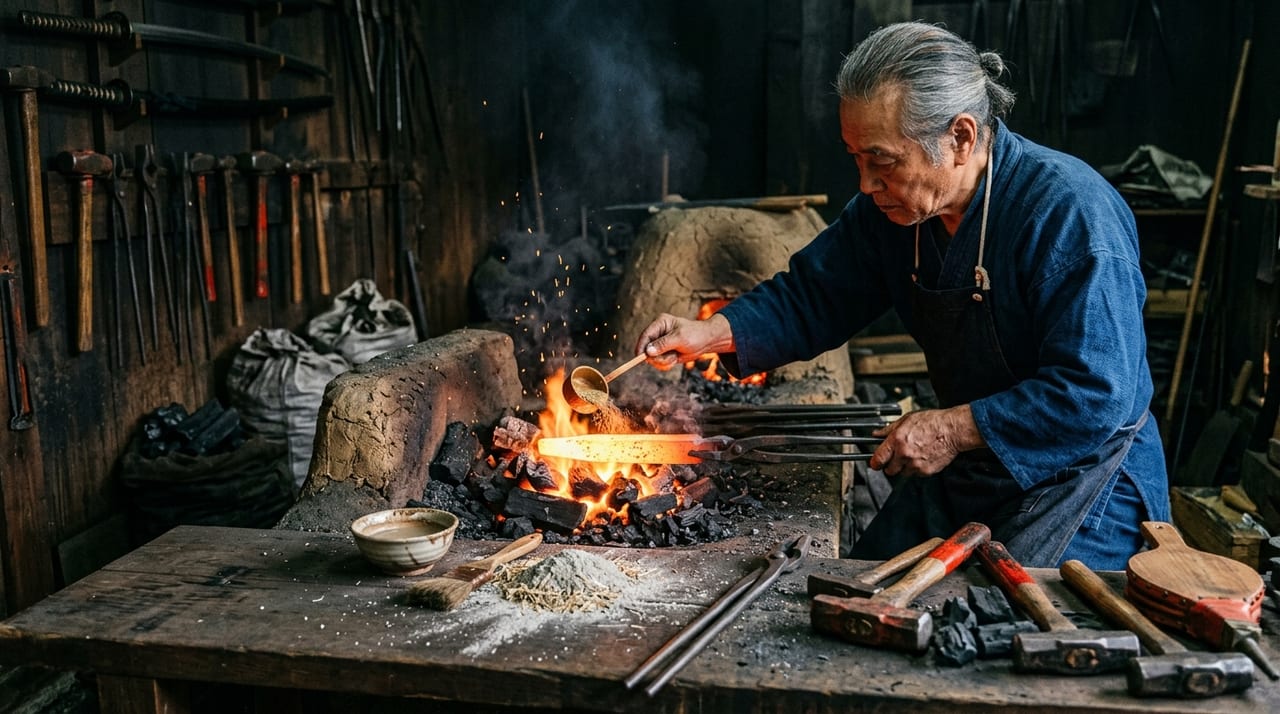
Straw ash and mud juice are indispensable to forge welding in the folding and forging of steel. This article explores the chemistry behind how these fluxes prevent oxidation and wash away impurities, and explains the precise timing sword smiths use when applying them.
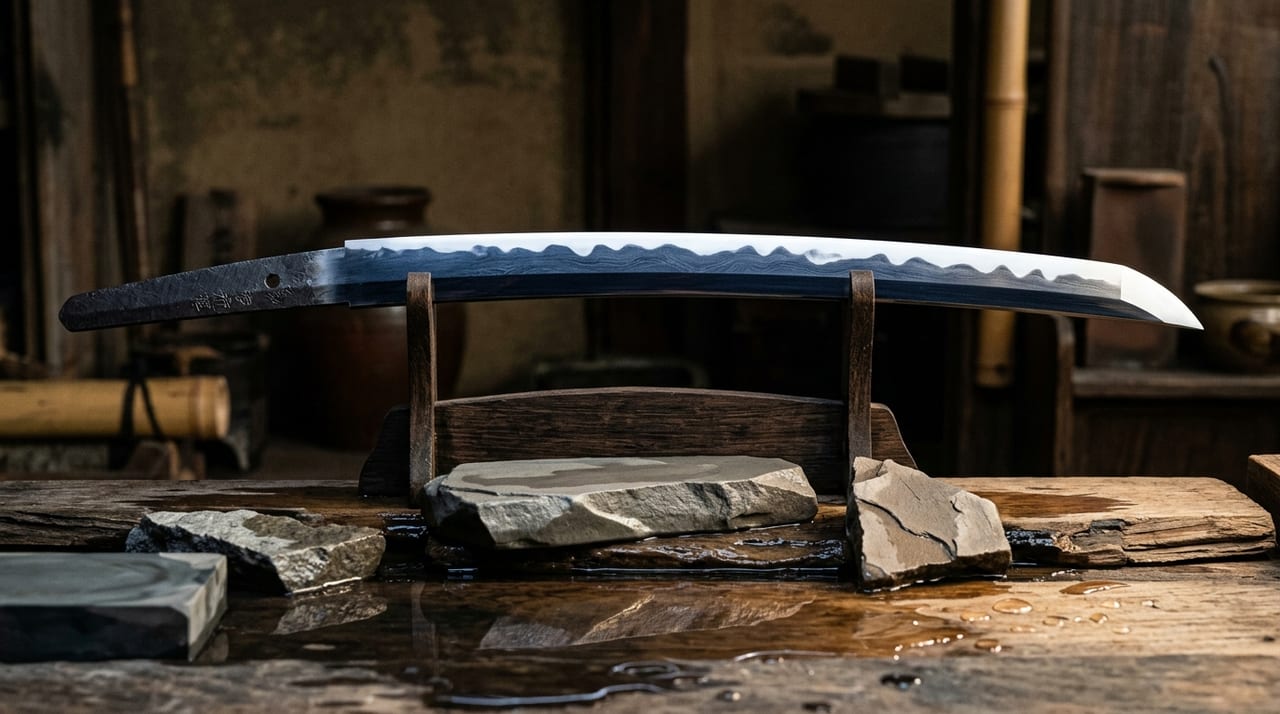
Polishing a Japanese sword requires different whetstones at each stage of the process. This article explains the types and properties of natural whetstones including arato, nakato, and uchugumo, and describes how finishing stones are used to create blade and body polish.
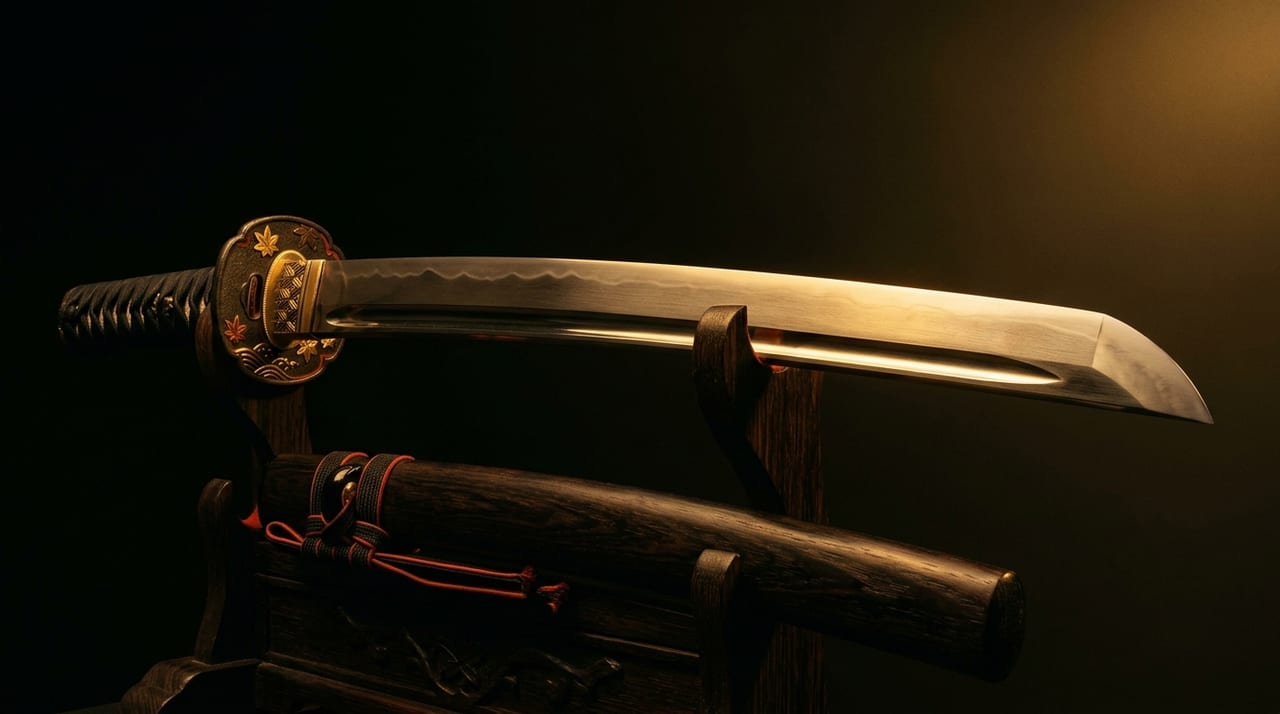
The hi grooves carved into the blade serve dual purposes: weight reduction and decoration. This article explains the varieties of hi—including bo-hi, futasuj-hi, and koshi-hi—the tools and steps involved in carving them, and the technical mastery revealed in how the groove tips are finished.
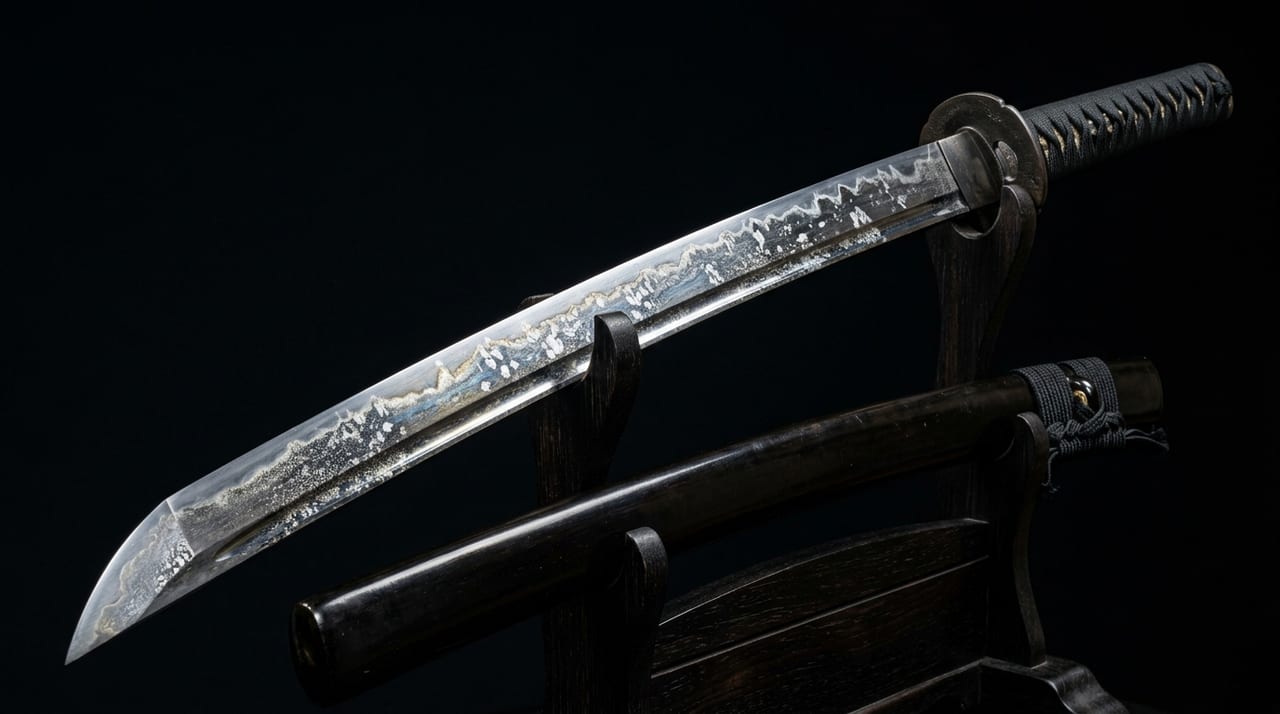
Hizutara scatters hardening across both the ha and ji—a hamon requiring sophisticated control of clay application and quenching. This article explains how this technique, which originated in the Soshu tradition, is created and what makes it so difficult.