Juzuba and Jūka-chōji — The Masterful Yaki-ire That Brought Chōji Hamon to Perfection
 * Image is for illustrative purposes only.
Table of Contents
Beyond Chōji Hamon
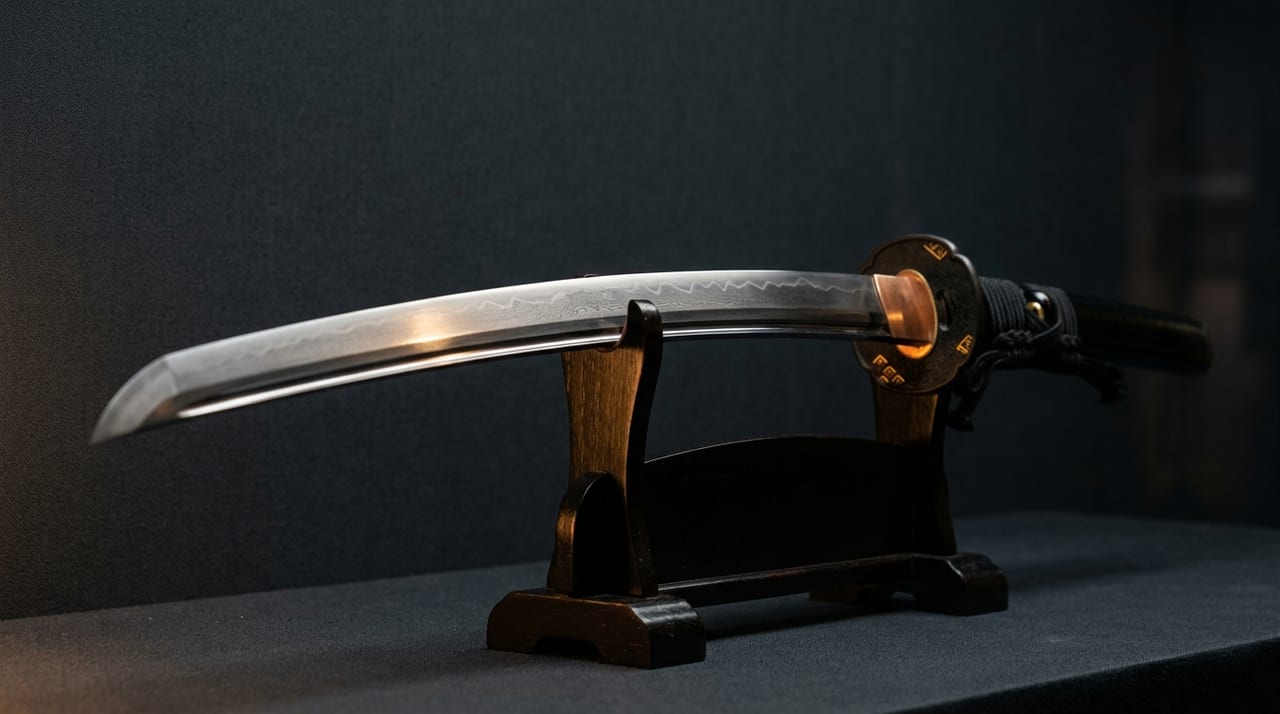
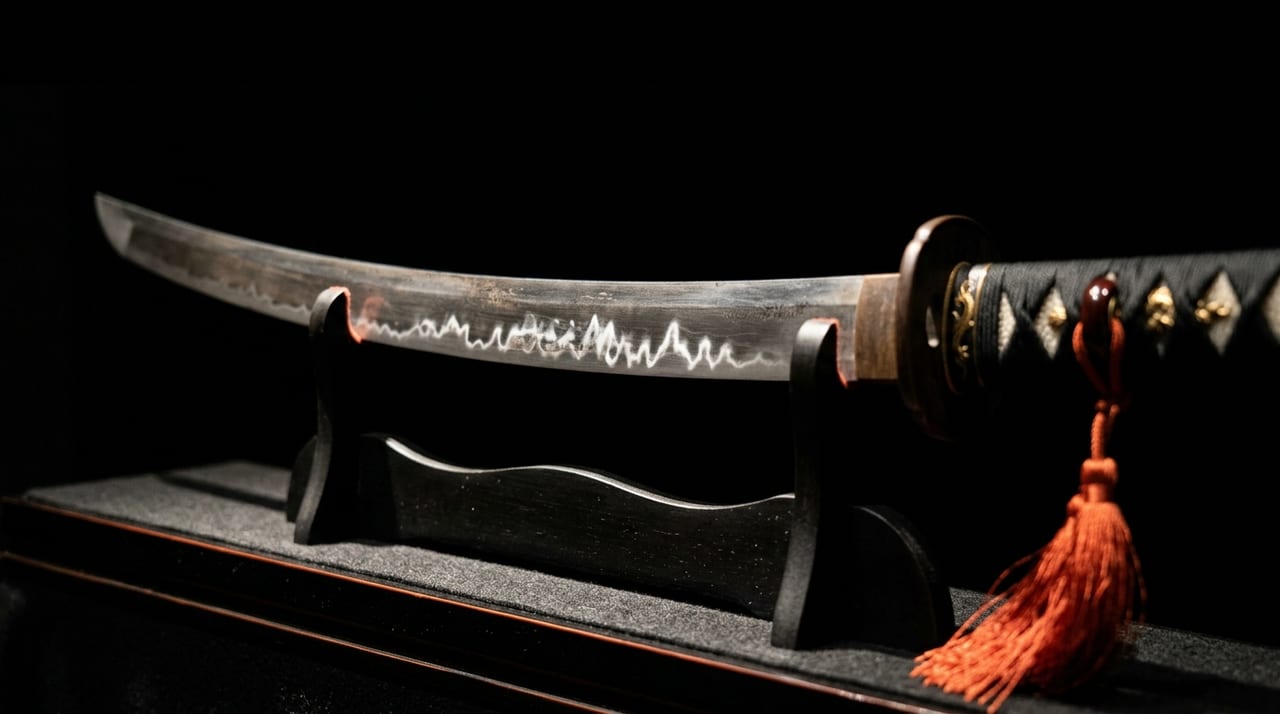
Among the hamon of nihontō, the "chōjiba" — an irregular temper line featuring a succession of round heads resembling the fruit of the chōji plant (clove buds) — is known for its flamboyance. It was above all the tōkō who flourished in Bizen Province (Bizen no Kuni, present-day eastern Okayama Prefecture) who developed chōji hamon to a high degree.
Chōji hamon has even more refined variations: "juzuba" and "jūka-chōji." Both are the crystallization of a tōkō's skill — the basic chōji hamon worked through yaki-ire to its utmost limit. Having a grasp of the basic form of chōji hamon makes the difference between these two all the easier to see.
Juzuba — the Ordered Beauty of Evenly Aligned Heads
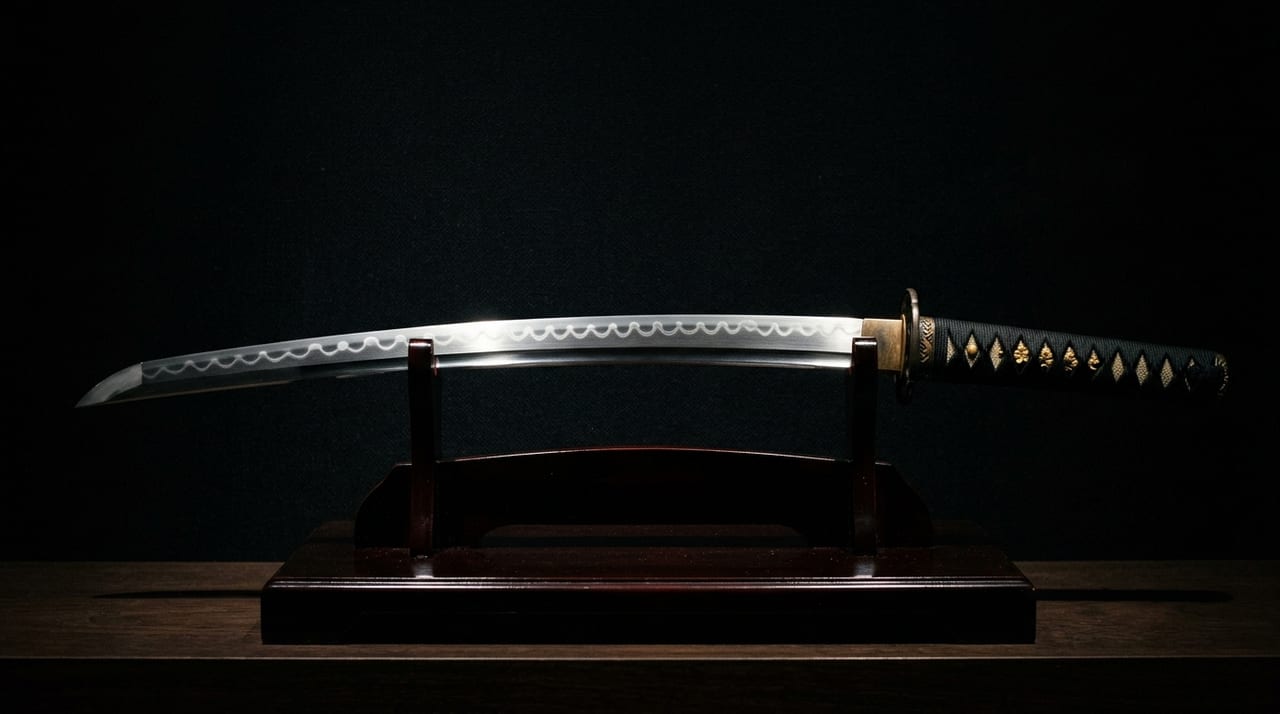
Juzuba is a hamon in which the heads of the chōji are regularly aligned in nearly the same size and at the same intervals, appearing just like prayer beads lined up in a row.
Whereas ordinary chōji hamon is an irregular succession of heads of varying sizes, juzuba is characterized by the uniformity of the head size and spacing. This "aligning" is in fact extremely difficult. The clay coating must be applied with a uniform rhythm, and heating and cooling during the yaki-ire must be finely controlled so that the heads come out evenly aligned as intended. It is an advanced hamon that layers orderly regularity onto the flamboyance of the irregular temper line.
Jūka-chōji — the Double-Blooming Chōji
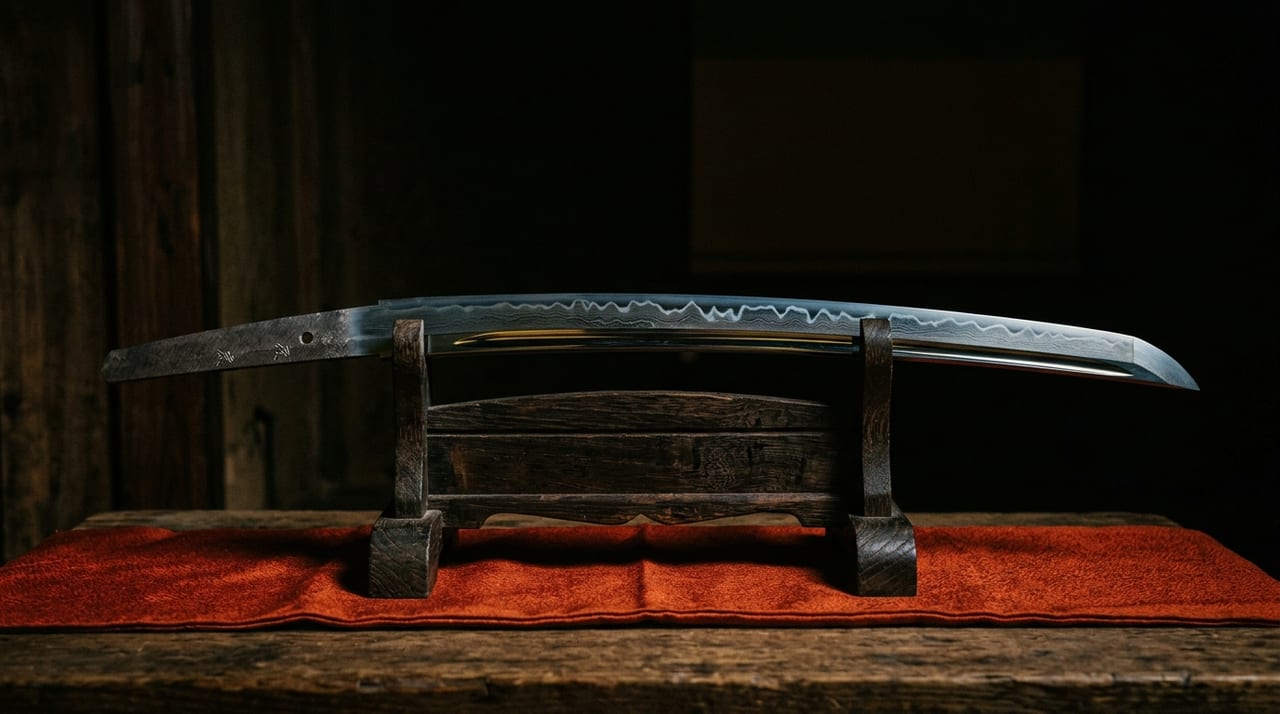
Jūka-chōji is a hamon in which the heads of the chōji overlap in two tiers, appearing as though flowers have bloomed in double layers. It creates a scene with a sense of depth and splendor, as if one small chōji were resting on top of another.
Jūka-chōji is considered among the most magnificent of the developed forms of chōji hamon, and belongs to the lineage of grand and gorgeous chōji seen in the Bizen-den tradition — for example, in the Fukuoka Ichimonji school of the Kamakura period. To bring out the double-tiered heads through quenching requires drawing complex forms at the tsuchioki stage, and then exercising extremely delicate control during the yaki-ire to allow nie and nioi to work without disrupting those forms.
Tsuchioki and Nioiguchi: the Foundation of Differentiated Firing
To fire such precise chōji as juzuba or jūka-chōji, the accuracy of the tsuchioki governs everything. The contour of the clay coating applied to the blade becomes, directly, the shape of the hamon after yaki-ire.
The tōkō sketches out the intended succession or overlapping of the chōji in the clay coating as if making a preliminary drawing. Then, managing the heating and cooling of the yaki-ire, the tōkō finishes the work so that the "nioiguchi (the band of light and shadow at the boundary of the hamon)" rises beautifully along the clay contour. Chōji hamon is often shown to best advantage by a tight nioiguchi with nioi as its main character, and a bright, clear nioiguchi is one of the hallmarks of a masterwork.
Though tsuchioki and yaki-ire appear to be separate processes, in practice they are carried out by reading each other's results. If the thickness of the clay or its placement shifts even slightly, the chōji that emerges after firing changes its expression greatly. That is precisely why, if the viewer contemplates not only the shape of the hamon but also imagines the calculation and experience upon which that shape rests, the depth of the work is felt a full register deeper.
Checkpoints for Appreciation
When actually appreciating juzuba or jūka-chōji, the following sequence makes it easier to take in the full scene.
- Illuminate the blade from an oblique angle and trace the full succession of the hamon. Get an overall sense of whether the head size and spacing are uniform and whether there are areas where the heads overlap in double tiers.
- Bring your eye close to the nioiguchi and see whether the boundary is bright and clear or blurred.
- Pay attention to activities such as the "ashi" — which project from the valleys of the hamon toward the cutting edge — and the "yo" (leaf-like formations) that float as scattered dots within the blade. A work with abundant ashi is lively within the hamon and never grows tiresome to look at.
A single point light source is best for illumination. Placing the light source at an oblique angle to the blade and tilting the blade slowly as you look, the contrast of the nioiguchi comes alive and the overlapping of the heads and the projections of the ashi emerge. Because photographs flatten color and shadow, it is strongly recommended, if possible, to stand before the actual sword and spend several minutes looking at it while changing the angle.
Distinguishing from Similar Hamon
The hamon most easily confused with chōji hamon is "gunome." Gunome is a hamon of semicircular formations regularly arrayed in succession, and its outline character differs from that of chōji, whose heads swell roundly and whose waists are pinched. In practice, there are many hamon called "gunome-chōji" in which the two are mixed, and the boundary between them is continuous. Because juzuba represents the pinnacle of chōji with evenly aligned heads, it can at first glance give an impression close to gunome; however, the character of chōji remains in the way the heads swell and the way the ashi project. Distinguishing such details is difficult through words alone, and in the end the nearest path is to look at many examples side by side and cultivate a feel for the outlines.
Points to Note When Assessing Condition
Flamboyant chōji hamon is also susceptible to the effects of togi wear. In a blade that has been polished many times over the years, the heads of the hamon move closer to the cutting edge and the original scene can appear lean. When appreciating or purchasing, one should not judge by the flamboyance of the hamon alone but also check together the brightness of the nioiguchi, the soundness of the jigane, and the balance between the hamon and the overall shape. Chōji fired on a sound blade is more three-dimensional than it appears in photographs, and its expression changes with every angle of light.
The Splendor That Bizen-den Brought to Perfection
Both juzuba and jūka-chōji are refined arts of yaki-ire that the tōkō of Bizen, who excelled in chōji hamon, polished to perfection. They can be said to be the pinnacle of technique, born from pushing the basic chōji hamon in the direction of "aligning" or "layering" to its ultimate limit.
When appreciating a blade bearing these hamon, please pay attention to the arrangement and rhythm of the chōji heads and the subtlety of their overlapping. Within what at first glance appears to be a flamboyant disorder, one should be able to read the tōkō's meticulous intent to align the heads and layer the flowers, and the skill of the yaki-ire that brought it out.
Explore the Craft of Nihontō
TOUKENZA (operated by M Assets Co., Ltd.) is a nihontō marketplace selling Japanese swords online. Knowing the art of sword-forging becomes a key to appreciating each sword more deeply. The swords listed are available to view in the online catalog and may be purchased there. If you have a sword that interests you or any questions, please feel free to contact us via the inquiry form.