New Arrivals — Browse our catalog for the latest authentic Japanese sword arrivals. Browse →
Insights into Japanese sword knowledge and culture
Hasebe Kunishige, transmitted as a disciple of Sōshū Masamune, was a swordsmith who flourished in Yamashiro (Kyōto) during the Nanboku-chō period. He excelled in the hitatsura (皆焼) hamon, and we trace the lineage that produced the National Treasure 'Heshikiri Hasebe,' which is associated with Oda Nobunaga.
The Ko-Bizen school (古備前派) represents the oldest generation of swordsmiths active in Bizen Province from the late Heian period through the early Kamakura period. Exemplified by masters such as Tōmori (友成) and Masatsune (正恒), it marks the beginning of a thousand-year Bizen blade tradition that would continue through the Ichimonji school (一文字派) and the Ōsafune school (長船派).
Shizu Saburo Kaneuji (志津三郎兼氏) was a master swordsmith said to have originated from the Yamato Tegai (大和手掻派) school, studied under Soshu Masamune (相州正宗), and forged blades in the Shizu region of Mino Province. He is counted among Masamune's Ten Virtuosos and his lineage continues into the later Naoeshizu (直江志津) tradition.
The Hōshō school (保昌派) is a group of sword makers counted as one of the Yamato Five Schools, known especially for its thorough masame steel. Through this study of the distinctive masame pattern that appears prominently in the jigane, we trace the school's artistic style and its place within the Yamato tradition.
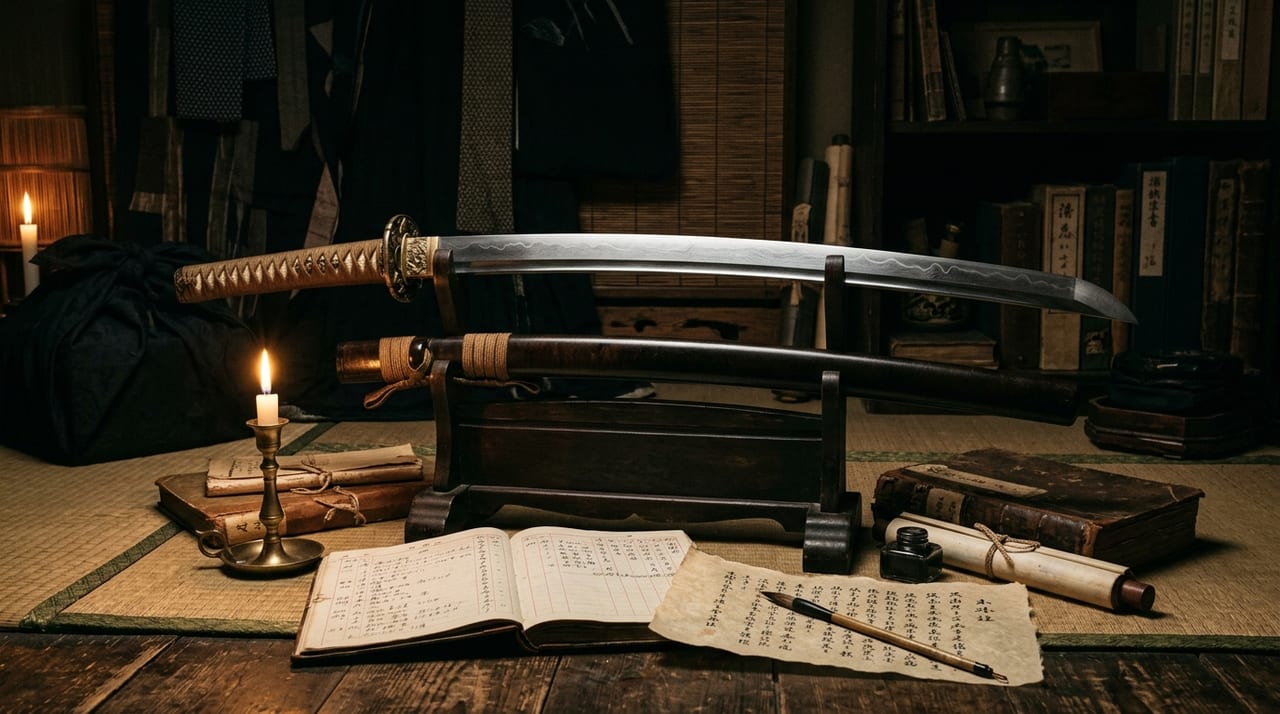
How to keep records to preserve a collection for the long term and in sound condition. This article explains practical organizing techniques for compiling measurements, signatures, condition, provenance, and authentication information in a ledger.
Dolls' Festival displays and warrior figurines for Boys' Day (May 5th). An explanation of why sword designs appear in this celebration of children's growth and the cultural traditions behind it.
How have swords been handled on the stages of Noh and Kabuki? We decipher the symbolic meaning embedded in celebrated blades that carry the heart of stories, and in the movements and stagecraft involving the sword.
Swords depicted in ukiyo-e prints, particularly in musha-e (武者絵). We explore the world of musha-e created by artists such as Utagawa Kuniyoshi (歌川国芳) and the image of the sword that woodblock prints spread to the common people.
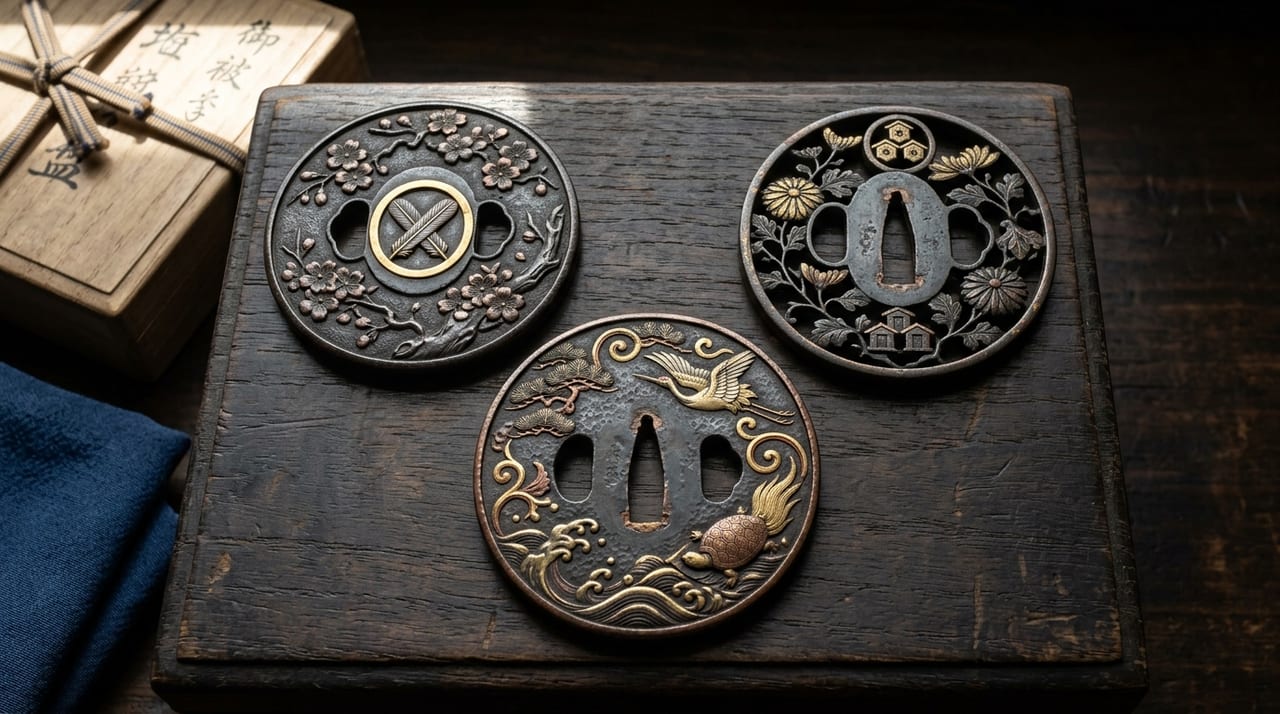
The patterns displayed on tsuba and sword fittings have meaning. This explanation covers how to read designs such as family crests, auspicious motifs, and designs inspired by classical tales and historical narratives.
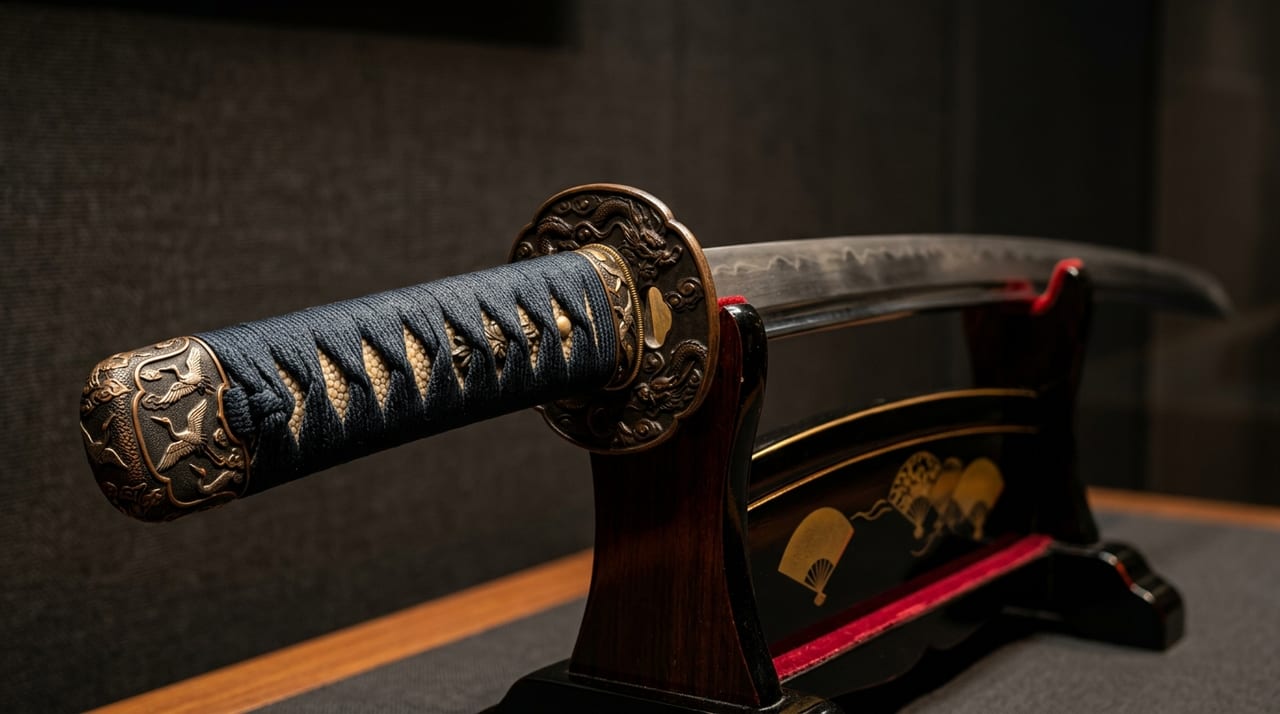
The fuchi and kashira that reinforce and ornament both ends of the handle. This article explains the function, materials, and motifs of the fuchi-kashira, treated as a pair, and the refined art of coordinating them with the tsuba and menuki.
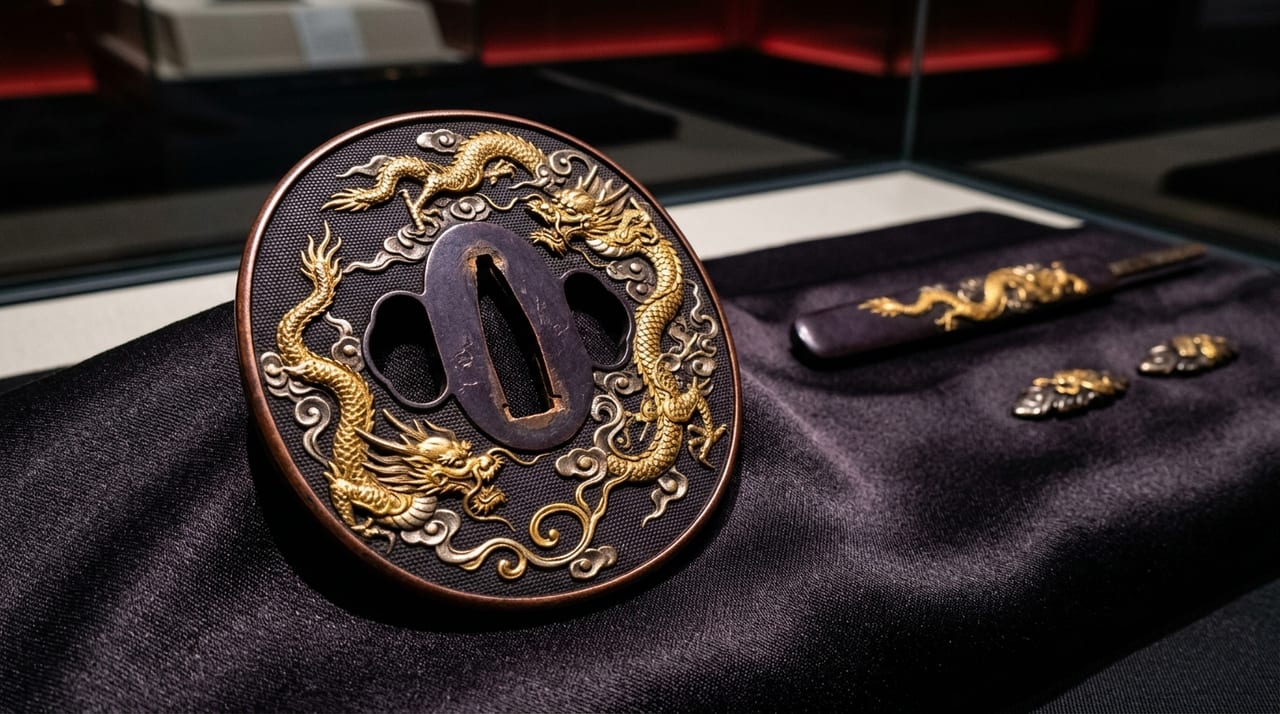
The Gotō family, masters of sword furniture metalwork. An overview of the main house's history beginning with Yūjō in the Muromachi period, the distinctive iebori (家彫) style, and the formal elegance inherent in mishomono (三所物) three-piece sets.
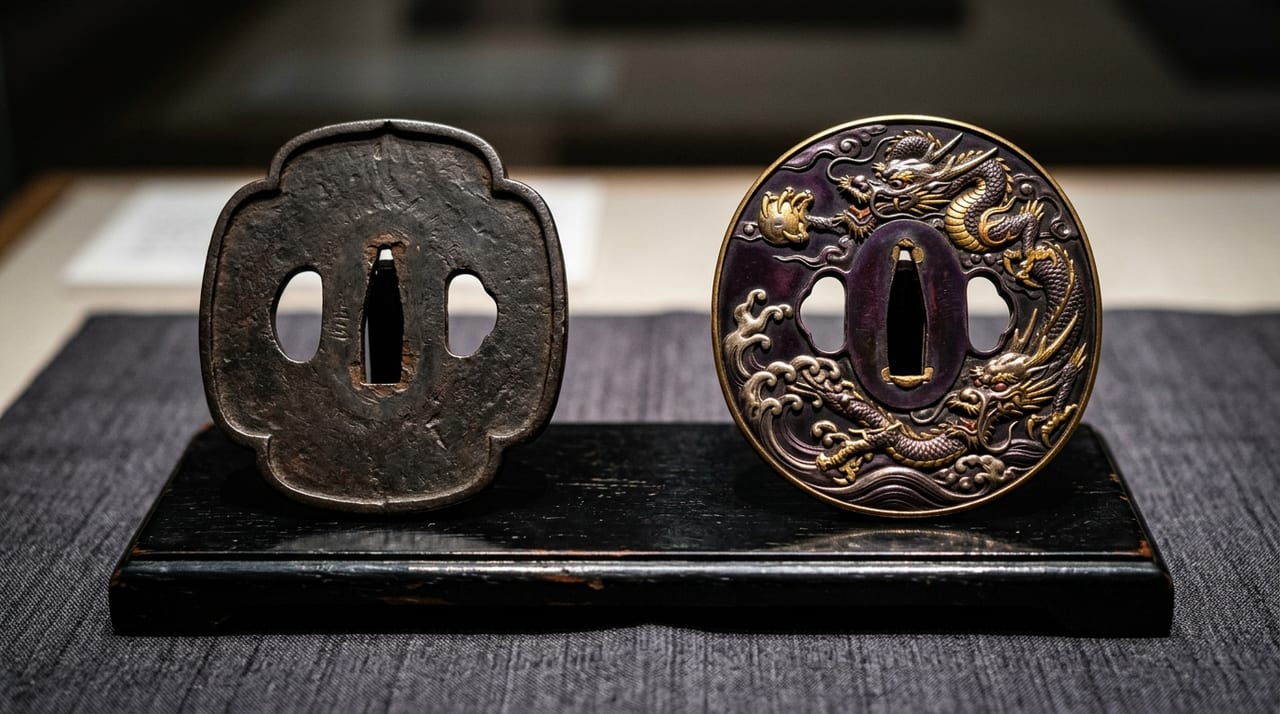
Tsuba divide broadly into two categories: tetsu-tsuba (iron-based guards) and kinko tsuba (metalwork guards) made with soft metals such as shakudo and shinchu. This section organizes the stylistic, technical, and appreciative differences that arise from material variation.