Decoding Tsuba Patterns: The Meaning Behind Family Crests, Auspicious Motifs, and Narrative Designs
 * Image is for illustrative purposes only.
Table of Contents
The patterns depicted on tsuba and tōsōgu are not mere decoration. Embedded within them are meanings that identify a family, prayers for happiness and long life, and narratives drawn from classical literature and historical anecdotes. Knowing the meaning of these patterns makes the appreciation of sword mountings far richer.
Family Crest Patterns
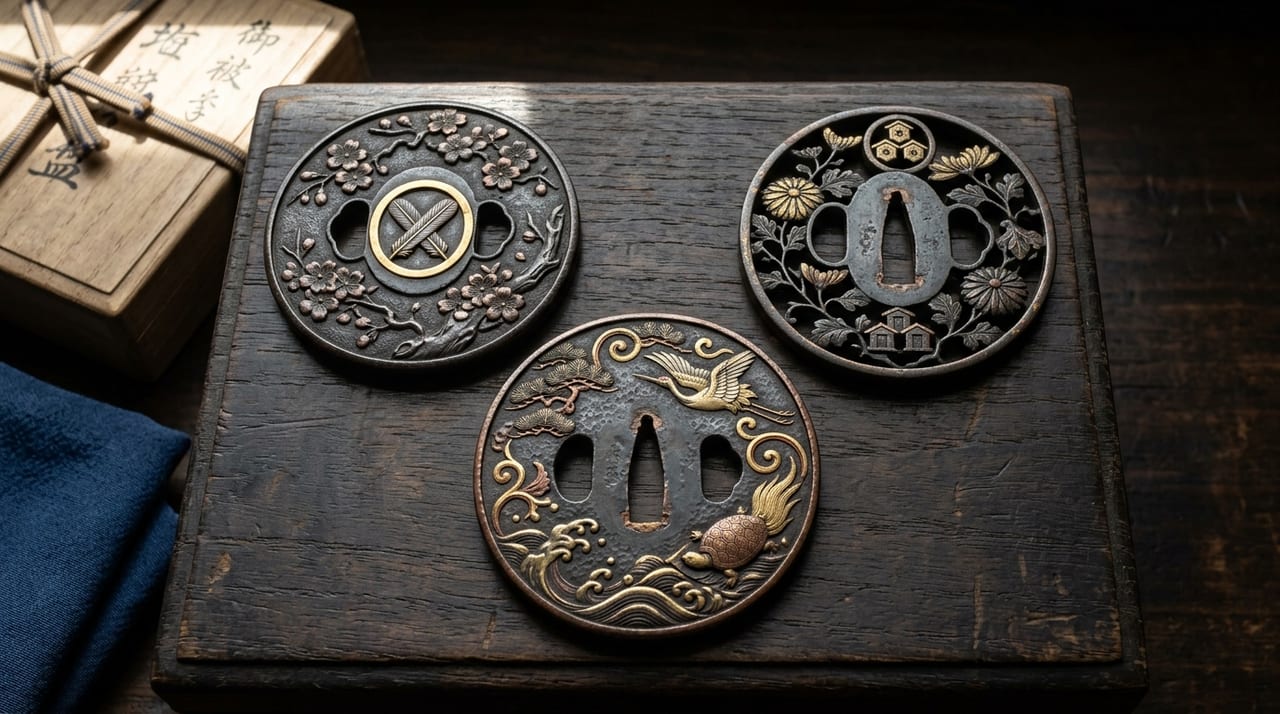
Family crests (kamon) are frequently found on tōsōgu. A kamon is a mark representing a house or clan, indicating the origin and affiliation of its bearer. By placing a kamon on the tsuba, menuki, or fuchi-kashira, the sword mounting declared to whom it belonged. From well-known crests such as the paulownia (kiri), hollyhock (aoi), chrysanthemum (kiku), and wood sorrel (mokkō) to crests unique to individual families, kamon designs give sword mountings a clear individual character.
Auspicious Patterns
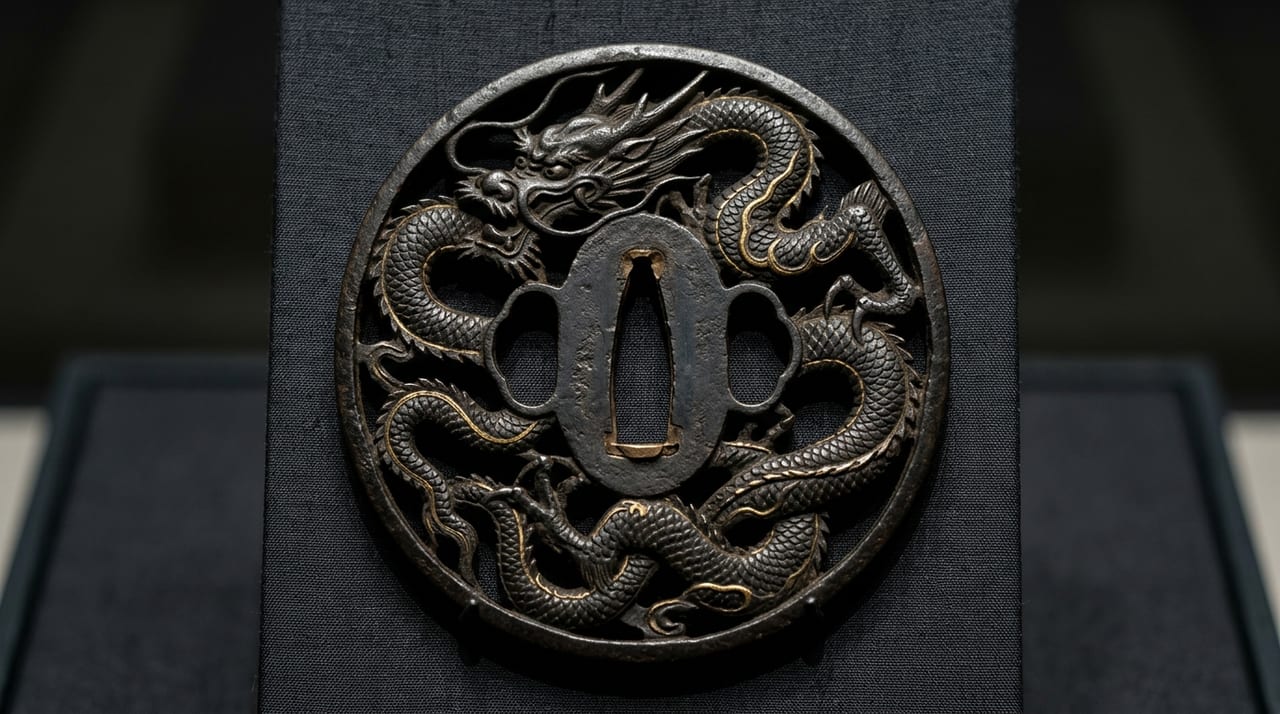
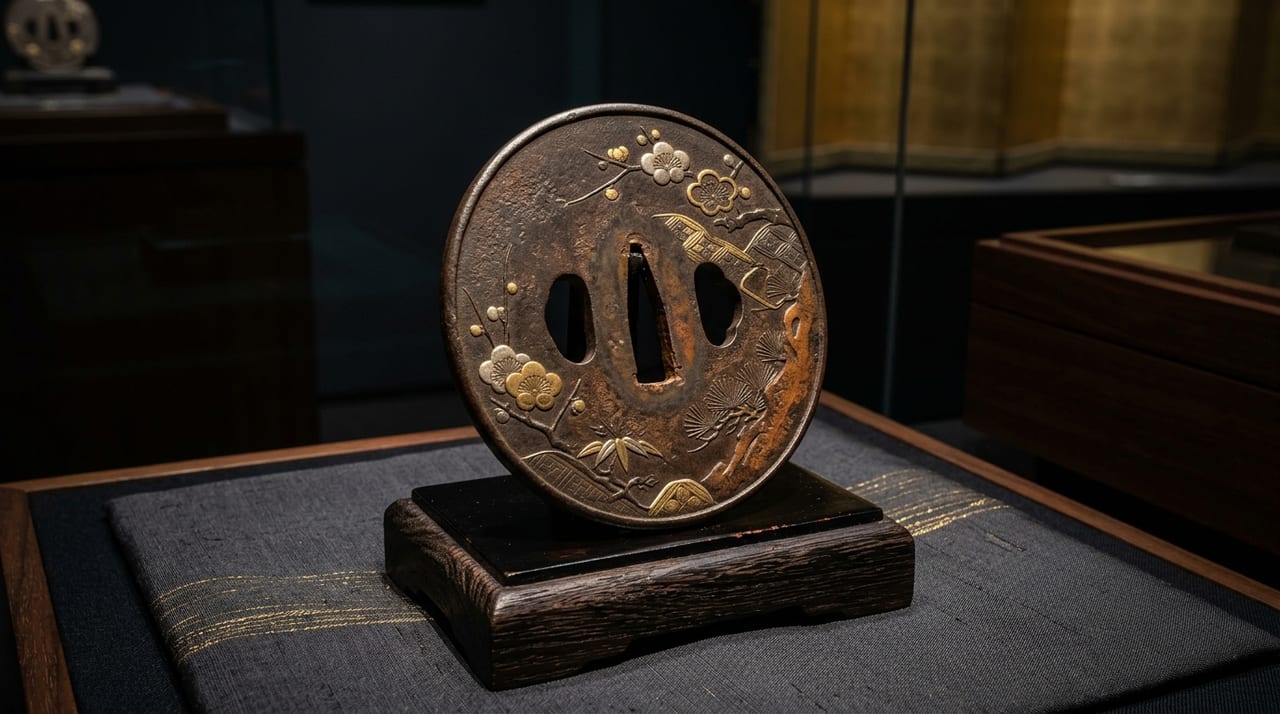
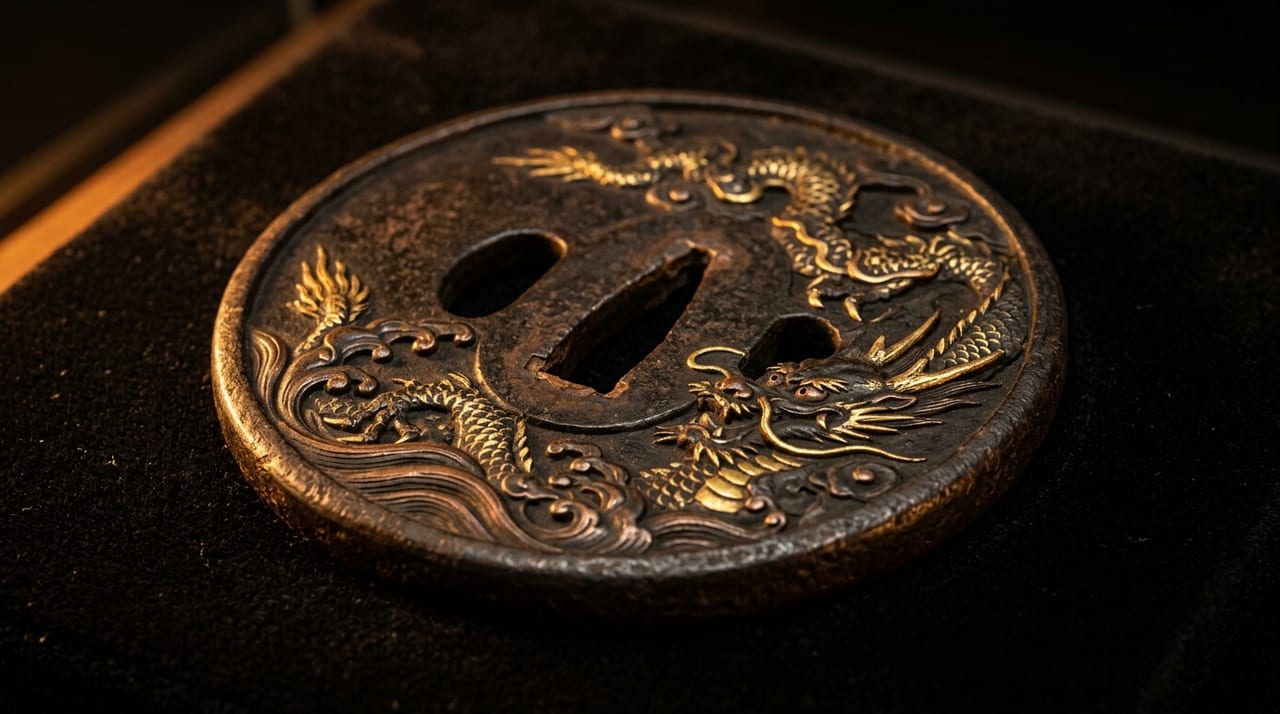
Auspicious patterns (kisshō mon'yō) wishing for happiness, long life, and prosperity were also widely used on tōsōgu. The crane and tortoise symbolize longevity; the pine, bamboo, and plum (shōchikubai) signify good fortune; and the collection of treasures (takarazukushi) represents wealth and luck. The dragon is said to convey authority and spiritual power, while the lion denotes protection against evil and guardianship, and such propitious designs were favored. For samurai households, the sword was both a tool of self-protection and a symbol of the soul, and auspicious patterns reflect that spirit of prayer.
Patterns from Stories and Historical Anecdotes
Designs drawn from classical literature, historical anecdotes, and legends were also important subjects for tōsōgu. Scenes from waka poetry and prose narratives, figures from Chinese historical tales, and the world of nō and yōkyoku were all rendered with skill on the limited surface of metal fittings. The key to understanding such patterns lies in knowing the stories and sources behind them. Those who shared a common education could read meaning from the designs and communicate with one another — sword mountings were also a space for such cultural dialogue.
Patterns from Nature and the Seasons
Plants and natural scenery of the four seasons were also frequently incorporated into tōsōgu. Natural motifs long cherished by the Japanese — cherry blossoms, autumn foliage, chrysanthemums, waves, and the moon — lend a sense of season and elegant refinement to sword mountings. Even with the same subject, the artist's sensibility shows through in the composition and manner of abbreviation, which is one of the pleasures of appreciation.
Considering Material and Technique Together
When reading the meaning of a pattern, understanding what material it is worked in and what technique was used gives depth to one's comprehension. In addition to forged iron, the base metal of tsuba employs colored alloys (irogane) such as shakudō, suaka, shinchū, and shibuichi, and the tone of the base metal itself determines the expression of the design. Representative techniques include sukashibori (pierced carving, in which the base metal is cut away to render the design), zōgan (inlay, in which a different metal is embedded), takabori (relief carving, which causes the design to stand out), and line-engraving methods such as kebori and katakiri-bori.
Even with the same cherry blossom design, rendering it in iron sukashibori gives a crisp, austere impression, while rendering it in irogane takabori creates a brilliant, ornate one. The combination of design and technique reflects the preferences of the patron and the aesthetic sensibility of the era.
A Practical Method for Reading Patterns
When actually standing before a piece of tōsōgu, observing in the following order makes it easier to arrive at the meaning of the design.
- Identify the subject: First determine whether what is depicted is a plant, an animal, an object, a figure, or a geometric pattern.
- Examine the combination: Is there a single motif or a combination of several? There are many conventional pairings of flora and fauna, and the combination itself can indicate a season or a narrative.
- View both front and back: Tsuba sometimes carry compositions in which the design continues across both faces. When the meaning is not complete from one side alone, the continuation of the story may be hidden on the reverse.
- Read the negative space: Japanese design prizes abbreviation and empty space. The unrendered areas are also part of the expression — an unpainted expanse may suggest the surface of water or a night sky.
Overlapping Layers of Meaning
A single design can carry multiple layers of meaning. A plant motif used as a kamon, for instance, may simultaneously be read as a seasonal scene and as an auspicious emblem. Which meaning was intended can only be inferred from the overall combination of the sword mounting and the circumstances of its provenance, but this very ambiguity is what gives pattern appreciation its depth. Rather than rushing to find a single definitive "correct" answer, cultivating an attitude of enjoyment through multiple overlapping readings is the best way to engage with this field.
Points to Bear in Mind When Appreciating and Collecting
There are several points to keep in mind when deepening one's appreciation of patterns. First, do not rush to identify the design. There are many plant and object motifs of similar form, and jumping to conclusions based on assumption will lead to misreading the original meaning. The habit of checking comparable examples in catalogues and reference works is important.
Next is the matter of storage and handling. Touching tsuba and metal fittings with bare hands causes the oil from one's skin to lead to rust and discoloration, so after viewing them, wipe them lightly with a soft cloth and store them in a paulownia (kiri) box or similar container, away from humidity. Polishing irogane tōsōgu with an abrasive will destroy the surface patination, so as a rule one should avoid cleaning them by one's own methods.
Furthermore, some tōsōgu bear the mei of the maker while others do not. Rather than judging value solely by the presence or absence of a mei, first looking at the quality of the work itself — the conceptual power of the design and the skill of the carving — is the surest path to cultivating a discerning eye.
The Pleasure of Reading Patterns
Decoding the meaning of patterns is one of the most intellectually rewarding pleasures of appreciating tōsōgu. Observe what is depicted, consider what the design symbolizes and what stories or prayers it bears — through that accumulation of attention, each individual fitting begins to speak eloquently.
At TOUKENZA, you can also view listed swords and their sword mounting designs in our online listings. Knowing the meaning of patterns will broaden your world of sword mountings further. For any works that interest you, please feel free to reach out via the inquiry form.