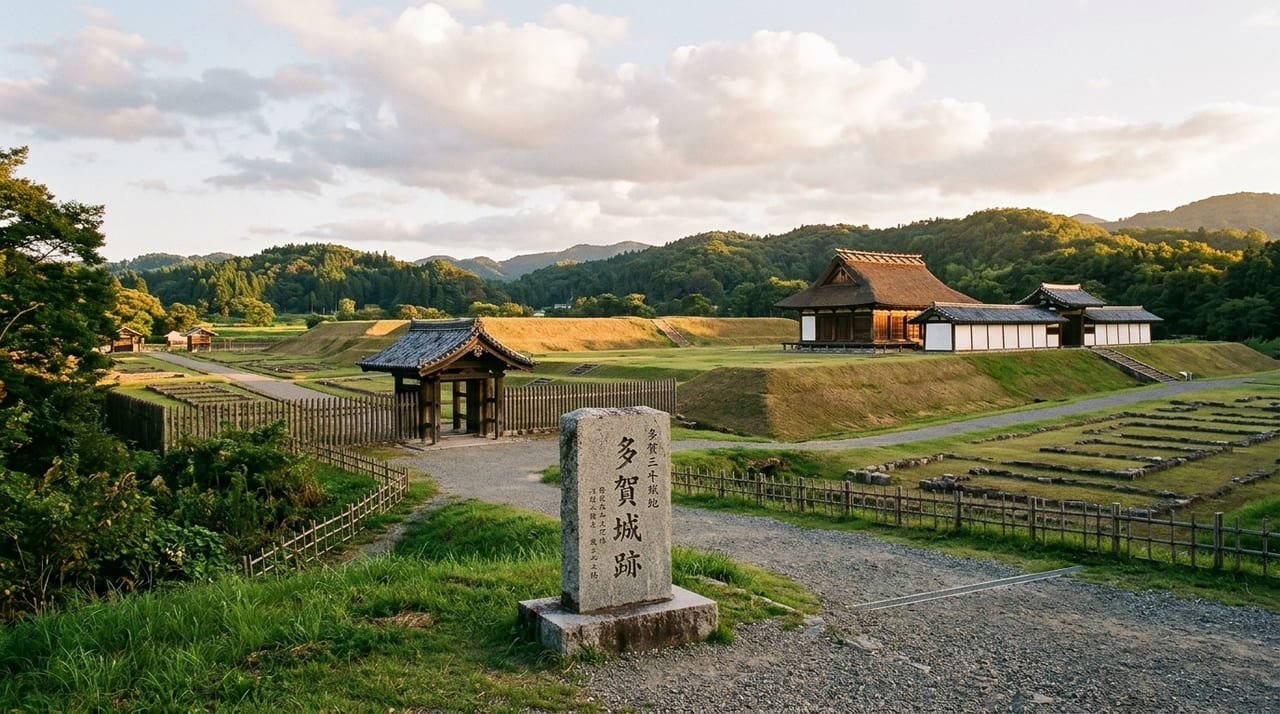
 * Image is for illustrative purposes only.
Yamabuki Castle
山吹城
Yamabuki Castle is a historic castle in the Chūgoku region (A precursor is surmised from the late Kamakura to early Nanboku-chō; abandoned around 1601). Its lord was The Ōuchi, Amago and Mōri clans; later the Tokugawa shogunate (Ōkubo Nagayasu).
Overview
Overview
Yamabuki Castle was a mountain castle in Iwami Province, now Omori-cho, Oda City, Shimane Prefecture. Built on Mt. Yōgai (414 m, about 200 m above its base), it guarded the Iwami Silver Mine. The site is part of the National Historic Site "Iwami Ginzan Silver Mine Site" and is included in the World Heritage property inscribed in 2007.
Construction
Tradition says the Ōuchi built it in the Enkyō era (from 1309), but sources disagree on the builder and date, and the exact year is unknown. A precursor facility is surmised to have existed between the late Kamakura and early Nanboku-chō periods.
Contest for the Silver Mine
The Iwami silver mine was fought over by the Ōuchi, Amago and Mōri. The local lord Ogasawara Nagataka seized it in 1530, but the Ōuchi retook it in 1533 and strengthened its defenses. Amago Tsunehisa occupied the mine in 1537, and the Ōuchi-Amago struggle continued. It later fell under Mōri influence; in 1562, after Honjō Tsunemitsu of the Amago side surrendered, Mōri Motonari had him assassinated, and a retainer of Kikkawa Motoharu was posted.
Tokugawa Rule and Abandonment
After Sekigahara in 1600 the mine became shogunal land and Ōkubo Nagayasu took charge. He renovated the castle and set up a fukiya (silver refinery), but moved his base to the Omori magistrate's office the next year, and the castle was abandoned around 1601.
Structure
A main enclosure of about 52 by 32 meters lies near the summit, defended by at least 19 confirmed groups of vertical moats, earthen ramparts, dry moats and stone walls. Stone walls exist only on the north side of the main enclosure facing the Omori settlement and are thought to have been meant for display. There was no tenshu.
Present Condition
Dry moats, ramparts, wells and stone walls remain. The gate of Saihon-ji at the foot is sometimes said to be a relocated main gate, but Oda City treats it as an early Edo building, distinct from castle remains.
Connection to Swords
No source tying the castle to a specific sword has been confirmed. It was the stage of Sengoku struggles over control of the silver mine.
Highlights
- A mountain castle on Mt. Yōgai guarding the Iwami Silver Mine
- Contested by the Ōuchi, Amago and Mōri together with the mine
- At least 19 groups of vertical moats confirmed
- Abandoned around 1601 when Ōkubo Nagayasu moved to Omori
- Part of the Iwami Ginzan site and its World Heritage property
* Opening hours and admission fees are subject to change. Please check the official website before visiting.