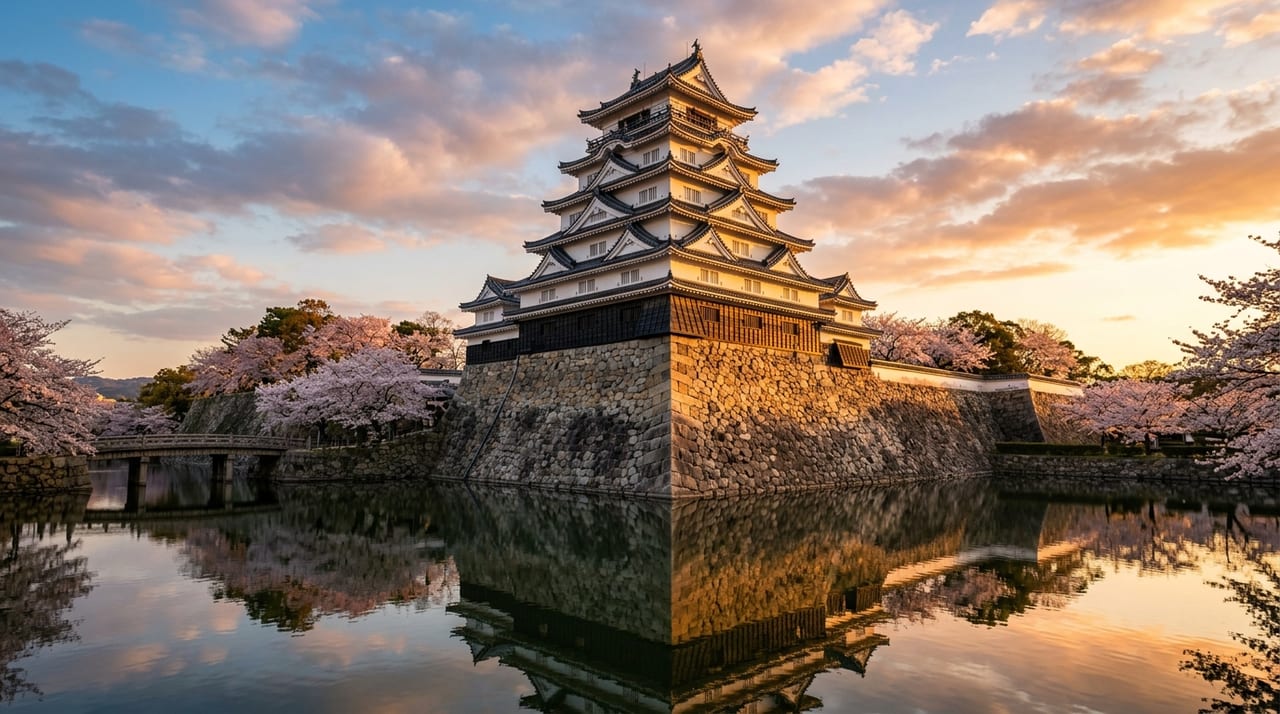
 * Image is for illustrative purposes only.
Ōuchi Clan Residence (Ōuchi-shi Yakata)
大内氏館
Ōuchi Clan Residence (Ōuchi-shi Yakata) is a historic castle in the Chūgoku region (Nanboku-chō to Muromachi period (construction begun in the late 14th century and developed in the early 15th), abandoned in 1557 with the fall of the Ōuchi clan). Its lord was Ōuchi Hiroyo (who moved the clan seat to Yamaguchi and began construction), successive heads including Norihiro, Masahiro, Yoshioki, and Yoshitaka, and Ōuchi Yoshinaga (the last head).
Overview
Overview
The Ōuchi Clan Residence is the site of the seat of the Ōuchi, shugo daimyo who ruled Suō and Nagato and extended their influence across western Japan. It was not a castle with a tenshu but a rectangular manor modelled on the shogunal residences of Kyoto, some 160–170 m on a side and enclosed by moats and earthen ramparts. Together with the Tsukiyama site, Takanomine Castle, and the Ryōun-ji site, it forms the National Historic Site "Ōuchi Clan Ruins, with the Ryōun-ji Site."
Founding and History
Ōuchi Hiroyo, who subdued Nagato in the Nanboku-chō period and united Suō and Nagato, moved the clan's seat to Yamaguchi and is said to have begun building the residence as part of laying out a city on the Kyoto model. Excavation suggests the manor took its developed form around the time of Ōuchi Norihiro in the early 15th century. It then served as the administrative center for successive heads — Masahiro, Yoshioki, and Yoshitaka — and Yamaguchi flourished as the heart of Ōuchi culture, styled the "Kyoto of the West." Yoshitaka perished in the Tainei-ji Incident of 1551, and in 1557 the last head, Ōuchi Yoshinaga, withdrew before Mōri Motonari's invasion, leaving the residence abandoned.
Structure and Remains
An auxiliary villa known as the Tsukiyama Residence stood to the north of the manor. Excavation within the compound revealed both a pond-and-spring garden with a distinctive gourd-shaped pond and a dry landscape (karesansui) garden, and both have been restored. Cycads said to date from 1488 are also preserved. The western gate has been reconstructed and portions of the moat and rampart are marked out on the ground.
Connection with Swords
The Ōuchi controlled the tally (kangō) trade with Ming China and built their wealth on the trade missions sent across the sea. Armour, helmets, and Japanese swords were among the goods carried, and the record of the 1547 mission notes that large numbers of tachi, long swords, and spears were prepared as gifts for the Ming emperor. The residence served as the seat of government that directed this trade, swords included.
Present State and Access
The site today lies within the precincts of Ryūfuku-ji, the temple that honours Ōuchi Yoshitaka, where the garden remains and the reconstructed western gate are open to visitors. In 2017 it was selected, together with Takanomine Castle, among the Continuation of Japan's Top 100 Castles (No. 174). Within walking distance of Kami-Yamaguchi Station on the JR Yamaguchi Line.
Connection to Swords
The Ōuchi controlled the tally (kangō) trade with Ming China and grew wealthy on the missions sent across the sea. Armour, helmets, and Japanese swords were among the exports and diplomatic gifts; the record of the 1547 mission notes that large numbers of tachi, long swords, and spears were prepared as presents for the Ming emperor. The residence was the seat of government that directed this trade, swords included.
Highlights
- The rectangular manor at the heart of Ōuchi culture, in the city styled the "Kyoto of the West"
- Excavated and restored gardens — a pond-and-spring garden with a gourd-shaped pond, and a dry landscape garden
- The seat that directed the Ming tally trade, sending Japanese swords abroad as exports and diplomatic gifts
- National Historic Site "Ōuchi Clan Ruins, with the Ryōun-ji Site"; Continuation of Japan's Top 100 Castles (No. 174)
* Opening hours and admission fees are subject to change. Please check the official website before visiting.