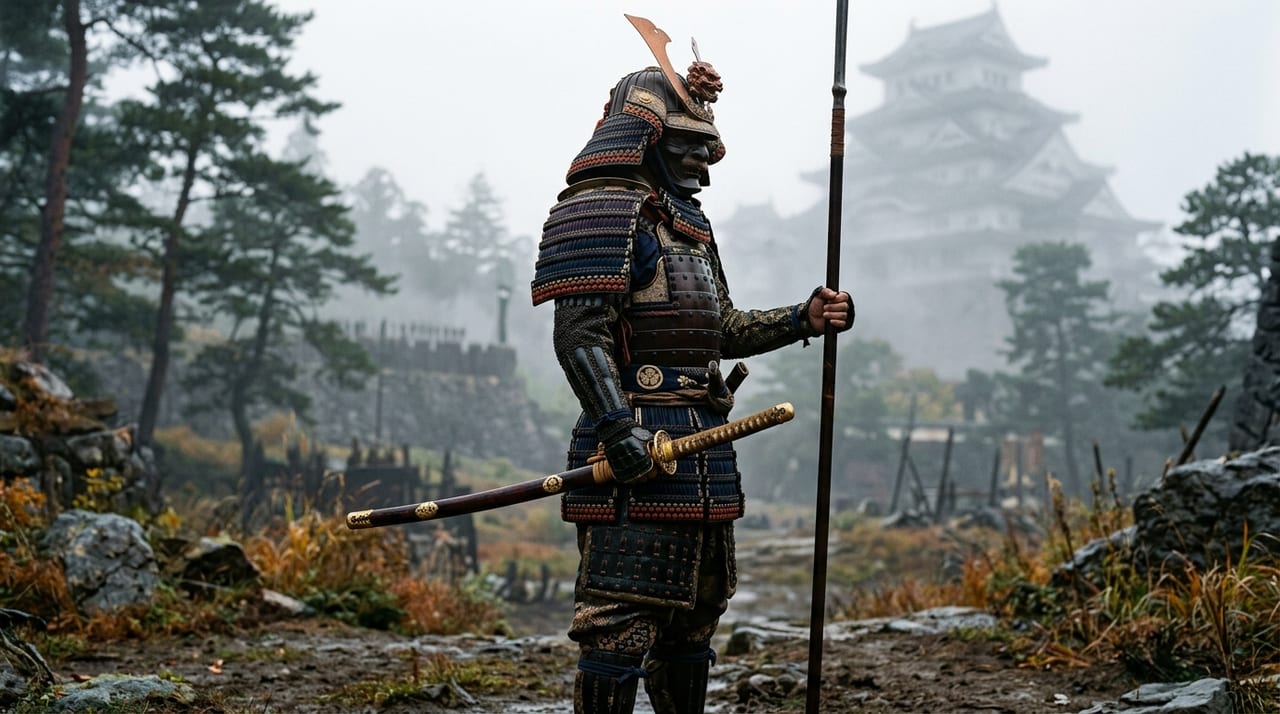
 * Image is for illustrative purposes only.
Taira no Kiyomori
平清盛
The First Warrior to Become Grand Minister of State
Description
A Man at the Summit of the Warrior Class
Taira no Kiyomori was born in Gen'ei 1 (1118). Though a warrior, he rose to Daijō-daijin, the highest post in court aristocratic society, and as the forerunner of warrior rule he was a revolutionary figure who fundamentally transformed Japan's power structure. Through two political upheavals, the Hōgen Rebellion (1156) and the Heiji Rebellion (1159), he eliminated his rivals one after another, and in Nin'an 2 (1167) he was appointed Daijō-daijin. This was an unprecedented position for a warrior, and it meant that Kiyomori reigned over the court nobility beyond the bounds of his warrior status. As the saying “Those who are not of the Taira are not people” symbolizes, at the height of Taira power the clan monopolized many of the high offices of the court. Kiyomori's daughter Tokuko entered the imperial palace and bore Emperor Antoku, forming a blood tie with the imperial house.
Tachi Culture of the Late Heian Period
The late Heian period, when Kiyomori was active, was the era in which the tachi reached its most refined form in the history of Japanese swords. Slender tachi with deep koshizori and graceful curves were the culmination of fusing the aristocratic aesthetic sense of the age with warrior practicality, and they became the standard for every later form of Japanese sword. Kiyomori actively promoted trade with the Song and developed Ōwada-no-tomari (present-day Port of Kobe). In the Japan–Song trade, swords were also among Japan's export goods. The tachi worn at the waist by Heike warriors were exquisite pieces in which elegant Heian culture and warrior fortitude came together superbly.
The Genpei Wars and Swords
After defeating Minamoto no Yoshitomo in the Heiji Rebellion, Kiyomori handed down a lenient sentence, exiling Minamoto no Yoritomo, the legitimate heir of the Minamoto, to Izu. This decision later proved fatal. When Yoritomo raised arms in Jishō 4 (1180), the Taira were rapidly driven into a corner. On the battlefields of the Genpei Wars, Taira warriors fought with the finest swords of the age, from famous blades associated with the imperial house, such as Kogarasu-maru, to tachi forged by renowned smiths across the land. When the Taira were destroyed at the Battle of Dan-no-ura (1185), legend says the Kusanagi sword, one of the Three Sacred Treasures, sank into the sea. This has been passed down as a historical tragedy symbolizing the bond between swords and sovereignty.
Legacy as the Forerunner of Warrior Rule
The warrior rule that Kiyomori realized was institutionalized when Yoritomo founded the Kamakura shogunate, and it became the starting point of a history in which warriors governed Japan for seven centuries. For warriors to hold power meant that swords became not merely weapons but symbols of political power. After Kiyomori's era, the exchange of famous swords became an indispensable ritual for political alliances and for establishing lord–vassal relations, and the cultural status of swords rose dramatically. It can be said that the arrival of the “age of the warrior” that Kiyomori opened created the historical conditions that elevated Japanese swords to art crafts.
Itsukushima and the Japan–Song Trade
Kiyomori venerated Itsukushima Shrine as his clan deity and developed the present offshore shrine buildings. The dedication of the ornate decorated sutra known as the Heike Nōkyō shows the rich aesthetic sense and cultural level of the Taira clan. At the same time, the vast wealth accumulated through the Japan–Song trade supported the Taira's military power and cultural activities. Kiyomori's role was also significant in that the circulation of Song coins laid the foundation of a monetary economy.
Fever and Death
In Jishō 5 (1181), Kiyomori fell ill with a high fever and died at the age of 64. It is said that he left a will: “Use Yoritomo's head to make offerings for my remains.” But this wish was not fulfilled. In the following year the decline of the Taira began, and only four years after Kiyomori's death the Taira were destroyed at Dan-no-ura. The Taira era was brief, but the template of warrior government and the legacy of tachi culture that Kiyomori left have had immeasurable influence on Japan's later history and sword culture.
Notable Swords
- Heike denrai no tachi (graceful tachi with deep koshizori, representing the late Heian period; the finest works worn at the waist by Heike warriors in battle)
- Kogarasu-maru (a treasure sword associated with the Taira family; a venerable tachi said to have been bestowed by the emperor on Taira no Sadamori, and a blade symbolizing the prestige of the Taira)