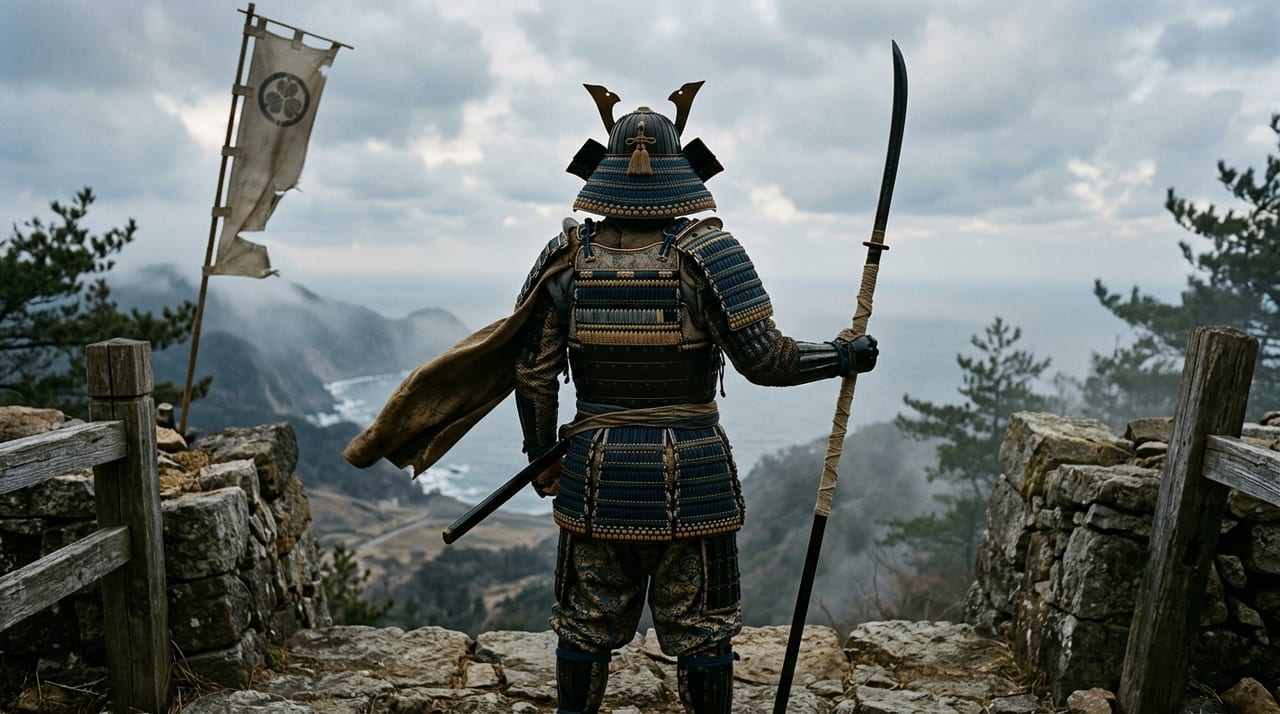
 * Image is for illustrative purposes only.
Kumagai Naozane
熊谷直実
Warrior Who Killed Taira no Atsumori at Ichinotani, Later Became a Monk
Description
Kumagai Naozane (1141-1207; according to one account, he died in 1208) was a warrior of the late Heian and early Kamakura periods, and a Bandō warrior whose base was Kumagai in Musashi Province (present-day Kumagai City, Saitama Prefecture). He followed Minamoto no Yoritomo and Minamoto no Yoshitsune in the Genpei War, and he is remembered by later generations especially for his single combat with Taira no Atsumori at the Battle of Ichi-no-Tani (1184). He is also known for later taking Buddhist vows, becoming a disciple of Hōnen, and calling himself Renshō.
Naozane was born into a samurai family in the Kumagai district of Musashi Province. Initially he belonged to the Taira side, but when the Jishō-Juei War (Genpei War) began, he followed Minamoto no Yoritomo's rising and served as a vanguard of the eastern warriors. In the Battle of Ichi-no-Tani, fought under the command of Minamoto no Yoshitsune, Naozane came upon Taira no Atsumori, a Taira warrior fleeing along the beach (a youth of seventeen according to The Tale of the Heike).
Naozane tried to pin Atsumori down and take his head, but when he removed Atsumori's helmet, the face he saw was that of a youth about the same age as his own son, and he was moved. He tried to spare him, but soldiers of his own side were approaching from behind, and Naozane judged that if he let Atsumori escape, another man would kill him. He is said to have taken Atsumori's head in tears, saying: “If he must die in any case, let me be the one to kill him, and I will perform memorial services for him in the afterlife.” This scene is known as a celebrated passage of The Tale of the Heike, and it has been passed down deeply through later generations as an anecdote that embodies “the sorrow of the warrior.”
The Tale of the Heike describes how this experience further strengthened Naozane's desire to renounce the world. Later, Naozane handed his family headship to his eldest son, Kumagai Naoie, took Buddhist vows, took refuge in Hōnen's teaching of the exclusive nenbutsu, and took the name Renshō. The life of the warrior known as Kumagai Naozane thus turned completely into the life of a nenbutsu monk. This is regarded as a typical example of a warrior's spiritual transformation after experiencing “mujō” (impermanence), and it is considered an important case in the study of Japanese Buddhist literature and bushidō.
In his childhood Naozane was called Yumiyamaru, and he was a Bandō warrior known as a master archer. Today, Kumagai-ji temple (Yūkoku-ji) in Kumagai City, Saitama Prefecture, has a grave and a seated statue of Naozane, and the Okunoin of Mount Kōya has the graves of Naozane and Atsumori side by side.