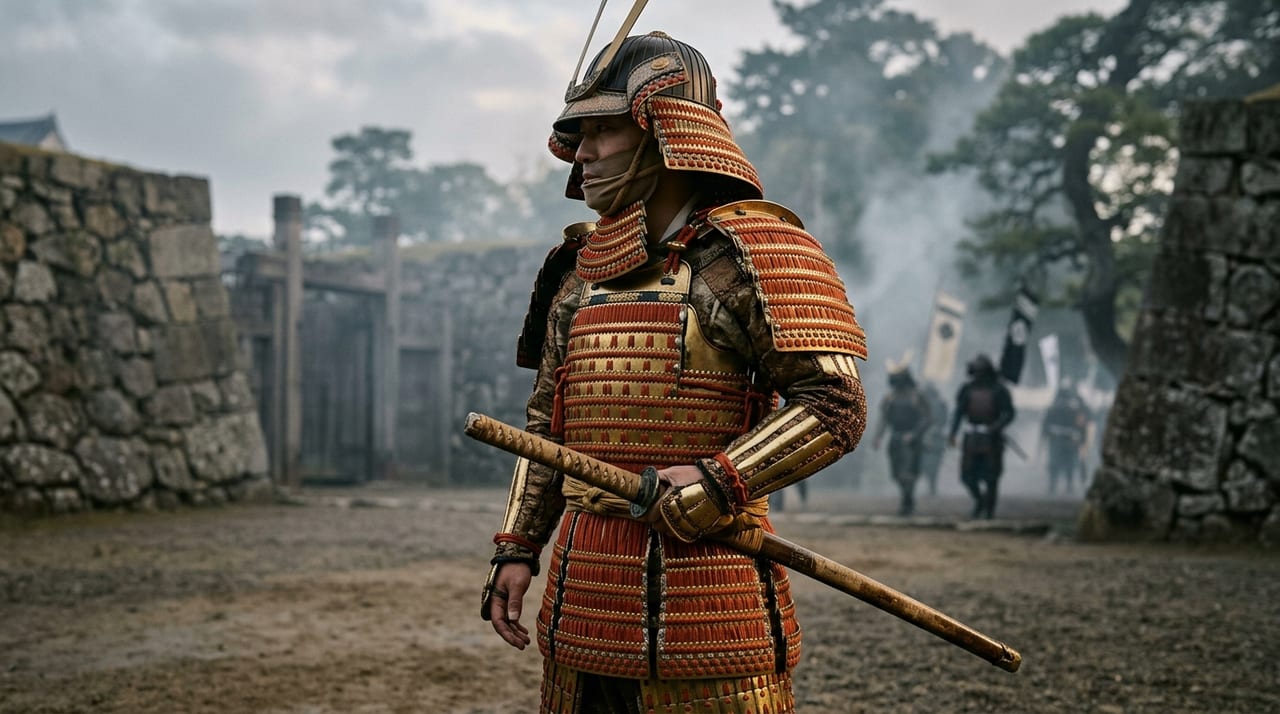
 * Image is for illustrative purposes only.
Minamoto no Yoshitomo
源義朝
Tragic Warrior of the Heiji Rebellion — Father of Yoritomo
Description
Minamoto no Yoshitomo (1123-1160) was a leading warrior of the late Heian period and the father of Minamoto no Yoritomo, who later founded the Kamakura shogunate. He served as Governor of Shimotsuke and Head of the Left Imperial Stables, and built his power base in the eastern provinces. In the Hōgen Rebellion (1156), he fought on the side of Emperor Go-Shirakawa alongside Taira no Kiyomori and earned great distinction by defeating the forces of Retired Emperor Sutoku. Later, in the Heiji Rebellion (January 1160; 12th month of Heiji 1), Yoshitomo allied with Fujiwara no Nobuyori, brought down Shinzei (Fujiwara no Michinori), and carried out a bold coup in which Retired Emperor Go-Shirakawa was confined.
However, Yoshitomo was inferior to Taira no Kiyomori in military strength. When Kiyomori returned to Rokuhara and counterattacked, Yoshitomo was forced into retreat. While fleeing toward the eastern provinces, he was betrayed by his retainer Osada Tadamune at Noma in Owari Province (present-day Mihama, Chita District, Aichi Prefecture) and assassinated while bathing. His final words, "If only I had even a single wooden sword," are passed down as a famous saying that plainly expresses the regret of a warrior who was killed without a sword.
Yoshitomo was a warrior with the leadership to unite the warrior bands of the eastern provinces. His beloved sword is also said to have been called "Higekiri," and it was respected as a sword handed down through generations of the Minamoto clan. The tragic end of Yoshitomo, and the later overthrow of the Taira clan by his sons Yoritomo, Yoshitsune, and Noriyori, who established a warrior government, is one of the greatest dramas in Japanese history. As a contemporary hero alongside Taira no Kiyomori, Yoshitomo embodied the transitional period in which the culture of swords came to be placed at the center of warrior society.
Notable Swords
- Higekiri (Hereditary Minamoto Tachi)
- The Legend of the Wooden Sword at Noma, Owari