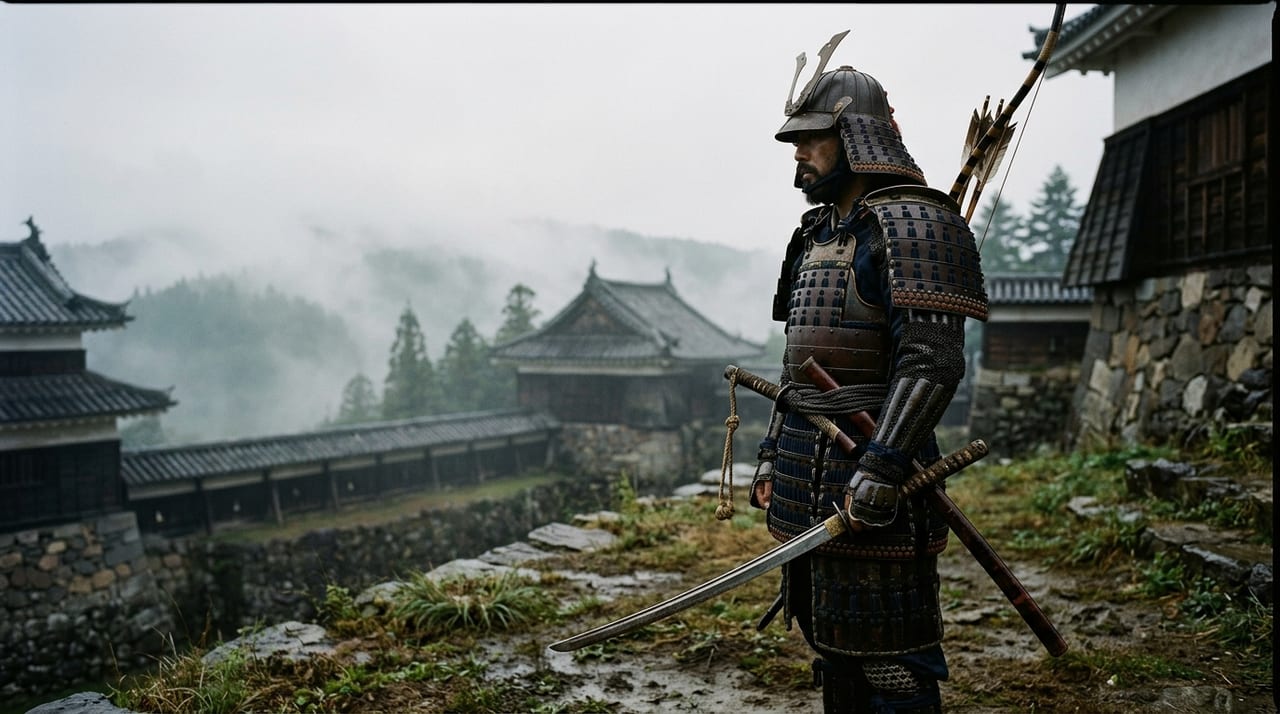
 * Image is for illustrative purposes only.
Taira no Shigemori
平重盛
Minister of the Interior at the Height of Taira Power, Warrior of Benevolence
Description
Taira no Shigemori (1138–1179) was a military commander and senior court noble of the late Heian period, and the eldest son of Taira no Kiyomori. He was active during the height of the Taira clan's power. While his father Kiyomori stood at the peak of power, Shigemori held key posts such as Minister of the Center (Naidaijin) and Major Captain of the Left Palace Guards, and he worked to sustain the government while leading the Taira clan.
Shigemori differed in character from his father Kiyomori and was known as a just, gentle and sincere man. In The Tale of the Heike, he is portrayed as the voice of reason within the Taira clan, and he is especially praised as a rare figure trusted by both the imperial court and the warrior class. When the Shishigatani Incident came to light in 1177 (Jishō 1), he remonstrated with Kiyomori, who called for the punishment of Retired Emperor Go-Shirakawa, and showed consideration for the Retired Emperor. It is also said that the Retired Emperor's safety was protected through Shigemori's mediation, and his benevolent conduct left a deep impression on later generations.
As a warrior, Shigemori supported his father Kiyomori and contributed to victory in the Heiji Rebellion (1159). In Nin'an 2 (1167), he received an imperial edict to suppress mountain bandits and pirates on the Tōsandō, Tōkaidō, San'yōdō and Nankaidō circuits. In terms of court rank, he was granted Junior Third Rank and joined the senior court nobles (kugyō) in Ōhō 2 (1162), and in Chōkan 3 (1165) he was appointed Councillor (Sangi). As the Taira clan increasingly became part of the court nobility, he came to represent his clan in both military and political power.
In relation to Japanese swords, the long sword “Kogarasu (Kogarasumaru)” is recorded in the Genpei Jōsuiki as a treasure passed down to the Taira main line, together with the armor “Karakawa.” Kogarasumaru is currently held by the National Institutes for Cultural Heritage as part of the Imperial Household collection (gyobutsu).
In 1179, Shigemori fell ill and died at the young age of forty-two. His death is often said to mark the beginning of the Taira clan's tragedy, and many assess that had he lived, his gentle political ability might have prolonged the survival of the Taira house. As a figure who embodies the sorrow of “the impermanence of all things and the fall of the mighty” in The Tale of the Heike, Shigemori also holds an important place in Japanese classical literature.
Notable Swords
- Kogarasu (Kogarasumaru) (treasured long sword passed down in the Taira main line; currently part of the Imperial Household collection)