Sword Culture of the Mid-to-Late Heian Period — The Rise of the Warrior Class and the Development of the Tachi on the Eve of the Genpei War
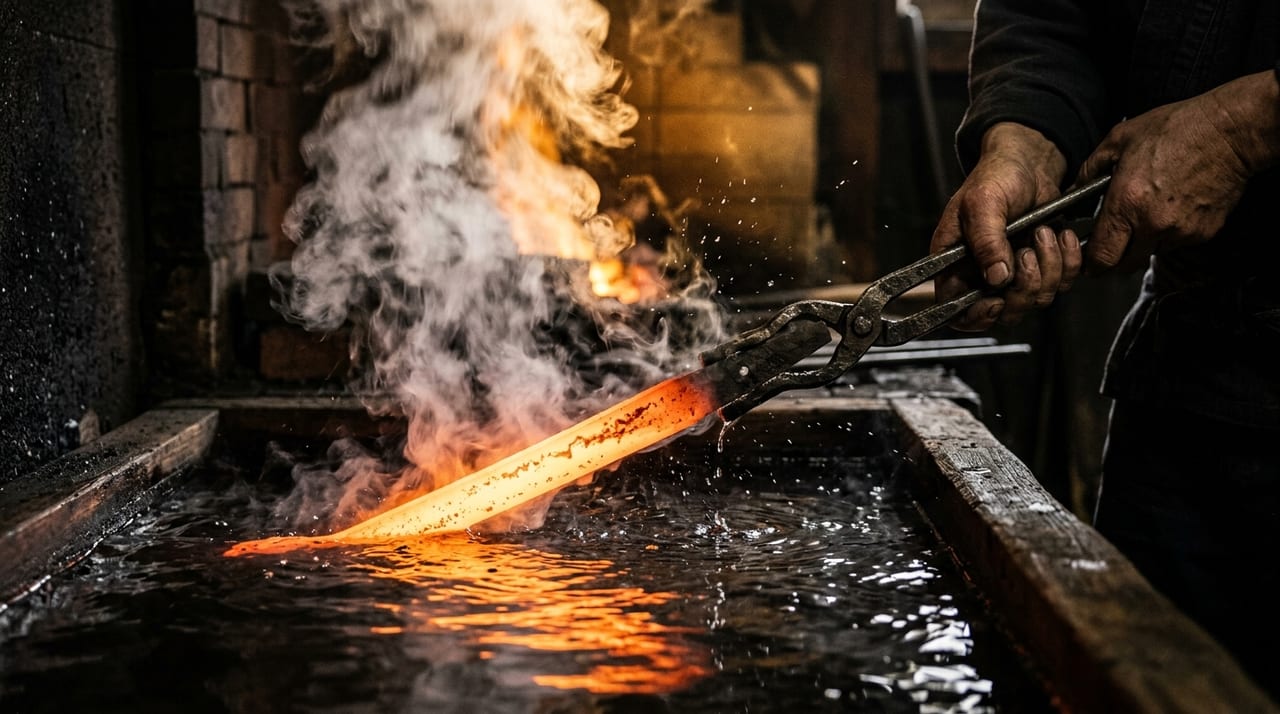 * Image is for illustrative purposes only.
Table of Contents
The Birth of the Nihontō — From Straight Blade to Curved Sword
The mid-Heian period (9th–10th centuries) was one of the most fundamental turning points in the history of the nihontō. Swords of the preceding Nara period and early Heian period were known as chokutō (straight swords) and were straight-bladed weapons strongly influenced by the continent (Tang China). Single-edged or double-edged straight forms closely resembling swords and daggers were the mainstream. However, from the 9th century into the 10th century, blades bearing Japan's own distinctive sori (curvature) began to emerge rapidly.
Behind this change lay the establishment of Japan's own distinctive style of combat. While straight swords were advantageous in the continental infantry-style fighting, in the mounted combat on mountains and in forests that formed the Japanese warrior's battlefield, curved blades were far better suited to the downward strikes from horseback — movements such as kesagiri (diagonal slash) and nōten-karatake (vertical overhead split). Moreover, in the battō (drawing of the sword) motion of pulling the blade from the waist, the sori allowed the blade to be drawn smoothly from the saya (scabbard).
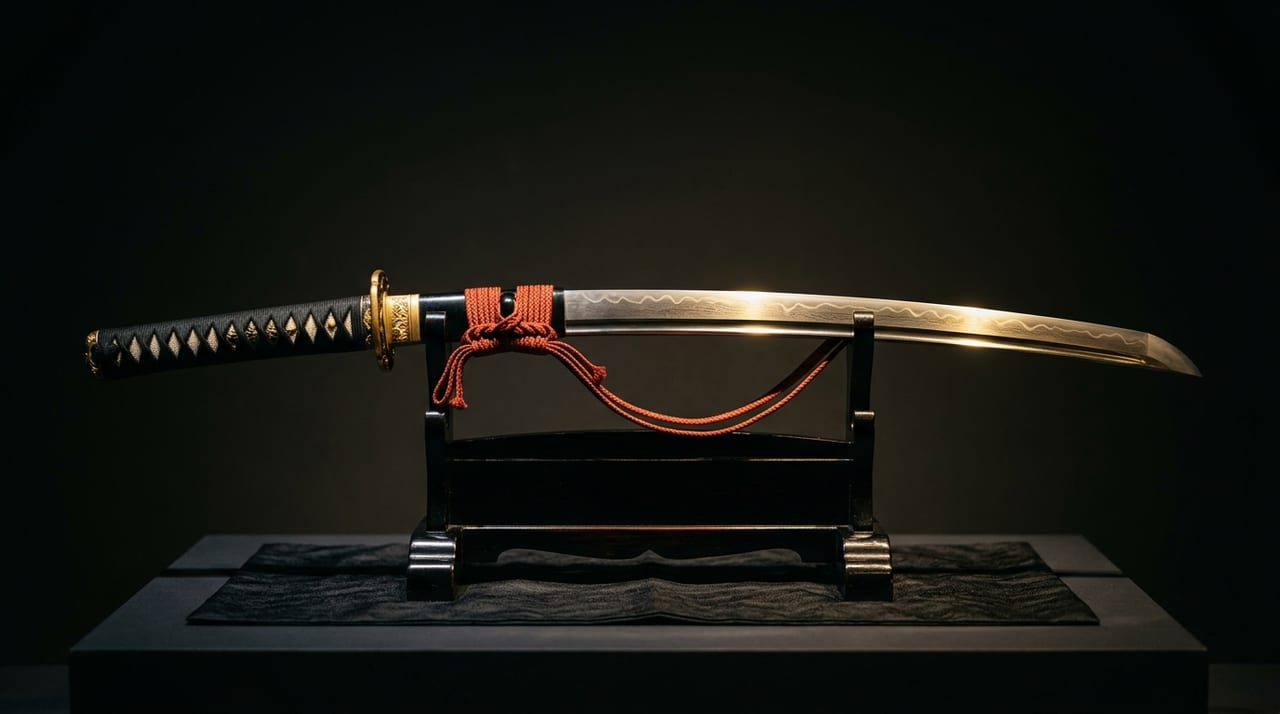
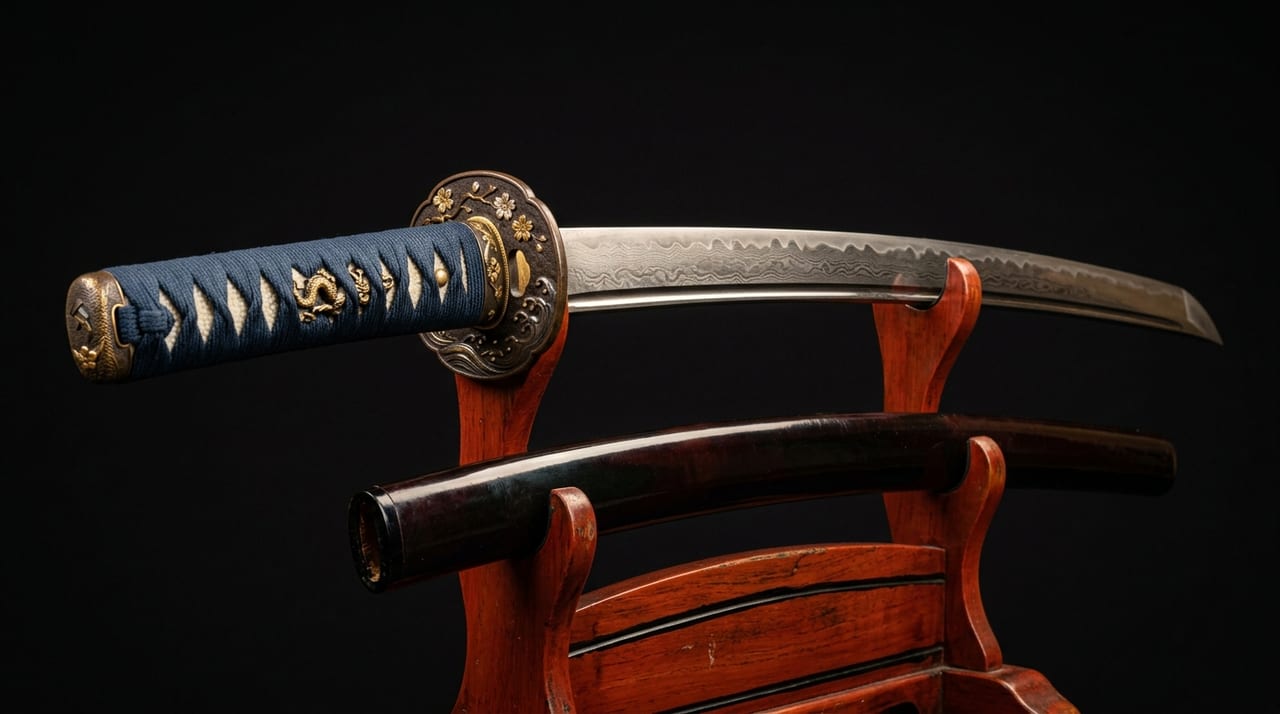
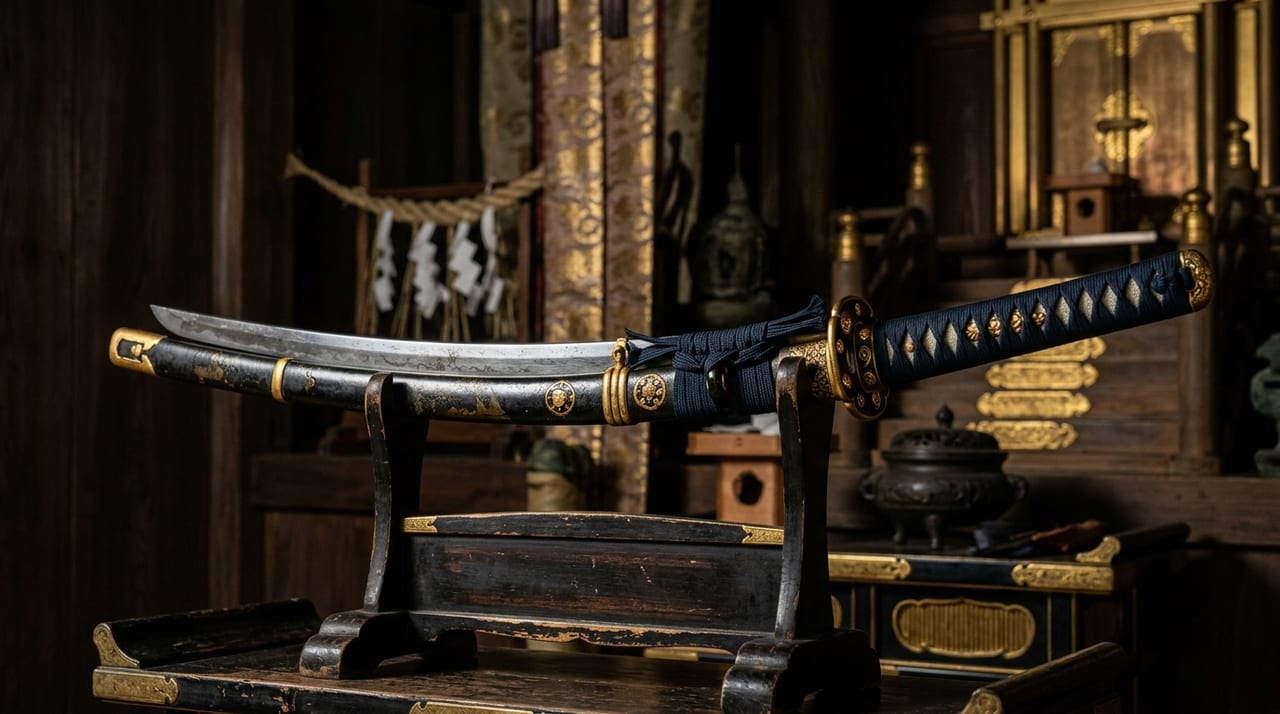
A sword with sori is called a tachi. The tachi's basic wearing style — called haiyō — was to suspend it from the waist with the blade facing downward, and its elegant curve, reaching a blade length of 70–80 cm or more, achieved both functional beauty and practicality. The koshi-zori form — in which the greatest sori lies near the base of the blade — is a characteristic of the Heian period. This tachi form became the mainstream style of the nihontō for the following 400 years. For more on the origins of the tachi, please also see The Origins of the Tachi.
The Rise of the Eastern Warrior Bands — Combat Hones the Sword
In the 11th century, the Former Nine Years' War (1051–62) and the Later Three Years' War (1083–87), which took place in Mutsu Province (present-day Tōhoku region), were campaigns in which the eastern warrior bands centered on the Minamoto clan experienced large-scale actual combat for the first time.
The Minamoto army led by the father-and-son pair Minamoto no Yoriyoshi and Yoshiie proved their strength as an organized military force through these two campaigns. Yoshiie, known by the sobriquet "Hachimantarō," is remembered by posterity as a commander who established a style of combat combining mounted archery tactics with the tachi. In the course of this, the performance requirements for a sword fit for actual combat — the three conditions of "does not break, does not bend, cuts well" — were concretely put to the test.
Swords of this era had a cross-sectional structure called shinogi-zukuri, in which the shinogi (ridge line) running along the center of the blade achieved high rigidity while remaining thin and lightweight. The relationship between the Tōhoku iron-producing regions (around Iwate and Akita) and the tōkō (swordsmith) is also thought to have begun during this period, and the prototype of a sword culture unique to the eastern provinces was formed in this era.
The Wavering of Court Authority — The Warrior Class Moves to the Fore of Politics
The Hōgen Rebellion (1156) and the Heiji Rebellion (1159) of the mid-12th century were epoch-making events in which warriors came to the forefront of politics, triggered by internal conflicts at court.
In the Hōgen Rebellion, Minamoto no Yoshitomo and Taira no Kiyomori sided with Emperor Go-Shirakawa, while Minamoto no Tameyoshi and Tametomo sided with Retired Emperor Sutoku. Minamoto no Tametomo, feared for his prodigious strength and archery, bore the sobriquet "Chinzei Hachirō," and his martial fame resounded as far as Kyushu. In the Heiji Rebellion, Minamoto no Yoshitomo was defeated by Taira no Kiyomori, and Yoshitomo's son Yoritomo was exiled to Izu. Through this rebellion, Taira no Kiyomori seized the reins of political power, and the golden age of the Taira regime arrived.
During this period, demand for swords surged. Taira no Kiyomori actively promoted trade between Japan and the Song dynasty, and Chinese iron and techniques flowed into Japan; however, the Japanese tōkō fused these with their own traditional techniques and instead achieved a development grounded in a distinctly Japanese aesthetic sense. The tōkō of Yamashiro Province (Kyoto) and Bizen Province (Okayama) began receiving numerous commissions, and competition and technical improvement among the producing regions were encouraged.
The Genpei War — The Nihontō Takes Center Stage in History
The Genpei War (the Jishō-Juei War) of 1180–1185 was a large-scale civil conflict in which the eastern Minamoto and the western Taira wagered the realm. This series of battles — at Fujikawa, Ichi-no-Tani, Yashima, and Dan-no-Ura — made the practical military role of the nihontō known throughout the country.
The many renowned swords that appear in the Heike Monogatari reflect the deep attachment to swords of this era. Kogarasu-maru is a treasured sword handed down through the Taira clan and carries the mythical legend that it was bestowed by Inari Myōjin. The sword Usumidori, said to have been the beloved blade of Minamoto no Yoshitsune, is also said to have been received from Kiichi Hōgen. In the scene where Nasu no Yoichi shoots the fan target, and in Yoshitsune's "eight-boat leap" — behind all these scenes, the sword was ever-present as the mark of a warrior.
The battlefield custom of kubijikken (identification of severed heads), the practice of presenting swords to commanders as battle honors, the ritual of tachi-arai (sword washing) — all of these were established in the late Heian period and formed the cultural foundation that positioned the nihontō as a spiritual symbol beyond a mere weapon.
The Tōkō of the Heian Period — The Dawn of the Three Great Production Centers
Records concerning tōkō of the Heian period are fragmentary, but it can be confirmed that Yamashiro Province, Yamato Province, and Bizen Province were already functioning as major sword-producing centers.
| Production Center | Representative Tōkō / School | Characteristics |
|---|---|---|
| Yamashiro Province (present-day Kyoto) | Sanjō Munechika | The tachi Mikazuki Munechika is said to have been made by imperial command of Emperor Ichijō and even today receives the highest esteem as one of the Tenkagoken (Five Greatest Swords). The small crescent-shaped uchinoké reflected in the blade is said to be the origin of the name, and its delicate jigane (steel of the blade surface) and graceful sori convey to the present day the high level of technical achievement of the late Heian period. It is currently housed in the Tokyo National Museum. |
| Yamato Province (present-day Nara) | Tegai School, Shikkake School, Senjuin School | Sword production took place under close ties with major shrines and temples such as Kasuga Grand Shrine and Tōdai-ji. The Tegai School is known as an entity that combined religious authority with technical excellence, having served as the dedicated kaji (smith) of Kasuga Grand Shrine. |
| Bizen Province (present-day Okayama) | Tomonari | The foundation that would become a major production center was forming as Ko-Bizen. High-quality iron sand and pine charcoal produced in abundance along the Yoshii River basin are the origin of Bizen swords. Tomonari is characterized by bold construction and a powerful irregular hamon (temper line), and his style, which foregrounded martial practicality, was favored by the warriors of the eastern provinces. |
The Achievement of the Late Heian Period — The Spiritual Foundation of Warrior Culture
The sword culture of the mid-to-late Heian period was a run-up to the golden age of the nihontō in the Kamakura period. Through the accumulation of these historical experiences — the completion of the curved tachi, the actual combat experience of the eastern warrior bands, and the Minamoto-Taira civil conflict — the concept of the nihontō as "the soul of the samurai" was born.
On the technical side, the distinctive features of the nihontō — shinogi-zukuri, koshi-zori, bōhi, and chōji-midare — were established in this era, and a purely Japanese sword beauty free from continental influence was nearing completion. The three production centers of Yamashiro, Yamato, and Bizen were competing and inspiring each other, and the groundwork for each to form its own distinct "den" (tradition) was also cultivated in this era.
The late Heian period — where the aesthetic of mono no aware intersected with the harsh reality of the warrior's life. Perhaps nothing embodied the spirit of that age more aptly than the form of the tachi, tracing its gentle arc. The swords of the Heian period, beyond their physical existence, formed the spiritual foundation of Japan's warrior culture.