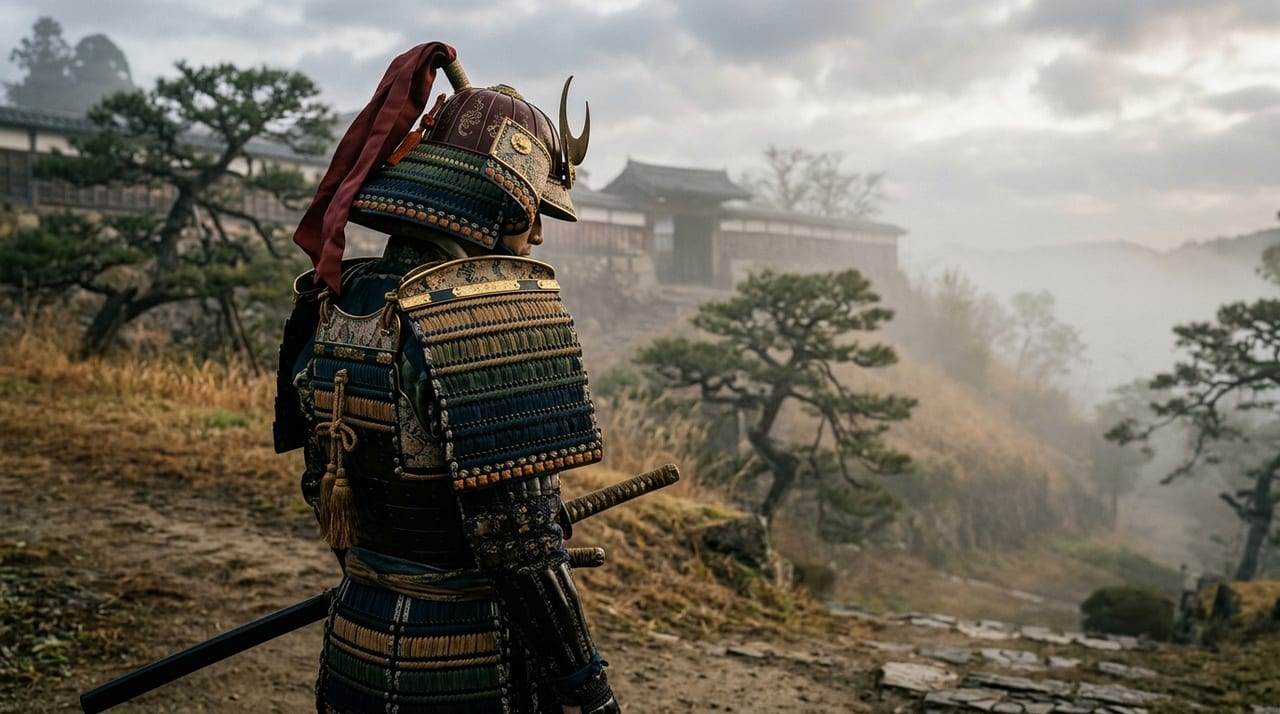
 * Image is for illustrative purposes only.
Okita Sōji
沖田総司
Captain of the Shinsengumi First Division
Description
The Birth of a Genius Swordsman
Okita Sōji, said to have been born in Musashi Province around Tenpō 13 (1842), was a genius swordsman celebrated as the strongest swordsman in the Shinsengumi, serving as captain of the First Unit. There are various theories about his birth year, and one holds that he was born in Tenpō 15 (1844). In any case, as a young genius swordsman of the Bakumatsu period, he is a figure deeply engraved in the hearts of the Japanese people.
Training at Shieikan
Sōji entered Shieikan as a child and began training in Tennen Rishin-ryū. Under the instruction of Kondō Shūsuke, Kondō Isami's adoptive father, his natural talent stood out early. At a young age he served as head student (jukutō) of Shieikan, and Nagakura Shinpachi later recalled that everyone said that if they fought in earnest, even their teacher Kondō Isami would be defeated. In his Shieikan days, Sōji was known as a boy who defeated adult swordsmen one after another in practice, and his extraordinary talent was acknowledged by everyone in the dojo.
Genius of the Shinsengumi
Sōji's signature technique, sandan-zuki (triple thrust), was the most feared technique in the Shinsengumi's swordsmanship. This technique unleashes three thrusts in an instant and was said to be so swift that it looked like a single thrust. The thrust is one of the most advanced techniques in swordsmanship, and the skill to deliver three in succession goes far beyond the range of ordinary people. In actual combat, thrusting techniques are fatal attacks that leave the opponent no room to react.
Fighting at the Ikedaya Incident
In the Ikedaya Incident (Genji 1 (1864)), Sōji led the charge into the Ikedaya. In the close-quarters melee inside the narrow building, Sōji fully displayed his natural swordsmanship and cut down the enemy patriots one after another. However, it is also said that during this fierce fight Sōji coughed up blood, which may have been the first sign of rōgai (tuberculosis). Sōji's exploits at the Ikedaya were decisive in showing the military prestige of the Shinsengumi to the whole country, but at the same time the shadow of the illness that was eroding his life was already creeping up on him.
Beloved Blades: Kashū Kiyomitsu and Yamato-no-kami Yasusada
Sōji's beloved swords are known to be two: Kashū Kiyomitsu and Yamato-no-kami Yasusada. Kashū Kiyomitsu is a work of the smith Kiyomitsu of Kaga Province, and its sharp cutting edge and good handling made it well suited to Shinsengumi combat. Yamato-no-kami Yasusada is a work of the early Edo period smith Yasusada, and Yasusada's blades are well regarded for their sharpness.
The Legend of Kiku-ichimonji
There is also a legend that he possessed Kiku-ichimonji Norimune. Kiku-ichimonji Norimune is a famous blade made by Norimune, the founder of the Fukuoka Ichimonji school in the Kamakura period, and it bears this name because Norimune is traditionally said to have been the chief of the goban-kaji (court smiths) of Retired Emperor Go-Toba. However, there is debate over the credibility of this legend, and some view it as unlikely that a unit captain of the Shinsengumi possessed an ancient famous blade such as Kiku-ichimonji. Yet the very fact that this legend was linked to Sōji shows how transcendent his swordsmanship was.
Illness and Death
From around Keiō 3 (1867), Sōji's tuberculosis rapidly worsened, and he was forced to leave the front lines. For a man who was the strongest swordsman yet could not stand on the battlefield, that anguish must have been as painful as having his sword broken. He could not take part in the Battle of Toba–Fushimi either, and Sōji spent his days recuperating in Edo.
On 19 July 1868 (Keiō 4/5/30), Sōji died at Sendagaya in Edo. His age at death is said to have been in his mid-twenties. The short life of this genius swordsman, who died young in the midst of the Boshin War, has a fleeting beauty like full-bloom cherry blossoms scattering in an instant, and it moves the hearts of the Japanese. The anecdote of his final moments, in which he tried to cut down a black cat that appeared in the garden of the gardener's house, failed, and lamented his own decline, is said to be a creation of Shimozawa Kan. Still, it is widely known as a beautiful episode symbolizing Sōji's ephemeral life. Sōji, who possessed extraordinary sword talent yet passed away without fully displaying it, embodies the aesthetics of mono no aware that the Japanese love.
Notable Swords
- Kashū Kiyomitsu (the work of the smith Kiyomitsu of Kaga Province. Its sharp cutting edge and good handling made it suited to Shinsengumi combat)
- Yamato-no-kami Yasusada (the work of the early Edo period smith Yasusada. Well regarded for its sharpness)