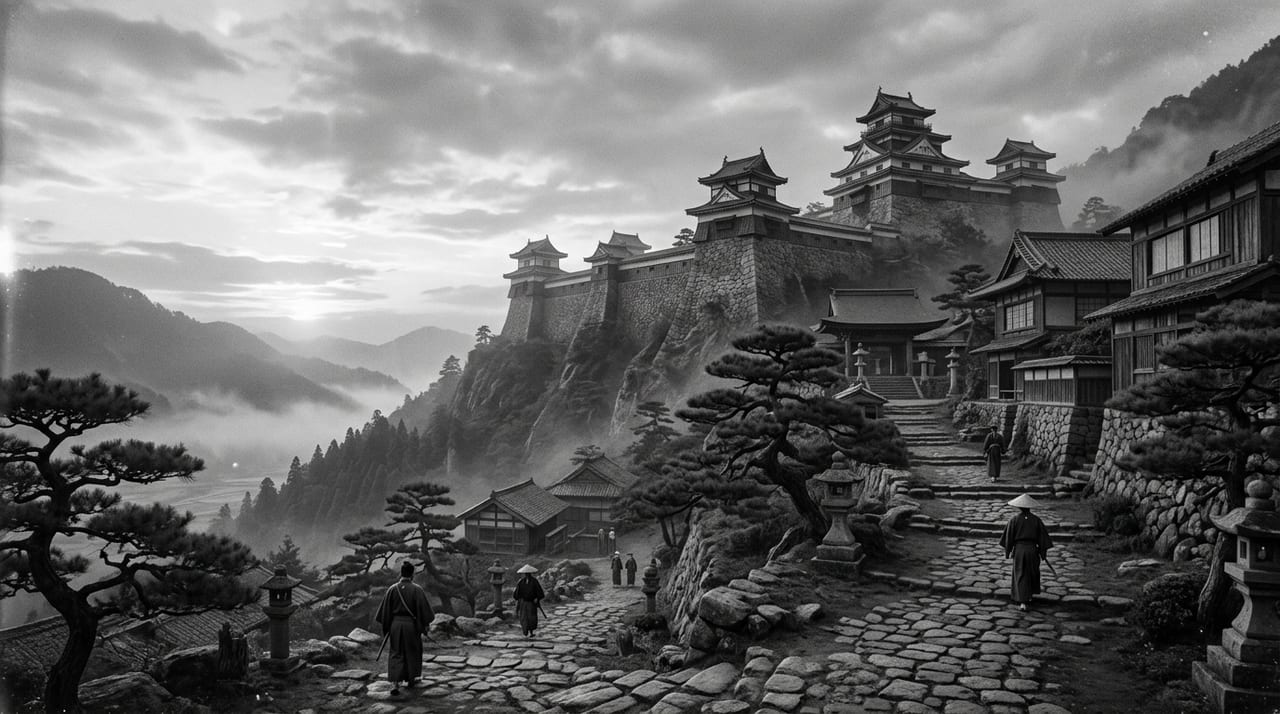
 * Image is for illustrative purposes only.
Sonnō-Jōi and the Swords of Bakumatsu Activists
尊王攘夷と幕末志士の刀剣
The period following the Opening of Japan (1854–), when sonnō-jōi thought spread across the country. The ideological and practical role of swords among Chōshū, Mito, and Tosa activists; the sword cultures of Yoshida Shōin, Takasugi Shinsaku, Sakamoto Ryōma, and Nakaoka Shintarō; and the political dimensions of Bakumatsu sword culture as revealed in the Ikeda-ya Incident and the 1866 attack on Sakamoto Ryōma at the Teradaya.
Description
The Sonnō-jōi — the political philosophy that one should revere the emperor and expel foreign barbarians — rapidly expanded across all of Japan during the Bakumatsu period following the Opening of Japan during the Kaei era (1853–1854). This ideological movement was inseparable from sword culture — for Sonnō-jōi activists, the Japanese sword transcended mere weapon to become "the concrete embodiment of the Japanese spirit, Yamato-damashii," and "the symbol of the will to drive out foreign encroachment."
The Shōka Sonjuku (Village School Under the Pine Tree) in Chōshū domain (present-day Yamaguchi Prefecture), presided over by Yoshida Shōin, stands as the ideological center of the Sonnō-jōi movement. Shōin advocated the philosophy of "sōmō-kutteki" — the ideal that men of conviction should rise regardless of social rank — and educated future leaders of the Meiji Restoration, including Takasugi Shinsaku, Itō Hirobumi, and Yamagata Aritomo. Shōin himself was executed in the Ansei Purge (1859), but his thought was carried into practice by his disciples. His disciple Takasugi Shinsaku organized the Kiheitai (Bunkyū 3, 1863) — a revolutionary fighting organization in which farmers and merchants carrying both swords and guns fought alongside samurai, transcending distinctions of rank.
The Ikeda-ya Incident in the 6th month of Genji 1 (1864) stands as the most symbolically charged event in the relationship between Bakumatsu activists and the sword. The Sonnō-jōi activists deliberating at the inn "Ikeda-ya" in Sanjō, Kyoto, were ambushed by the Shinsengumi (including Kondō Isami, Hijikata Toshizō, and Okita Sōji). In this incident, fierce sword fighting broke out indoors between the Shinsengumi members and the activists. The cherished blades of participants such as Kondō Isami's Nagasone Kotetsu and Okita Sōji's Kikuichimonji Norimune (though later disputed) left many legends for posterity.
Sakamoto Ryōma (of Tosa domain) is known as the most emblematic "sword-and-gun" figure among Bakumatsu activists. When Ryōma was attacked at the Teradaya by officers of the Fushimi magistrate's office in Keiō 2 (1866), he fought back with a revolver given to him by Takasugi Shinsaku (said to be a Smith & Wesson) and escaped. This fact symbolically demonstrates that sword culture in the Bakumatsu period occupied a transitional position from "the age of the sword to the age of the gun." The blade of the Mutsu-no-Kami Yoshiyuki that Ryōma possessed is held in the collection of the Kyoto National Museum.
Mito domain held a special position as the source of Sonnō-jōi thought, and Mito scholarship (the Japanese studies and Confucian learning of Fujita Tōko, Aizawa Seishisai, and others) provided the philosophical foundation of "the Japanese sword as the embodiment of the Japanese spirit." In the Sakuradamongai Incident of Ansei 7 (1860), eighteen activists centered on Mito rōnin made a surprise attack on the procession of Tairō Ii Naosuke (of Hikone domain) and assassinated him with swords. This incident stands as one of the final examples of the period in which the sword functioned as a decisive instrument in Bakumatsu political power struggles.
Characteristics of This Era
- Ideological fusion of sonnō-jōi and the sword — the Japanese blade politically charged as 'embodiment of Yamato-damashii and symbol of the will to expel foreign encroachment'
- Shōka Sonjuku and the Kiheitai — Yoshida Shōin and Takasugi Shinsaku's innovation of mixed-rank sword-and-rifle forces transcending social class
- Ikeda-ya Incident (1864) — a representative Bakumatsu sword-combat event, in which the Shinsengumi clashed with sonnō-jōi activists
- Sakamoto Ryōma's sword-and-gun duality — the 1866 Teradaya attack as cultural embodiment of the transition from the age of blades to the age of firearms
- Sakuradamongai Incident (1860) — Mito activists' sword assassination of the Tairō as the final chapter of the sword as decisive instrument of political power