New Arrivals — Browse our catalog for the latest authentic Japanese sword arrivals. Browse →
1858–1859 (Ansei 5–6)
Edo (primarily), Kyoto, and various domain territories
Forces
Shogunate (Ii Naosuke faction)
Sonnō-jōi / Anti-Shogunate faction
About 12 min read
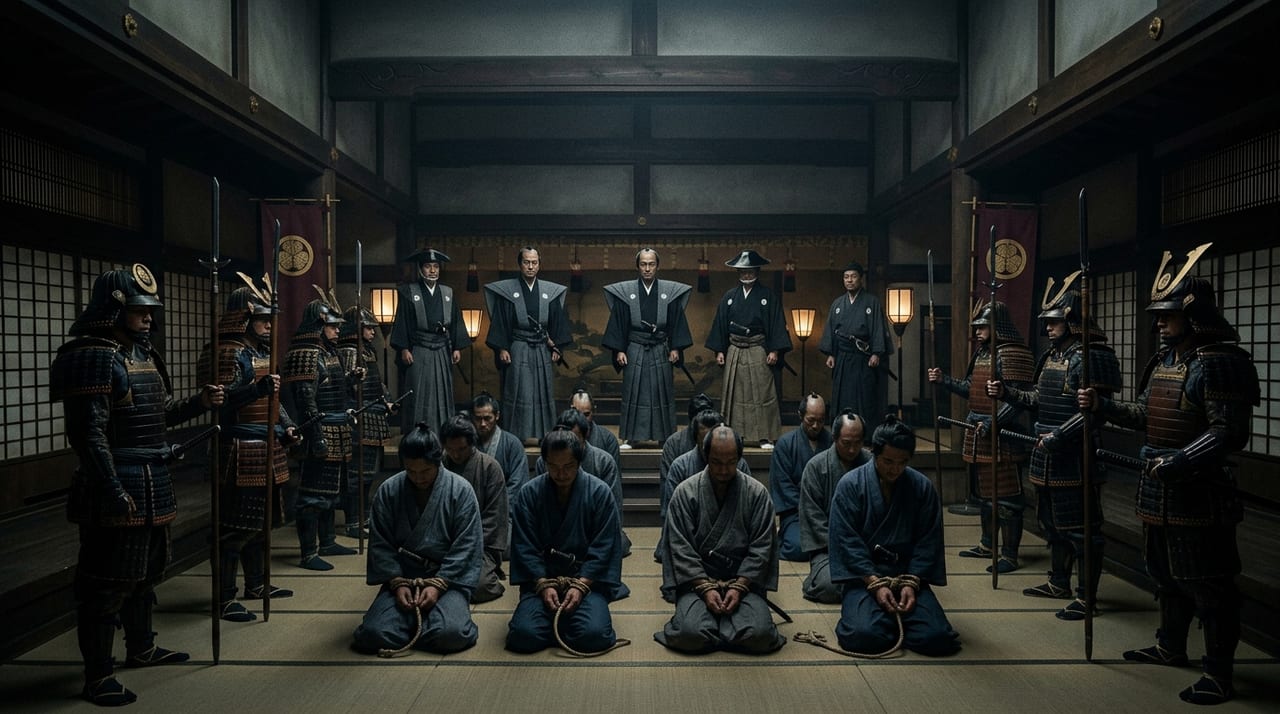
In 1858 (Ansei 5), Tairō Ii Naosuke took full control of the shogunate and launched the Ansei Purge, a politically repressive campaign without precedent. Its targets extended to every force that had opposed the shogunal succession dispute and the Treaty of Amity and Commerce between the United States and Japan (Harris Treaty): sonnō jōi activists, the opposing factions of the Mito, Chōshū, and Satsuma domains, and even the court nobles (kuge) of the imperial court.
There were two direct triggers for the Ansei Purge. The first was the shogunal succession dispute. The 13th shogun, Tokugawa Iesada, was sickly and had no heir. The Hitotsubashi faction, which backed Hitotsubashi Yoshinobu (of the Mito Tokugawa house) and was supported by major domains such as Echizen, Satsuma, and Owari, clashed with the Nanki faction, which championed Tokugawa Yoshitomi (later Iemochi) of Kii. The Nanki faction was made up of conservative fudai daimyo, with Ii Naosuke as its backer. The second trigger was the question of concluding the Treaty of Amity and Commerce between the United States and Japan. Senior councillor (rōjū) Hotta Masayoshi sought imperial sanction, but Emperor Kōmei refused. Nevertheless, in the 6th month of Ansei 5, Ii signed the treaty on his own authority without imperial sanction. This act, known as the ichoku chōin (signing against the imperial will), provoked fierce backlash from the sonnō jōi faction.
Immediately after taking office as Tairō, Ii Naosuke set out to sweep away the Hitotsubashi faction and suppress opposition to the opening of the country and to the ichoku chōin. He began a crackdown on activists, daimyo, and court nobles across the country.
One of the victims of the Ansei Purge whose influence on later generations was greatest was Yoshida Shōin (1830–1859), a samurai of the Chōshū domain. Shōin was a thinker and educator who trained Takasugi Shinsaku, Itō Hirobumi, Yamagata Aritomo, and others at the Shōka Sonjuku in Hagi. He opposed opening the country and was also a theoretical pillar of sonnō jōi.
In Ansei 5, Shōin planned to waylay senior councillor (rōjū) Manabe Akikatsu (the plan to waylay Manabe). In Ansei 6, because of his connection with Umeda Unpin, he was sent to Edo. During questioning by the Hyōjōsho, he confessed the plan himself. On the 27th day of the 10th month of Ansei 6 (1859), Shōin was beheaded at the Denmachō prison in Edo. He was 29 years old. His death poem, "Though my body may rot in the fields of Musashi, / may I leave behind my Yamato-damashii," became a spiritual pillar for the activists of the Meiji Restoration.
Hashimoto Sanai (1834–1859) of the Echizen (Fukui) domain was a brilliant statesman and physician. As the confidant of the domain lord Matsudaira Yoshinaga (Shungaku), he actively supported the Hitotsubashi faction. Sanai was arrested for working to put Yoshinobu forward in the shogunal succession dispute, and on the 7th day of the 10th month of Ansei 6 (1859) he was beheaded. He was 26 years old.
The Echizen domain lord, Matsudaira Yoshinaga (Shungaku), was also placed under confinement, and the daimyo of the Hitotsubashi faction were removed from the political stage one after another.
The Mito domain was the headquarters of sonnō jōi thought. Its former lord, Tokugawa Nariaki, was the natural father of Hitotsubashi Yoshinobu and the most fervent supporter of the Hitotsubashi faction. Ii Naosuke ordered Nariaki to eichikkyo (permanent confinement, that is, lifelong confinement). He also condemned the senior sonnō jōi leaders among the Mito domain's samurai one after another.
The purge also reached the court nobles (kuge). Former kampaku Takatsukasa Masamichi, minister of the left Konoe Tadahiro, minister of the right Takatsukasa Sukehiro, and former inner minister Sanjō Sanetsumu were all subjected to measures such as retirement, resignation from office, and rakushoku (taking the tonsure). Among the more than 100 people who were punished, the penalties included capital punishment (beheading or death in prison), exile to a distant island, confinement, and forced retirement.
The significance of the Ansei Purge for the history of Japanese sword culture is profound. For the sonnō jōi activists who suffered the purge, the Japanese sword was not merely a weapon but a symbol of Yamato-damashii. The swords worn by the activists who followed Shōin embodied the unity of thought and action.
Ii Naosuke himself, the suppressor in the Ansei Purge, studied iai alongside the tea ceremony and Nō. He was a man of the martial arts who opened Shinshin Shin-ryū out of Shinshin-ryū. The blades that struck him later, outside the Sakurada Gate, were ironically the same swords of sonnō jōi that the activists he had suppressed carried.
The swords sought by the activists of this period were practical uchigatana and wakizashi. With the rapid expansion of demand in the late Edo period, swordsmiths of the shinshintō (new-new swords) received large numbers of orders. The lineage of shinshintō established by Suishinshi Masahide and his disciple Taikei Naotane was also carried on in this era of the sonnō jōi movement.
The Ansei Purge had reached a certain end by the end of Ansei 6 (1859), but its cost had been enormous. The Mito domain samurai who had been persecuted were watching for a chance to take revenge. The following year, on the 3rd day of the 3rd month of Man'en 1 (1860), eighteen rōnin from the Mito and Satsuma domains who had defected attacked Ii Naosuke's palanquin outside the Sakurada Gate of Edo Castle (the Sakuradamon Incident).
Ii Naosuke died almost instantly. This assassination of the realm's Tairō in broad daylight, just before Edo Castle, made clear to the whole realm that the absolute authority of the shogunate had begun to collapse. Paradoxically, the suppression of the Ansei Purge became the first trigger for the collapse of the shogunate.
The chain of turmoil at the end of the Edo period ran from the Ansei Purge through the Sakuradamon Incident to the Ikedaya Incident, the Kinmon Incident, and the Battle of Toba-Fushimi. At its starting point lay the clash over Ii Naosuke's suppression and the activists' "Yamato-damashii." The Ansei Purge was the darkest night of the era in which the Japanese sword shone brightest as a symbol of the spirit.
Political Swords of the Ansei Era
Political sword culture of the Ansei era encompassing the purge
Sonnō-Jōi and the Swords of Bakumatsu Activists
Sonnō-jōi movement and sword culture intensified by the Ansei Purge
The Black Ships and the Transformation of Late Edo Sword Culture
The Kurofune crisis and opening debate that provided the backdrop for the purge