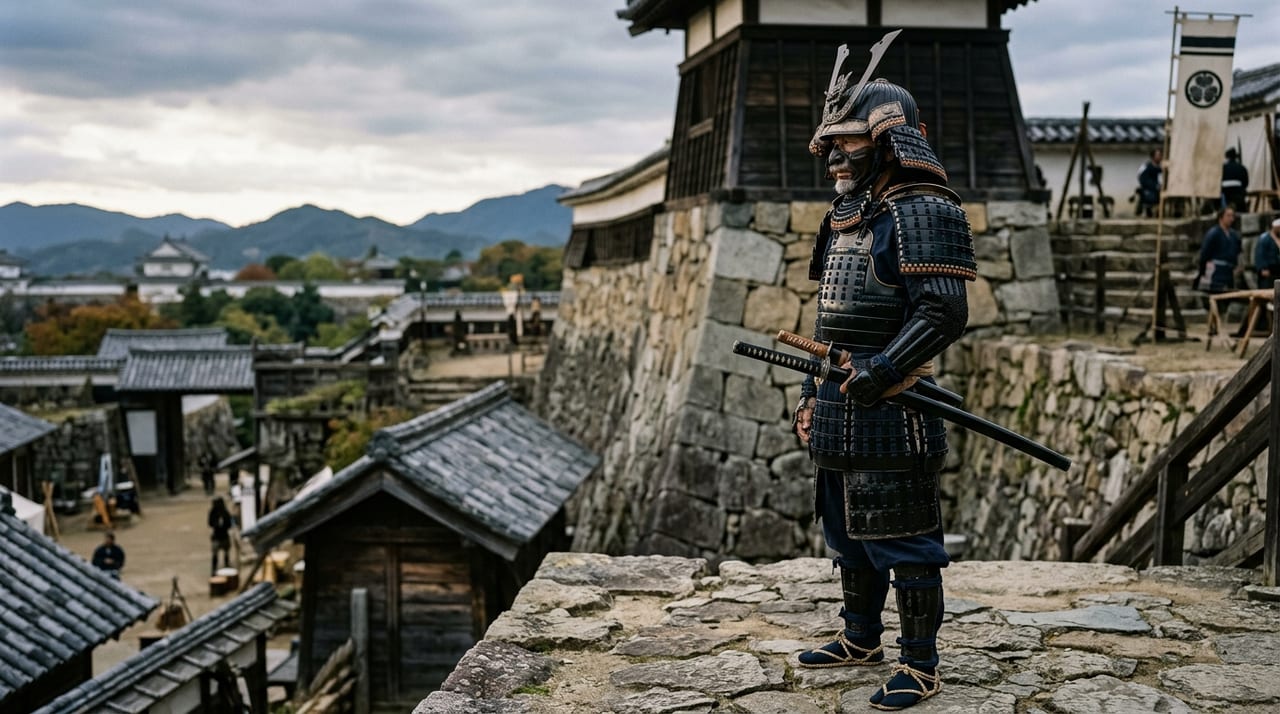
 * Image is for illustrative purposes only.
Yoshida Shōin
吉田松陰
Head of Shōka Sonjuku, Teacher of Bakumatsu Patriots
Description
Yoshida Shōin (1830–1859) was a bakumatsu shishi (activist), thinker and educator, born into a lower-ranking samurai family of the Chōshū Domain (present-day Yamaguchi Prefecture). As head of the Shōka Sonjuku, he produced key figures of the Meiji Restoration, including Takasugi Shinsaku, Itō Hirobumi, Yamagata Aritomo and Kusaka Genzui, and he is known as one of the greatest ideological leaders of the late Edo period.
From childhood Shōin studied Yamaga-ryū military science, and the domain recognized his talent at an early age. As he grew older, he was no longer satisfied with the conventional Shushigaku (Zhu Xi learning) and sought out a wide range of studies. When the question of opening the country surfaced in the Ansei era of the 1850s, Shōin argued, on the principles of "ikkun banmin" ("one sovereign, all people equal") and sōmō kukki, that people with resolve should rise up regardless of status.
Perry's arrival in 1853 shocked Shōin, and he resolved to travel abroad to see the outside world firsthand. In 1854 he rowed a small boat toward the USS Powhatan, part of Perry's squadron anchored at Shimoda, and attempted to stow away. Refused boarding, he surrendered himself and was imprisoned. This "Black Ship stowaway" incident is passed down to later generations as a demonstration of Shōin's resolve.
Education at the Shōka Sonjuku accepted everyone with resolve, regardless of status or family background. Shōin's teaching was distinguished by its emphasis on practical action rather than learning from books alone, and it embodied the spirit of chikō gōitsu (unity of knowledge and action). During the Ansei Purge (1858–1859), because of his association with Umeda Unpin, he was sent to Edo. Under interrogation he confessed, on his own, to a plan to ambush the senior councillor (rōjū) Manabe Akikatsu, and he was executed. He died at the age of 29.
Regarding the Japanese sword, Shōin as a samurai had training in swordsmanship, and within Yamaga-ryū military science the handling of swords was also a basic skill. Disciples who received Shōin's tutelage each wielded swords on the battlefields of the late Edo period. The death poem Shōin composed before his execution, "Though my body may decay on the fields of Musashi, I would leave behind my Yamato spirit," deeply resonates with the spirit of the Japanese sword as a symbol of the samurai soul.