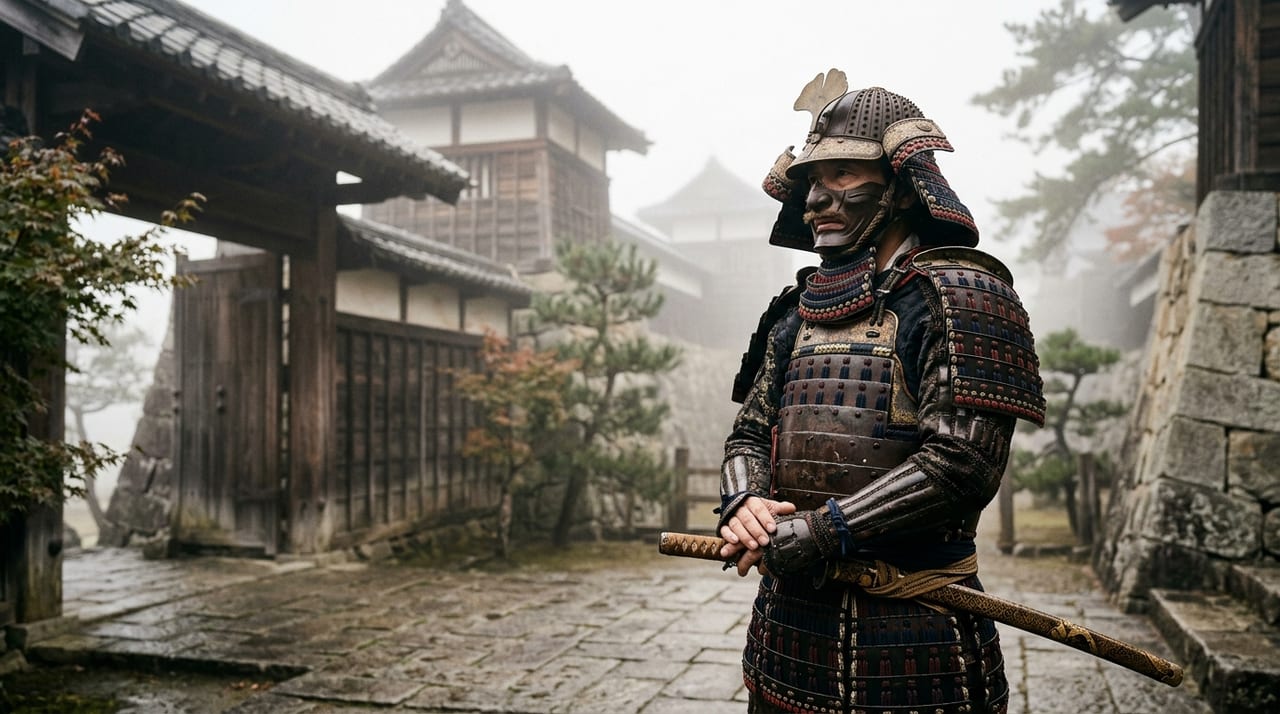
 * Image is for illustrative purposes only.
Takechi Hanpeita
武市半平太
Leader of the Tosa Kinnōtō and Master of the Kyōshin Meichi-ryū Sword Art
Description
Takechi Hanpeita (1829-1865) was a samurai patriot of the late Bakumatsu period who stood at the center of the sonnō jōi movement as leader of the Tosa Kinnōtō. He is also known as Takechi Zuizan. Born into a family of shirafuda gōshi (gōshi ranked in a status just below that of the jōshi, or upper samurai) in Tosa Domain (present-day Kōchi Prefecture), he was one of the outstanding figures of the late Bakumatsu period, and through his exceptional swordsmanship and organizational ability he at one point moved the domain's policy.
Hanpeita studied Ono-ha Ittō-ryū in Tosa and received its full transmission (menkyo kaiden). In 1856 (Ansei 3), he went to Edo, entered the dojo of Momoi Shunzō of the Kyōshin Meichi-ryū (the Shigakukan), and received full transmission there, after which he served as the head disciple (jukuchō). He had many students, including Nakaoka Shintarō, and was also a swordsman who was connected by marriage with Sakamoto Ryōma. He was known as the foremost swordsman in Tosa.
In 1861, Hanpeita founded the Tosa Kinnōtō, gathering in the end 192 like-minded men, centered on the kashi (lower samurai) and gōshi within the domain. He aimed to take political leadership within the domain under the banner of 'kinnō jōi.' However, the radical anti-foreign movement caused friction both inside and outside the domain, and when the political situation shifted toward kōbu gattai with the Coup of the 18th day of the 8th month of 1863, the Tosa Kinnōtō became isolated.
The most famous incident involving Hanpeita and the Tosa Kinnōtō was the assassination of Yoshida Tōyō (1862). Yoshida Tōyō, a powerful figure in Tosa Domain, supported kōbu gattai, and his ideological conflict with Hanpeita, a sonnō jōi advocate, was severe. Following Hanpeita's orders, Nasu Shingo and other members of the Tosa Kinnōtō assassinated Tōyō, and the party briefly gained control of domain government. Later, however, the former domain lord Yamauchi Yōdō ordered a search for the perpetrators of this incident, which led to Hanpeita himself being imprisoned in 1863.
In connection with Japanese swords, Hanpeita was a master of the Kyōshin Meichi-ryū and was well versed in the handling of blades. For the samurai activists of the late Bakumatsu period, the sword was a means of expressing their convictions, and Hanpeita's sword was said to embody his sonnō jōi aspirations.
In 1865, Hanpeita was ordered by Yamauchi Yōdō to commit seppuku within Tosa Domain. He was 37 years old at his death. His end, in which he is said to have cut open his abdomen three times in the 'sanmonji kappuku no hō,' a method reportedly achieved by no one before him, was a heroic one, and he is said to have died with the pride of a samurai. Even after his death, the aspirations of the Tosa Kinnōtō were carried on by Sakamoto Ryōma, Nakaoka Shintarō, and others, and became a driving force of the Meiji Restoration.