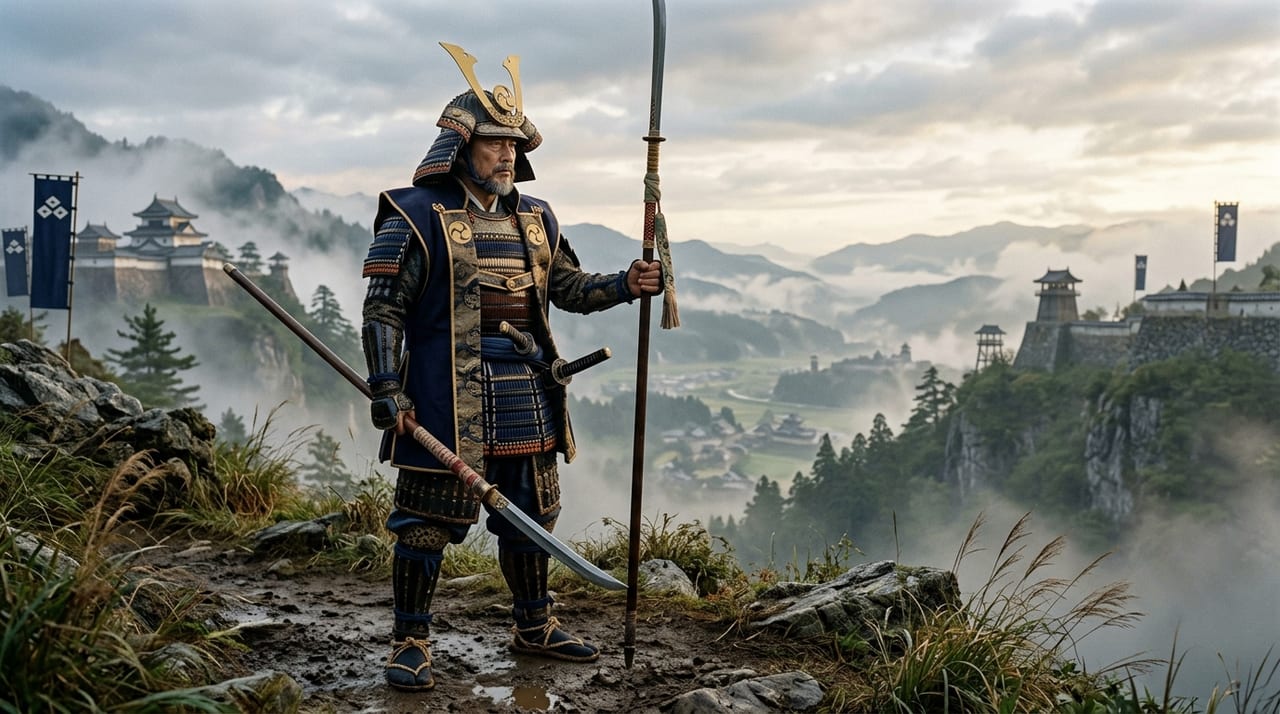
 * Image is for illustrative purposes only.
Itō Kashitarō
伊東甲子太郎
From Shinsengumi Strategist to Leader of the Goryō Eji
Description
Itō Kashitarō (1 January 1835 (Tenpō 5/12/3) – 13 December 1867 (Keiō 3/11/18)) was a samurai and swordsman of the Bakumatsu period. After serving the Shinsengumi as its strategist (sanbō) and instructor in letters, he left the corps with like-minded comrades, founded the Goryō Eji (also known as the Kōdaiji-tō), and became its leader.
Life
He is said to have been born into a family of retainers of the Shizuku domain in Hitachi Province, but when his father's debts came to light the family name was abolished and the family was banished from the domain; he is then said to have gone to Mito to study, learning swordsmanship and the Mito school of thought. He later went to Edo and entered a Hokushin Ittō-ryū dōjō, where the master recognized his ability and adopted him as a son-in-law; he took the name Itō Ōkura. The name "Kashitarō" was adopted later, when he went up to Kyoto in Genji 1 (1864), after that year's sign in the sexagenary cycle (kasshi). Handsome and eloquent, he was also known as a polemicist deeply committed to the sonnō jōi (revere the emperor, expel the barbarians) cause.
Strategist of the Shinsengumi
In the tenth month of Genji 1 (1864), through the mediation of Tōdō Heisuke, a fellow member of his school who served in the Shinsengumi, he joined the corps. He was appointed to the high post of strategist and instructor in letters, and is said to have been held in high regard even by the commander, Kondō Isami. Yet although he and the Shinsengumi were at one on jōi (expelling the foreigners), a deep divergence gradually opened between Kondō and his men, who upheld the shogunate, and Itō, who leaned toward loyalism to the throne and the overthrow of the shogunate.
Founding the Goryō Eji and the Aburanokōji Incident
On 24 April 1867 (Keiō 3/3/20), ostensibly to gather intelligence on the movements of the Satsuma domain and to guard the mausoleum of Emperor Kōmei, Itō left the Shinsengumi together with fourteen comrades and founded the Goryō Eji. Because the group made its base at Gesshin-in, a sub-temple of Kōdai-ji in Kyoto, it was also called the Kōdaiji-tō. On 13 December 1867 (Keiō 3/11/18), three days after the Ōmiya Incident, he was returning from a drinking party to which Kondō Isami had invited him when he was ambushed in front of the gate of Honkō-ji on Aburanokōji and assassinated by Shinsengumi members including Ōishi Kuwajirō. He died at 34 by the traditional Japanese count.
Connection with the Sword
Itō was a swordsman skilled enough to become master of a Hokushin Ittō-ryū dōjō. As the Shinsengumi's strategist he was also responsible for matters of learning, but underlying this was the swordsmanship he had honed in the dōjō; for a samurai living through the turmoil of the Bakumatsu, the sword was always a means of self-protection and also of asserting a political position.
Legacy
From the Meiji period onward his career was reassessed: he was posthumously granted court rank, and in 1932 he was enshrined at Yasukuni Shrine. As a tragic figure who broke away from the Shinsengumi only to meet a violent end, and as an idealist of the Bakumatsu era, he remains a subject of novels and television dramas to this day.