The Boshin War (1868–1869) and Nihontō — The Clash Between Samurai Swords and Modern Weapons in the Final Civil War
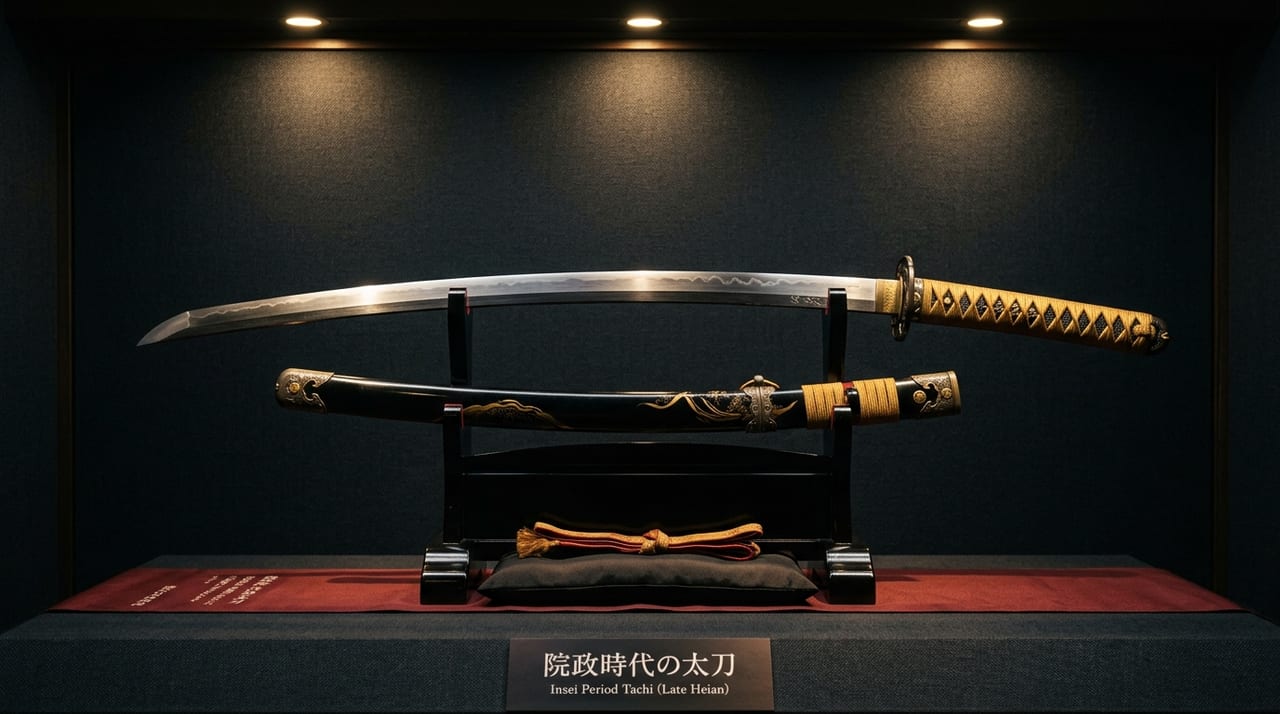 * Image is for illustrative purposes only.
Table of Contents
What Was the Boshin War — A Watershed in Sword Culture History
The Boshin War (Boshin sensō, 1868–1869) was the greatest civil war in modern Japanese history, fought between the Meiji government (the new government forces centered on Satsuma, Chōshū, Tosa, and others) and the coalition forces of the former Edo Shogunate and various domains (the former Shogunate forces).
The war unfolded in the following sequence.
- The Battle of Toba-Fushimi (January 1868)
- The Bloodless Surrender of Edo
- Resistance by domains in the Tōhoku region
- The final battle at Hakodate and Goryōkaku Fort (May 1869)
This war was not merely a change of power; it signified the end of samurai society and the birth of a modern state.
In the Tōhoku region, domains centered on the Aizu domain formed the Ōuetsu Reppan Dōmei to oppose the new government forces, and the front lines moved further and further north. In these battles across various regions, nihontō continued to play an important role — both as weapons alongside Western-style firearms and as instruments of samurai pride.
From the perspective of sword history, the Boshin War stands as one of "the last large-scale wars in which samurai used nihontō in actual combat."
The Shinsengumi and Nihontō — The End of Bakumatsu Swordsmen
The most symbolic "story of swords and swordsmen" left behind in the Boshin War belongs to the Shinsengumi. Kondō Isami, Hijikata Toshizō, Okita Sōji, and other members of the Shinsengumi continued to fight with nihontō as their primary weapon, from maintaining public order in Bakumatsu-era Kyoto to the battlefields of the Boshin War.
- From Toba-Fushimi to Kōfu: Against the new government forces' modern firearms (Snider rifles, Gewehr rifles, etc.), the Shinsengumi engaged with outdated equipment centered on nihontō and spears. While repeatedly forced to retreat in the face of overwhelming firepower, records remain that they achieved certain results in close-range combat with nihontō.
- The final moments of Hijikata Toshizō: Hijikata Toshizō, who fought until the final battle at Hakodate and Goryōkaku Fort, embodied the contradiction of a warrior who wore a nihontō while also wielding Western-style firearms. Hijikata's death by gunfire in June 1869 has been passed down to later generations as a symbol of "the end of the age of nihontō."
Kondō Isami, defeated at the Battle of Toba-Fushimi, later surrendered and was executed, leaving the Shinsengumi without its de facto leader. Okita Sōji also left the front lines and died of illness, and many of the Shinsengumi's principal members lost their lives during the Boshin War. Many of the nihontō they cherished have been handed down to the present day, serving as invaluable records that convey the true image of Bakumatsu swordsmen.
The Aizu Domain and Nihontō — Samurai Pride and Tragedy
The domain that left behind the most tragic stories connected to nihontō in the Boshin War was the Aizu domain (present-day Fukushima Prefecture).
The Aizu domain fought until the very end on the side of the former Shogunate, and the siege battle at Aizuwakamatsu Castle (Tsurugajō) in August–September 1868 was fought with extreme ferocity. Many samurai fought inside and outside the castle with nihontō in hand, and the scene in which the young samurai of the Byakkotai died by their own swords is known as a tragedy of modern Japanese history.
The nihontō of the Byakkotai: The members of the Byakkotai, composed of second and third sons of Aizu domain samurai, were boys of 16 to 17 who had only recently come of age. The nihontō they wore at the time of their self-immolation on Iimoriyama (19 members took their own lives) have since been preserved as personal effects at the Byakkotai Memorial Museum in Aizuwakamatsu and other institutions, symbolizing the tragic dimension of sword culture in the Boshin War.
It is known that in the Aizu War, not only samurai but also women bearing naginata and other weapons joined the resistance, demonstrating that nihontō and weapons were not the exclusive domain of male samurai. Through this battle, numerous stories and personal effects connected to nihontō were left behind in the Aizu region.
The Reality of Sword Equipment in the Former Shogunate Forces
In the Boshin War, the equipment of the former Shogunate forces and domain samurai was not limited to nihontō. The Edo Shogunate had already actively adopted Western-style firearms, and under the guidance of the French military mission (including Brunet and others), infantry units were primarily armed with rifles.
Nevertheless, nihontō were still worn as personal weapons and functioned as an identity marker for officers and samurai. Frequency of use in actual combat varied by era and unit, but it is said that nihontō were drawn in many instances of close-range combat.
Just as officers in contemporary Western nations continued the custom of wearing ceremonial and command swords (sabers), nihontō did not completely disappear even under a Western-style military system. The Boshin War in Japan also reflects the transitional state in which nihontō and modern weapons coexisted on the same battlefield.
Impact on Postwar Sword Culture
The Road to the Sword Abolishment Edict
In the seven years between the end of the Boshin War (1869) and the promulgation of the Sword Abolishment Edict (Haitōrei) (1876), the Meiji government handled the issue of samurai sword-wearing with caution. The experience of the Boshin War — the reality that nihontō-wielding swordsmen of the former Shogunate could become a powerful resistance force — was one reason the government was cautious about prohibiting sword-wearing.
Ultimately, sword-wearing was prohibited by the 1876 Sword Abolishment Edict (Haitōrei), but this was not a simple act of "modernization" — it was a political decision forged through the experience of the bloody civil wars from the Boshin War through the Satsuma Rebellion.
The Transformation of Nihontō into Personal Effects and Commemorative Objects
The nihontō worn by samurai who participated in the Boshin War were passed down to their descendants as personal effects and keepsakes after the war. These nihontō hold special historical value as "swords used in the Boshin War" and are still housed in museums and archives in various regions, including Aizu, Hakodate, and Yamagata.
These inherited nihontō are treasured not merely as works of art, but also as records that transmit the memories of the individuals who lived through the turbulent era of the Boshin War.
Impact on Tōkō
Some regions saw a temporary revitalization of the sword-forging industry due to wartime demand during the Boshin War (particularly tōkō in the Kantō and Tōhoku regions within the sphere of the former Shogunate). However, with the end of the war and the promulgation of the Sword Abolishment Edict (Haitōrei), the nihontō industry was forced into rapid decline.
How to View Nihontō from the Boshin War Era Today — Perspectives on Appreciation and Preservation
Nihontō that survived the Boshin War hold value not merely as antiques, but as witnesses to the transition from Bakumatsu to the Meiji era. Nihontō used by samurai of that time in actual combat may show chipping from intense use or damage to the koshirae (mounting). Such signs of use serve as one clue for assessing authenticity and provenance.
When appreciating or collecting nihontō related to the Boshin War that still exist today, the provenance (denrai) — including who owned the sword — is emphasized in addition to the presence or absence of a mei (signature) and the condition of the blade. At archives and memorial museums in regions that were battlefields, such as Aizu and Hakodate, nihontō with clear provenance — like the personal-effects swords of the Byakkotai members — are preserved and exhibited, and encountering these actual objects provides a valuable opportunity to understand the sword culture of the Boshin War era.
When assessing the authenticity and value of nihontō, the presence or absence of a kanteisho (appraisal certificate) from a specialized institution is an important consideration. Precisely because these are nihontō that have passed through the turbulent era of the Boshin War, it is essential to properly evaluate their historical value through verified provenance and professional appraisal.
Conclusion
The Boshin War is a civil war that symbolizes "the final era in which nihontō were used in large-scale actual combat." The nihontō of the Shinsengumi swordsmen, the young samurai of the Byakkotai, and the samurai who fought until the final stages at Aizu and Hakodate embody the moment when nihontō culture brought the "era of practical weapons" to a close. The Boshin War provides an indispensable historical context for understanding the subsequent flow of events: the Sword Abolishment Edict (Haitōrei), the Satsuma Rebellion, and the aestheticization of nihontō during the Meiji era.