Echizen Yasutsugu: Techniques of the Tokugawa Shogunate's Favored Smith and the Mystery of the Nanban Iron Inscription
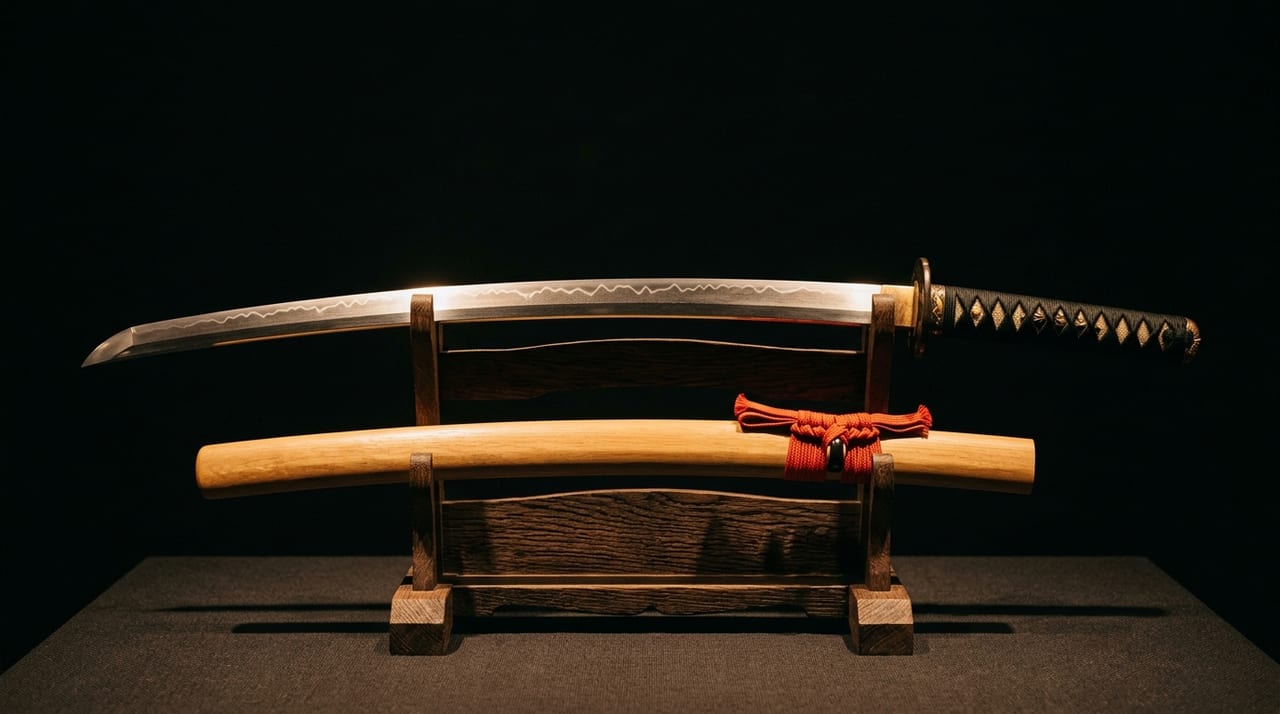 * Image is for illustrative purposes only.
Table of Contents
Echizen Yasutsugu: The Shogun's Personal Swordsmith
Echizen Yasutsugu was a master swordsmith who flourished from the late Azuchi-Momoyama period into the early Edo period, based in Echizen Province (present-day Fukui Prefecture). He is renowned as an official shogun's swordsmith (goyō-tōkō) who served two generations of Tokugawa shoguns, Tokugawa Ieyasu and Hidetada (the first generation died in Genna 7 (1621), before Iemitsu became shogun in 1623). He was one of the rare swordsmiths permitted by the Tokugawa shogun family to carve the aoi no gomon (three-leaf hollyhock crest) on the nakago—the highest distinction of their patronage.
The Career of the First Generation Yasutsugu
The first-generation Yasutsugu is said to have been a Shimosaka smith from Shimosaka in Sakata District, Ōmi Province (present-day Nagahama, Shiga Prefecture). He began to establish his reputation during the Toyotomi Hideyoshi era, and after Tokugawa Ieyasu's entry into the Kanto (1590), he came under Ieyasu's patronage.
During the Keicho era (1596–1615), he was summoned to Edo and worked as the exclusive swordsmith for the shogun's household. Subsequently, as he maintained bases in both Echizen and Edo, a distinction arose between "Echizen Yasutsugu" and "Edo Yasutsugu."
The Mystery of the "Nanban-tetsu" Signature: An Innovative Experiment with Foreign Steel
The greatest mystery characterizing Echizen Yasutsugu is the signature "I-nanban-tetsu (以南蛮鉄)" (made with nanban-tetsu)—foreign steel.
What Is Nanban-tetsu?
"Nanban-tetsu" (literally "southern barbarian iron") refers to Western steel imported from Portugal, the Netherlands, and other sources from the late sixteenth through early seventeenth century (primarily Swedish steel bars and the like). In Japan at that time, "nanban" (southern barbarian) was a general term for Western and Southeast Asian goods, and all imported iron materials were collectively called "nanban-tetsu."
Why Use Nanban-tetsu?
There are several theories about why the first-generation Yasutsugu used nanban-tetsu:
- The Tokugawa Ieyasu Experimental Commission Theory: Ieyasu had keen scientific curiosity and interest in Western advanced technology. According to this theory, he ordered Yasutsugu to experiment with nanban-tetsu's performance.
- The Practicality Theory: Nanban-tetsu had uniform carbon content and high purity, offering the possibility of creating blades with more stable quality than tamahagane.
- The Strategic Appeal Theory: Blades made from foreign materials increased in value as "rare items" and were suitable as gifts to the shogun.
The Appraisal Significance of the "Nanban-tetsu" Signature
Yasutsugu blades inscribed with "nanban-tetsu" are valued for their greater rarity compared to standard Yasutsugu blades. However, spurious signatures are common, making authentication documents (particularly NBTHK Important Sword ratings and above) essential.
Modern scientific analysis (such as fluorescence X-ray analysis) has confirmed that some blades bearing the "nanban-tetsu" signature contain Western-origin iron compounds, suggesting that the signature likely reflects fact.
The Granting of the Aoi Crest: A Special Relationship with the Shogun's House
The first-generation Yasutsugu received permission from Tokugawa Ieyasu to carve the aoi no gomon (three-leaf hollyhock crest) on the nakago. This was the Tokugawa shogun family's crest, a symbol whose use was otherwise forbidden to the public. This "granting of the aoi crest" was the highest proof that Yasutsugu was the official swordsmith of the shogun's house.
Yasutsugu blades bearing the aoi crest inevitably have many forgeries. Authentic aoi crests follow consistent rules in carving precision, depth, and placement, which serve as key appraisal points.
The Yasutsugu Lineage: Two Transmission Lines
The Echizen Yasutsugu name divided into multiple lineages.
The Echizen Line (Fukui)
The first generation's family line remained in Echizen, perpetuating the name "Echizen Yasutsugu" through successive generations. This lineage continued as the official swordsmiths for Fukui Han (the Echizen Matsudaira clan).
The Edo Line
A lineage in which disciples and descendants of the founder remained in Edo and worked as "Edo Yasutsugu." This line served as direct official swordsmiths to the Tokugawa shogunate throughout the seventeenth century.
Major Generation Names (Characteristics of Each Generation):
- First generation: Nanban-tetsu experimentation, granting of the aoi crest
- Second generation: Inherited the first generation's style, milder hamon
- Third generation onward: Stylistic changes adapting to mid-Edo period tastes
Technical Characteristics of Yasutsugu Blades
Hamon (Blade Pattern)
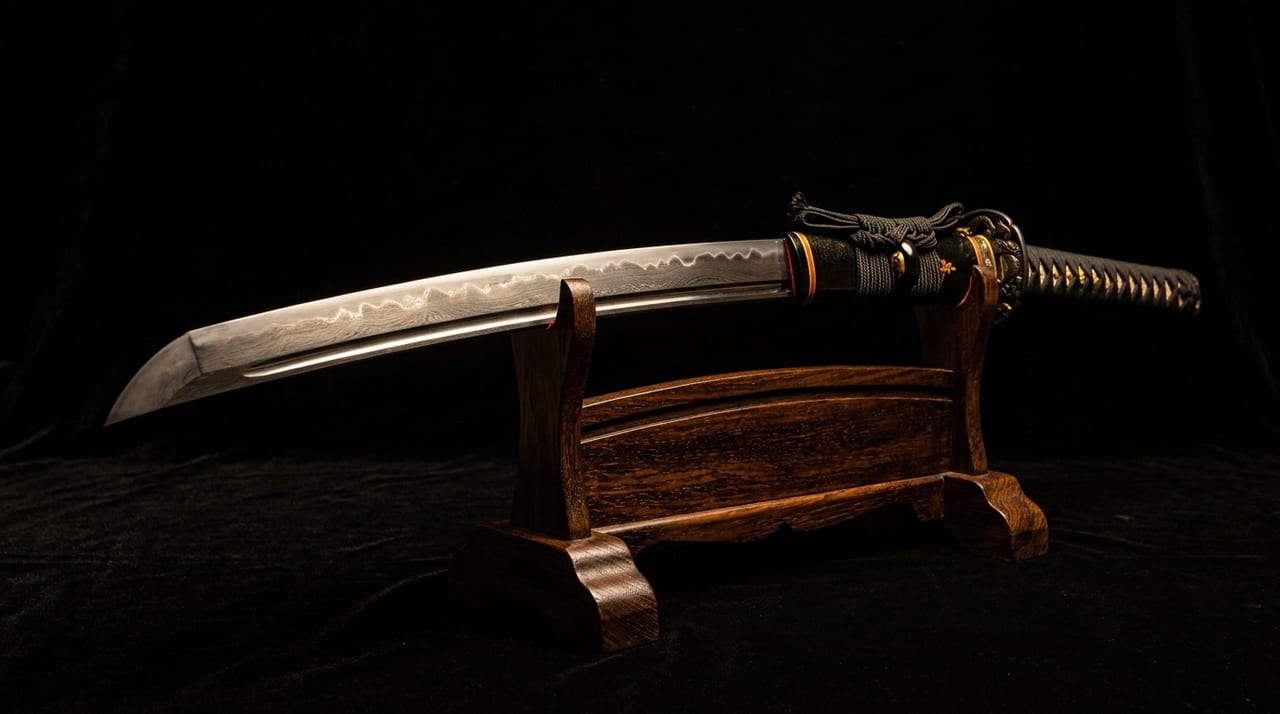
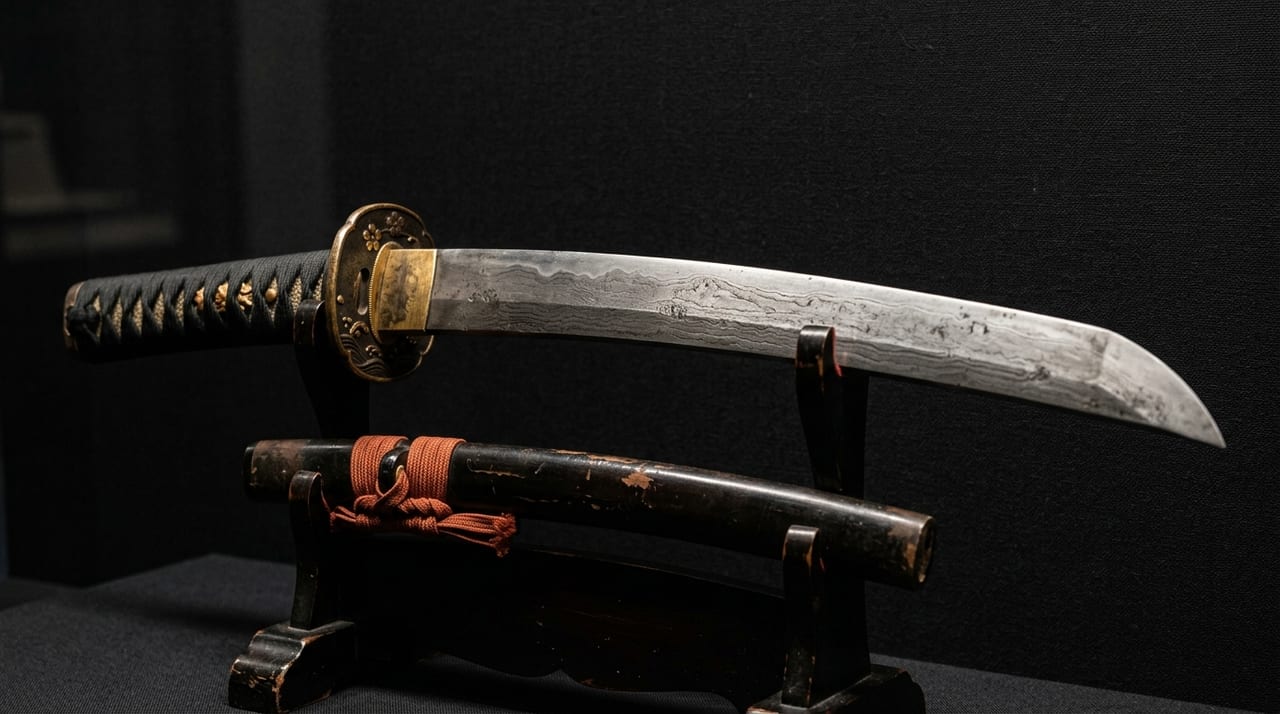
Yasutsugu blades display diverse hamon patterns; the first generation frequently employed gunome midare (interlocking eye pattern) and ko-midare (small irregular pattern). He excelled in bold, robust hamon influenced by the Soshu tradition (Kamakura tradition), often finishing with strong nie (hamon particles).
Jigane (Blade Ground)
The jigane is fundamentally forged in itame pattern with mixed nagare-hada (flowing wood-grain pattern). Blades made with "nanban-tetsu" show slightly different jigane characteristics from standard tamahagane blades, serving as a reference point in appraisal.
Sugata (Blade Form)
Most display the standard form for early Edo uchigatana. The curve (sori) is somewhat shallow, and the blade width (mihaba) is moderate. They possess elegant, well-balanced proportions befitting blades offered to the shogun.
Appraisal and Market Value
The value of Yasutsugu blades, as early Edo shinto (new swords), is determined by the following appraisal factors:
| Factor | Impact on Value |
|---|---|
| Presence of "nanban-tetsu" signature | Significant increase in value |
| Presence of aoi crest | Increase in value (authentication required) |
| Generation determination (first generation rated highest) | Earlier generations valued more highly |
| NBTHK appraisal certificate rating | Highly valued at Important Sword level and above |
| Condition of preservation | Minimal wear from polishing is important |
Conclusion: A Technician Trusted by the Shogun
Echizen Yasutsugu was not merely an "official swordsmith," but rather a figure possessing an experimental spirit who attempted to innovate sword-making technology during the early years of Tokugawa rule. His use of nanban-tetsu constitutes a valuable record of material experimentation in Japanese sword history, and his experiments are increasingly supported by modern scientific analysis. Yasutsugu's stance—receiving the highest mark of trust through the aoi crest while boldly challenging new materials—symbolizes the technical culture of the early Edo period.