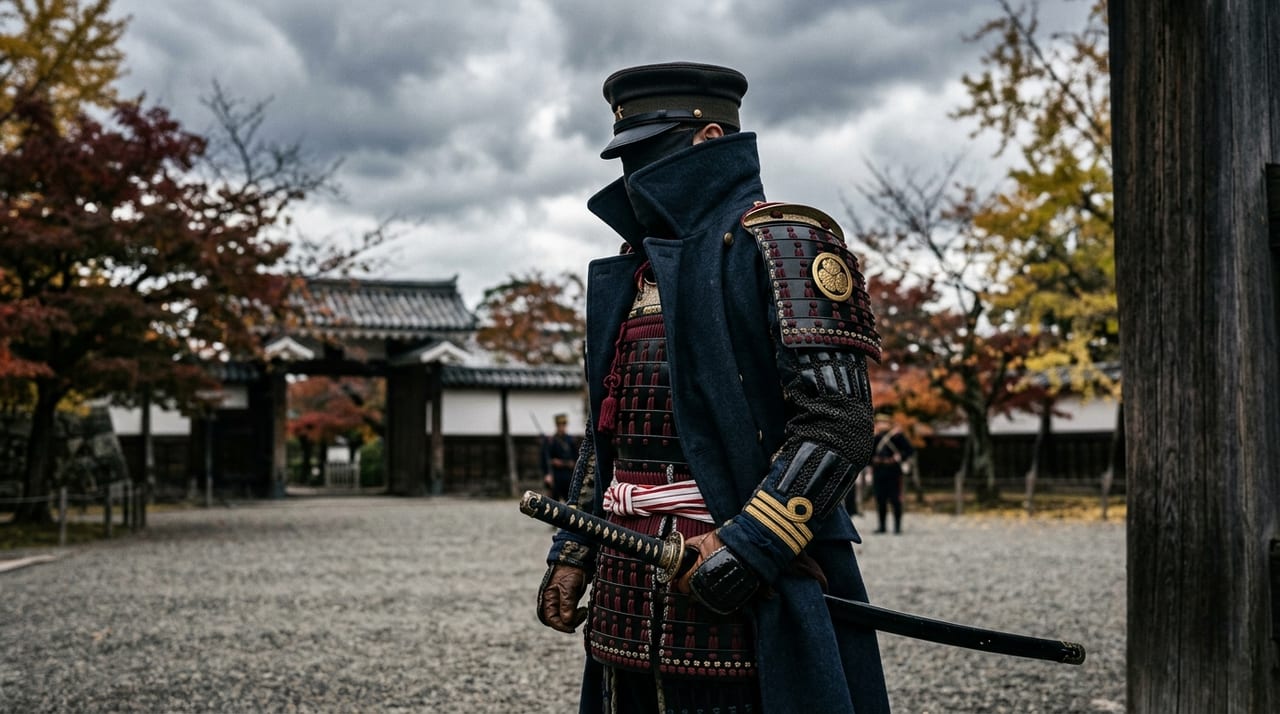
 * Image is for illustrative purposes only.
Kiyokawa Hachirō
清河八郎
The Hokushin Ittō-ryū Swordsman Whose Rōshigumi Sparked the Birth of the Shinsengumi
Description
Life
Born in 1830 in Kiyokawa village, Shonai domain in Dewa Province (present-day Shonai Town, Yamagata), Kiyokawa Hachirō traveled to Edo at eighteen to study at one of the era's foremost academies. Excelling in both scholarship and swordsmanship, he opened his own academy, the Kiyokawa-juku, at age twenty-five — a rare institution that taught both letters and the blade under one roof.
The Hokushin Ittō-ryū Swordsman
In Edo, Hachirō trained under Chiba Shūsaku at the Genbukan dojo, earning a full transmission license in the Hokushin Ittō-ryū style of swordsmanship. Eloquent, striking in appearance, and formidable with a blade, he was regarded as the very model of a loyalist activist of his time.
Founding the Rōshigumi and the Origins of the Shinsengumi
A committed advocate of "Sonnō Jōi" (Revere the Emperor, Expel the Barbarians), Hachirō proposed his "Three Urgent Policies" to Matsudaira Shungaku, the shogunate's political director (seiji sōsai), leading to the shogunate's approval of the Rōshigumi — a corps of 234 masterless samurai. In the second month of Bunkyū 3 (1863), the corps departed for Kyoto as a vanguard for the shogun's visit; upon arrival, Hachirō revealed that its true purpose was to spearhead the loyalist cause. Kondō Isami, Hijikata Toshizō, and others who opposed this plan remained behind in Kyoto — the nucleus from which the Shinsengumi would later emerge.
Assassination
Having placed himself in open conflict with the shogunate in Kyoto, Hachirō was recalled to Edo, where he was assassinated at Ichinohashi in Azabu on May 30, 1863 (Bunkyū 3/4/13), by six shogunate agents led by Sasaki Tadasaburō. He was 34.
Legacy
Though he directly set in motion the chain of events that led to the Shinsengumi's founding, Hachirō met his violent end before that famed corps ever came into being — a twist of fate that continues to fascinate students of the Bakumatsu era.