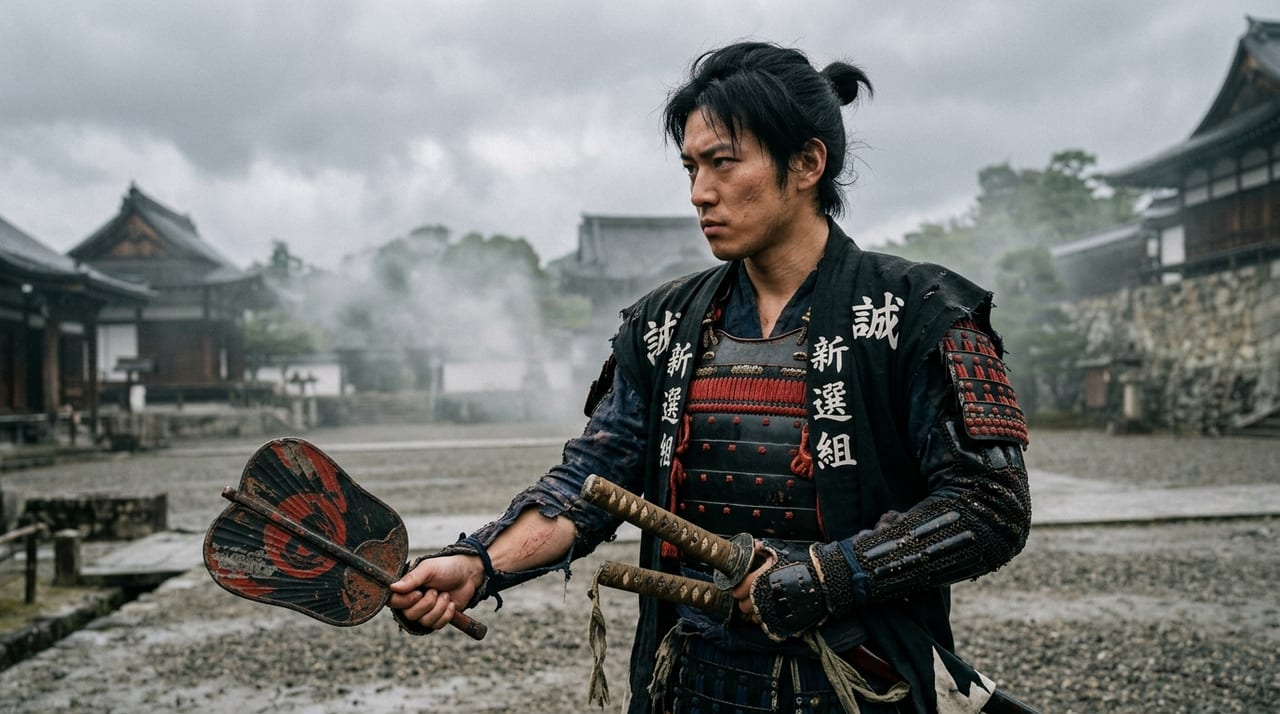
 * Image is for illustrative purposes only.
Serizawa Kamo
芹沢鴨
First Chief Commander of the Shinsengumi — Powerful Shinto Munen-ryu swordsman who wielded an iron fan, the founding leader who was assassinated by his own organization
Description
Mito rōshi and Swordsman of Shindō Munen-ryū
Serizawa Kamo, whose birth year is unknown, is said to have come from the gōshi (rural samurai) ranks of the Mito domain. The Mito domain was the center of the sonnō jōi (revere the emperor, expel the barbarians) ideology, and Serizawa is said to have been involved in the Mito anti-foreign movement. He studied the Shindō Munen-ryū sword art, and his skill was highly regarded. Shindō Munen-ryū is a school characterized by bold attacks and swift techniques, which matched Serizawa's fierce temperament.
Leading the Shinsengumi as Chief Commander
In Bunkyū 3 (1863), the Shinsengumi (originally the Mibu Rōshigumi) was formed, and Serizawa Kamo became a commander alongside Kondō Isami and Niimi Nishiki, standing at the head of them. Combining the sonnō ideology influenced by Mito studies with martial prowess, Serizawa exerted strong leadership during the organization's founding period. However, he drank heavily, and his violent conduct, including extortion-like acts and the coercion of Ōsaka merchants to extract money and valuables, was conspicuous and damaged the organization's reputation.
The Tessen and His Beloved Sword
Serizawa favored not only the Japanese sword as a weapon but also the "tessen" (a fan with an iron frame). The tessen functioned as a striking weapon in close combat. It is said that he always carried a tessen engraved with "Jinchū hōkoku no shi Serizawa Kamo" ("Serizawa Kamo, a man devoted to loyalty and service to the nation"). An anecdote also survives that during the coup of the 18th day of the 8th month of Bunkyū 3 (1863), he calmly fanned with his iron fan at a spear thrust toward him. Views differ on his beloved sword, but it is certain that as a swordsman of Shindō Munen-ryū he wore a blade suited to actual combat. As a swordsman active in Kyōto during the Bakumatsu period, he is thought to have sought out masterwork blades made by the famous smiths of the time.
Purge: Assassination by the Shinsengumi
Late on the night of the 16th day of the 9th month of Bunkyū 3 (28 October 1863), Serizawa Kamo was assassinated at the Yagi residence in Mibu, while he was sharing his bed with his favorite concubine, Oume, by members of Kondō's faction, including Hijikata Toshizō and Okita Sōji. This purge was carried out because his violent conduct was judged to threaten the survival of the organization. It is also said that the Aizu domain (Matsudaira Katamori), which oversaw the Shinsengumi, ordered Serizawa's disposal. Serizawa's death sealed the transfer of power to the leadership of Kondō Isami and Hijikata Toshizō, and the Shinsengumi was transformed into an organization under the iron discipline of Hijikata, the "demon vice-commander."
The Origins of the Shinsengumi
Serizawa Kamo embodies both the chaos and the potential of the Shinsengumi's founding period. Possessing Mito's sonnō ideology and the sword skill of Shindō Munen-ryū, his achievement in founding the organization is undeniable. Yet the conduct judged to be "violent" cut short his own life. The Kondō and Hijikata leadership established after Serizawa's death is the true form of the organization that later generations remember as the "Shinsengumi." Serizawa Kamo is recorded in Bakumatsu history as the tragic hero who bore its prehistory.
Notable Swords
- Tessen (iron fan; Serizawa's emblematic weapon. A fan with an iron framework that functioned as a striking weapon. It is said to have been engraved with "Jinchū hōkoku no shi Serizawa Kamo" ("Serizawa Kamo, a man devoted to loyalty and service to the nation").)
- Hōtō (worn sword; details unknown. He is thought to have worn a masterwork blade suited to actual combat as a swordsman of Shindō Munen-ryū, but no record of a specific swordsmith's name survives.)