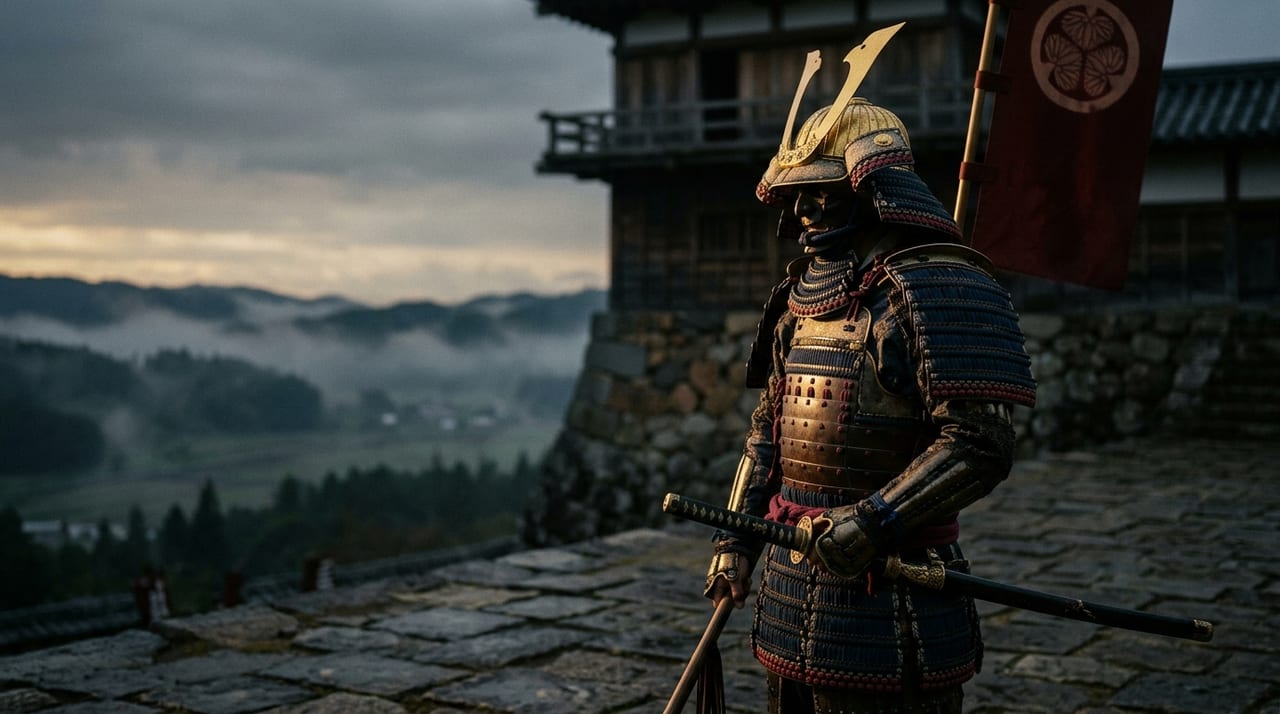
 * Image is for illustrative purposes only.
Takasugi Shinsaku
高杉晋作
Founder of the Kiheitai · Revolutionary of Choshu Domain
Description
Takasugi Shinsaku (1839–1867) was a samurai of Choshu Domain (present-day Yamaguchi Prefecture) and an indispensable figure in any discussion of the Bakumatsu and Meiji Restoration. He studied under Yoshida Shoin at the Shoka Sonjuku, served prominently as a radical advocate of the Sonnō Jōi movement, and secured his place in military history by founding the Kiheitai, a volunteer unit open to men regardless of social status.
Shinsaku was born in 1839 into an upper-samurai household of Choshu Domain. At the Shoka Sonjuku he received the tutelage of Yoshida Shoin and grew into a patriotic activist deeply concerned for the nation. In 1862, on orders of the domain, he accompanied the shogunate's mission to Shanghai aboard the Senzaimaru. Witnessing firsthand the devastation of the Qing dynasty, which had been trampled by the Western powers, further sharpened his Jōi convictions.
In 1863, when Choshu Domain carried out Jōi by firing on foreign ships in the Kanmon Strait and was counterattacked by American and French warships (the Shimonoseki War), Shinsaku, who had been entrusted with the defense of Shimonoseki, organized the Kiheitai, a revolutionary military organization that recruited volunteers without regard to social status. Admitting farmers, merchants, and townspeople as well as samurai, this unit fundamentally shook the traditional feudal class system.
Regarding his connection with swords, Shinsaku wore a Japanese sword as a samurai, yet he keenly sensed the changes of the times and developed a practical military doctrine that combined firearms and blades. He left behind the verse known as his death poem, 'omoshiroki / koto mo naki yo wo / omoshiroku' (lower verse 'suminasu mono wa / kokoro narikeri', said to have been added by Nomura Boto-ni). He died of tuberculosis in 1867 at the young age of twenty-seven by full-age reckoning (twenty-nine by traditional count). A tragic hero who passed away before the dawn of the Meiji Restoration, he continues to captivate the hearts of many people today.