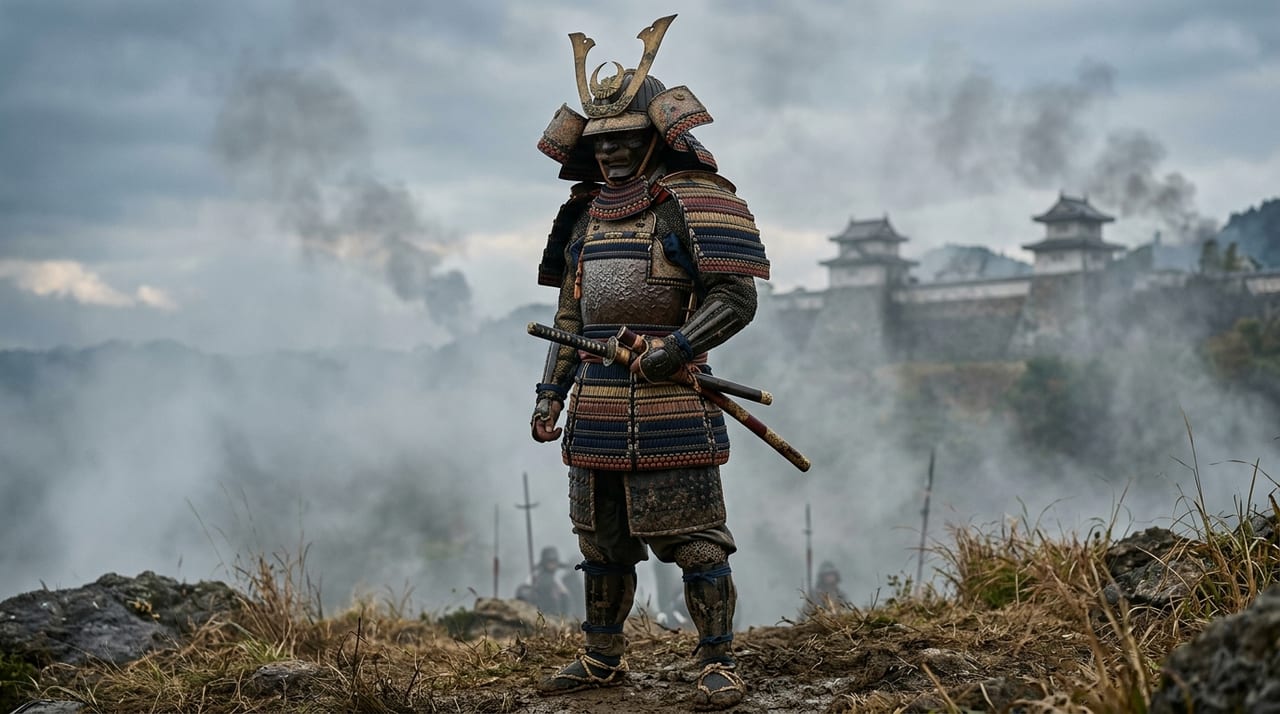
 * Image is for illustrative purposes only.
Ashikaga Takauji
足利尊氏
First Shogun of the Ashikaga Shogunate, Founder of the Nanbokucho Period
Description
Ashikaga Takauji (1305-1358) was the first shōgun of the Muromachi shogunate. He overthrew the Kamakura shogunate and helped establish Emperor Go-Daigo's Kenmu New Government, but he ultimately turned against the emperor and rebuilt a warrior government, making him a rare historical figure. His actions often contradicted one another, and later generations have described him as a man of sharp emotional swings. Yet it is precisely this complex inner life that embodies the turbulent era of the Northern and Southern Courts.
Takauji came from the Ashikaga clan, a prominent family of the Kantō region, and was a powerful gokenin vassal of the Kamakura shogunate. In 1333, under orders from the Kamakura shogunate to suppress Emperor Go-Daigo's forces, Takauji broke away from the shogunate's side partway through the campaign, joined the imperial side, and carried out a dramatic betrayal by attacking and seizing the Rokuhara Tandai. In the same year, Nitta Yoshisada captured Kamakura and the Hōjō clan was destroyed, bringing the Kamakura shogunate to an end.
During the Kenmu New Government (1333-1336), Takauji felt that the interests of the warrior class were being neglected, and he rebelled. In 1336, at the Battle of Minatogawa, he killed Kusunoki Masashige. He then set up Emperor Kōmyō of the Northern Court in opposition to Emperor Go-Daigo of the Southern Court. In Kenmu 5 (1338) he was appointed shōgun and founded the Muromachi shogunate. However, power struggles within the shogunate were constant, including the Kannō Disturbance (1349-1352) with his younger brother Tadayoshi, and he is also said to have spent his later years in deep mental anguish.
Regarding swords, Takauji regarded them as symbols of warrior authority. The Ashikaga shogunal family handed down many famous swords over generations, and it is said that the custom of collecting and bestowing swords began in Takauji's era. Takauji treasured the naginata "Honekami (Honebami Tōshirō)", an heirloom of the Ashikaga clan, as his favorite blade, and Baishōron records that he was wearing it when he faced the Battle of Tatarahama. Also, according to Nōami-bon Meizukushi, Takauji patronized the Bizen Osafune smith Kanemitsu on his way to Kyoto.
The establishment of the Muromachi shogunate was also an important turning point in the development of Japan's sword culture. The Muromachi and Northern and Southern Courts period, when Takauji founded the shogunate, saw rising demand for the large swords known as "Nanbokuchō-mono", namely ō-tachi and nodachi, and smiths devoted their efforts to making large blades suited to battlefield needs. The sword culture Takauji loved became the foundation of Muromachi culture through the Ashikaga shogunal family, creating a soil that nurtured central elements of Japanese culture: Noh, the tea ceremony, and sword appraisal. Although historical assessments of him remain divided, Ashikaga Takauji is an unavoidable giant in the history of Japan's warrior government and sword culture.
Notable Swords
- Honebami Tōshirō (the Ashikaga clan's heirloom naginata "Honekami", reshaped into an ō-wakizashi. Important Cultural Property; held by Toyokuni Shrine)
- A famous sword handed down in the Ashikaga family