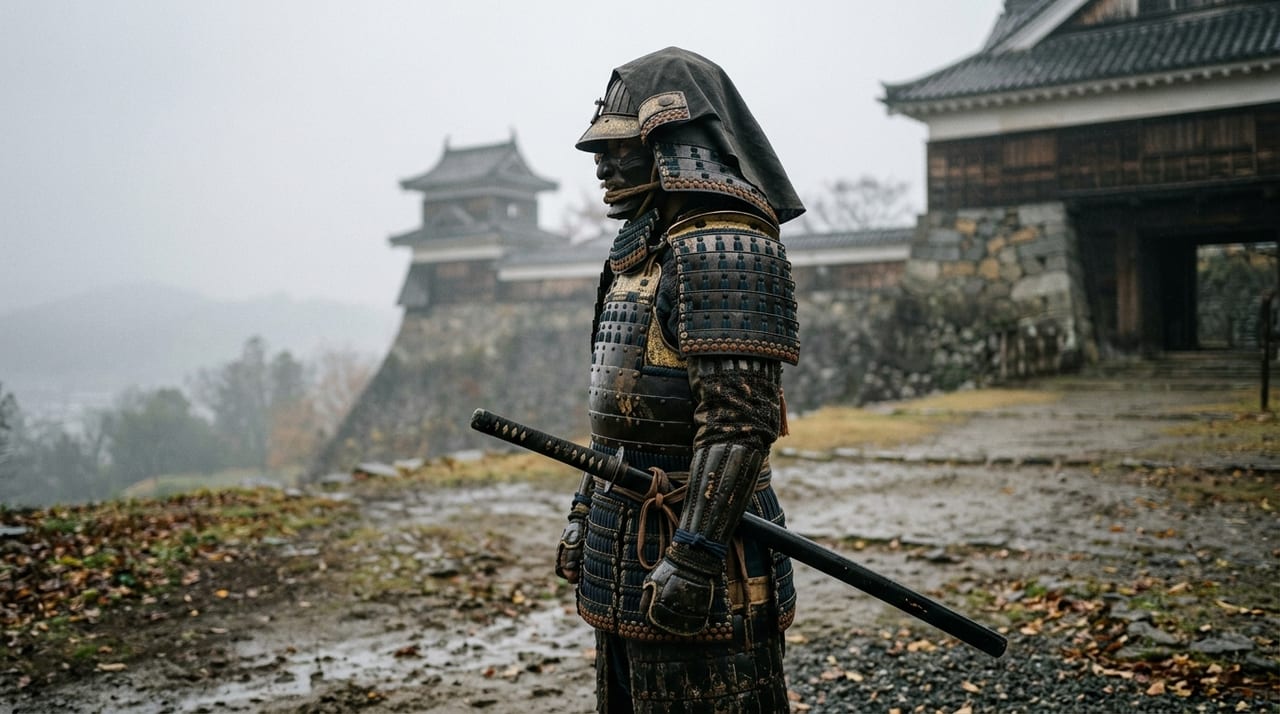
 * Image is for illustrative purposes only.
Kikuchi Takemitsu
菊池武光
Loyal Retainer of the Southern Court, Supreme Commander of Southern Court Forces in Kyushu
Description
Kikuchi Takemitsu (1319?-1373) was the greatest loyal vassal of the Southern Court (the court of Emperor Go-Daigo and Emperor Go-Murakami) in Kyushu during the Nanboku-chō period, and a spirited warrior who, as head of the Kikuchi clan of Higo, resisted the great armies of the Northern Court and the Ashikaga for many years. Matching or even surpassing the Northern Court forces of the Ōtomo, the Shōni and the Shimazu, known as the "masters of Kyushu," he defended the banner of the Southern Court in Kyushu until the very end, and he is remembered in history as a loyal vassal.
Takemitsu's rise came at a time when the Kikuchi clan was the most important force of the Southern Court in Kyushu. After the death of his elder brother Takeshige, Takemitsu became leader of the Kikuchi clan in place of his younger brother Takehito, who had been its head (sōryō). He managed Kyushu in the name of the Seisei Shōgun, Prince Kaneyoshi (a son of Emperor Go-Daigo). Together with Prince Kaneyoshi, Takemitsu won the Battle of the Chikugo River in 1359, and in 1361 he took control of Dazaifu, bringing nearly all of Kyushu under Southern Court control for a time. In the fall of Dazaifu, Takemitsu's military contribution was enormous, and he functioned as the de facto chief of staff to Prince Kaneyoshi.
Takemitsu's relationship with swords is discussed mainly in terms of his role as a patron of sword culture centered on the Kikuchi clan's home base in Higo. In Higo (present-day Kumamoto Prefecture), smiths of the Enju school had been active since the Kamakura period, and the Enju school is known to have been under the protection of the Kikuchi clan. The Kikuchi spear (Kikuchi-yari), said to have been devised by the Enju school, was carried by many foot soldiers, so it is also called the Kikuchi senbon-yari, "the thousand spears of Kikuchi." It has been handed down to the present day as a phrase expressing the fierceness of the Kikuchi clan (the date of its origin is unclear). There is also a legend that after the Battle of the Chikugo River, Takemitsu washed the blood from his sword in a small stream, and this gave rise to the place name Tachiarai (present-day Tachiarai Town, Fukuoka Prefecture).
After the fall of Dazaifu in 1361, the situation in Kyushu briefly turned in favor of the Southern Court. However, when Imagawa Ryōshun was dispatched as Kyūshū tandai (in 1371), the situation was completely transformed. Through Imagawa Ryōshun's skillful diplomacy and military strategy, the alliances of the Southern Court were broken apart, and in 1372 Dazaifu fell. Prince Kaneyoshi and Takemitsu withdrew to Mount Kōra in Chikugo. Even in this distress, Takemitsu fought valiantly to protect his lord, Prince Kaneyoshi, but he died in 1373.
After Takemitsu's death, the Kikuchi clan continued to resist as part of the Southern Court, but the overall course of events had been decided, and the Southern Court's lifeline in Kyushu was gradually cut off. However, Takemitsu's loyalty and martial valor have been highly praised by later generations, and he is passed down as one of the sources of pride for the people of Higo (Kumamoto). In the turbulent era of the Nanboku-chō period, the life of Kikuchi Takemitsu, who fought to the end to uphold a great cause, is regarded as an embodiment of the ideal of loyalty in the Japanese warrior code of bushidō.