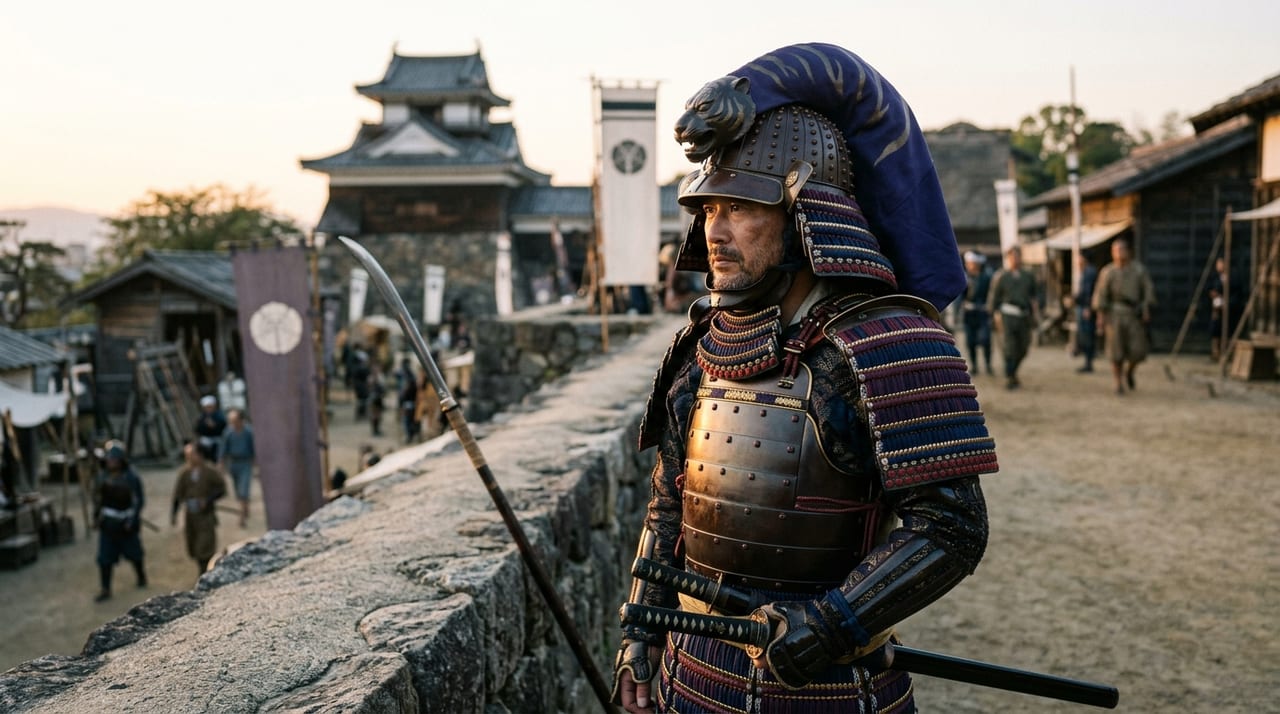
 * Image is for illustrative purposes only.
Ashikaga Tadafuyu
足利直冬
Illegitimate Son of Ashikaga Takauji, Kyushu Tandai
Description
Birth and Childhood
Ashikaga Tadafuyu was a warrior of the Nanbokuchō period and an illegitimate son of Ashikaga Takauji, the first shogun of the Muromachi shogunate. The year of his birth is most widely given as Karyaku 2 (1327), and his mother is said to have been a secondary consort known as Lady Echizen (Echizen no Tsubone). According to the Taiheiki, he was born to a woman named Lady Echizen, with whom Takauji had secretly been involved when he was young. Takauji long refused to acknowledge the child, so the young Tadafuyu was raised as a kasshiki (temple page, a child attendant serving at a temple) at Tōshō-ji in Kamakura.
Adoption by Ashikaga Tadayoshi
What led to Tadafuyu's recognition was the mediation of the scholar-monk Gen'e Hōin. Recognizing Tadafuyu's learning and talent, Gen'e introduced him to Takauji's younger brother, Tadayoshi. Tadayoshi, who had no children at the time, adopted him, gave him one character of his own name, and named him Tadafuyu. In this way Tadafuyu came to be positioned as a member of the Ashikaga shogunal house, but his relationship with his biological father, Takauji, remained complicated for the rest of his life.
Rise as a Warrior and Nagato Tandai
Amid the wars of the Nanbokuchō period, Tadafuyu began to emerge as a warrior. In his first battle, in Jōwa 4 (1348), he distinguished himself by suppressing Southern Court forces. He was eventually ordered to serve as Nagato Tandai, with jurisdiction over the eight provinces of San'in and San'yō, and he went west to take up the post. However, on the way, at Bingo, he was ambushed by the forces of Kō no Moronao, a close aide of Takauji, and he escaped to Kyūshū with barely his life. This incident was part of the power struggle between Takauji and Tadayoshi, and Tadafuyu became a figure tossed about between the two.
The Kannō Disturbance and Cooperation with the Southern Court
During the Kannō Disturbance (1349–1352), Tadafuyu took a position in direct opposition to his biological father, Takauji. After fleeing to Kyūshū, he formed a cooperative relationship with the Southern Court and sought to take control of the Kyūshū region as Kyūshū Tandai. After Tadayoshi's death, he submitted to the Southern Court and advanced troops from the Chūgoku region. In Bunna 4 (1355) he briefly occupied Kyoto. Supported by powerful warriors such as Ōuchi Hiroyo and Yamana Tokiuji, he opposed the shogunate. However, after Takauji's death in Shōhei 13 (1358), his power declined, and in Jōji 2 (1363) Ōuchi and Yamana both submitted to the shogunate, and the Tadafuyu faction collapsed.
Later Whereabouts and Final Years
The last document in which Tadafuyu appears is a letter from Jōji 5 (1366), after which his activities vanish from the historical record and his later whereabouts are unknown. According to one account, Ashikaga Yoshimitsu permitted him to surrender, he retired to Iwami Province, and he died around Ōei 7 (1400) at the age of 74. The fate of Tadafuyu, who lived a turbulent life without ever being acknowledged by his father, has continued to draw the interest of later generations as a symbol of the upheavals of the Nanbokuchō period.
Later Reputation
He is also portrayed vividly as a tragic warrior in the Taiheiki literature, and his conflict with his father, Takauji, was depicted in the NHK taiga drama Taiheiki of 1991.