New Arrivals — Browse our catalog for the latest authentic Japanese sword arrivals. Browse →
August–September 1335 (Kenmu 2, 7th–8th month)
Shinano Province to Musashi Province, Kamakura (present-day Nagano to Kanagawa)
Forces
Hōjō Tokiyuki Forces (Hōjō remnants)
Kenmu Government forces → Ashikaga Takauji
About 8 min read
In the summer of Kenmu 2 (1335), a rebellion that marked a turning point in Japanese history broke out in the mountains of Shinano Province. With the fall of the Kamakura shogunate in Genkō 3 (1333), Hōjō Takatoki, the head of the Hōjō clan, took his own life, and the Kamakura shogunate came to an end after roughly 150 years. However, his son Hōjō Tokiyuki, who was still a young boy at the time, survived by being sheltered in the mountains of Suwa. He is the protagonist of the “Nakasendai Rebellion.”
In Genkō 3 (1333), Emperor Go-Daigo, with the support of Ashikaga Takauji, Nitta Yoshisada, and others, overthrew the Kamakura shogunate and established the Kenmu Restoration (Kenmu no Shinsei). However, this new regime pursued policies that favored court nobles over warriors, and this created friction with warrior society. The warriors' dissatisfaction, over the unfairness of rewards, interference in the jitō system, and administration that gave priority to court nobles, had already reached its limit by the time of Kenmu 2 (1335).
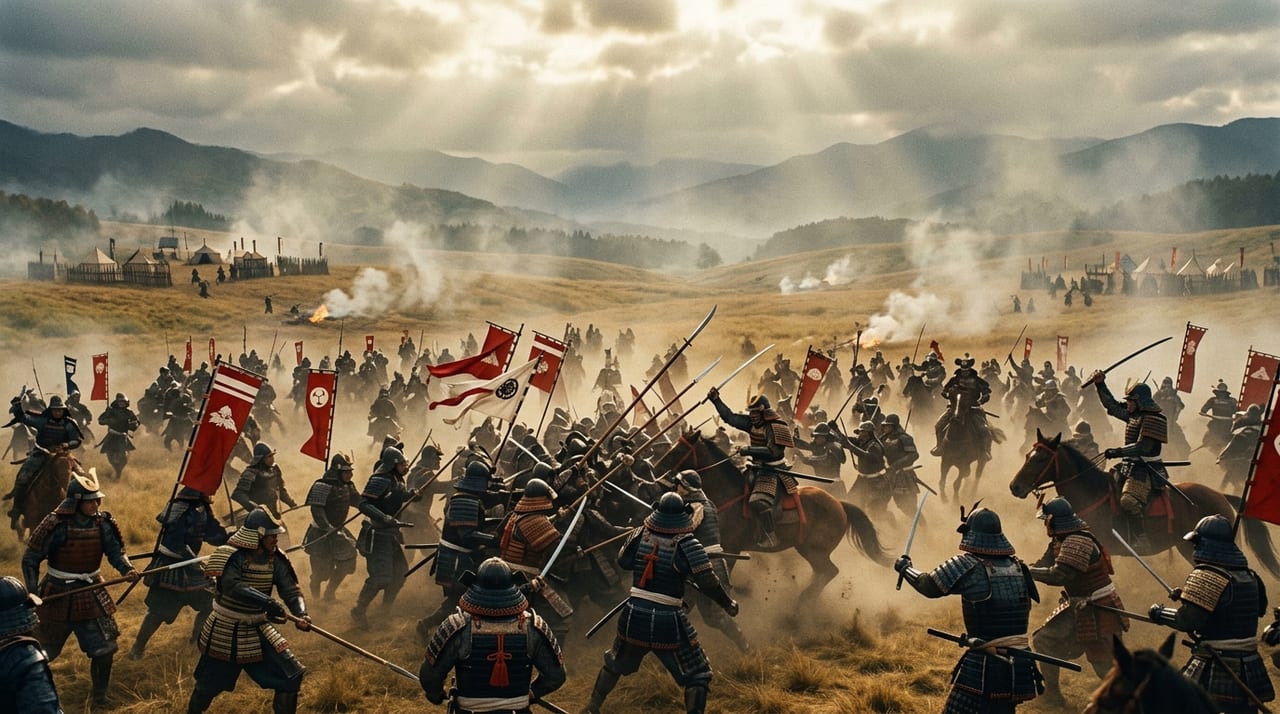
In the 7th month of Kenmu 2 (1335), Hōjō Tokiyuki, supported by Suwa Yorishige, raised troops in Shinano Province. Under the banner of restoring the old Hōjō clan, Tokiyuki's army advanced rapidly south, gathering some eastern warriors who felt nostalgia for the Kamakura shogunate.
The forces of Ashikaga Tadayoshi (Takauji's younger brother), who had been dispatched by the Kenmu government as the Kamakura Shogunal Office, were defeated in various places, and Tokiyuki's army advanced into Musashi Province at lightning speed. Late in the 7th month, Tokiyuki's army succeeded in occupying Kamakura. Only two years after the fall of the Hōjō clan, Kamakura was once again placed under the Hōjō banner. Though it lasted only a brief time, it was an event that dealt a profound shock to the warrior society of the eastern provinces.
Ashikaga Tadayoshi fled Kamakura, withdrawing after having Prince Moriyoshi (a son of Emperor Go-Daigo who had fallen from favor in the Kenmu government and was confined in Kamakura) killed.
Swords of the Kenmu period fall within the era in which the bold, forceful style of the Nanboku-chō period appears among the old swords (kotō). The large, magnificent sword styles of the Nanboku-chō period reflect the sturdy spirit of the warriors of this age and the ferocity of battle.
Upon receiving word of the fall of Kamakura, Ashikaga Takauji set out for the eastern provinces on his own authority, without obtaining permission from Emperor Go-Daigo. Takauji had been seeking appointment from the emperor as Seii Taishōgun, but he moved his army despite not having been granted that permission.
Takauji's army advanced swiftly eastward, defeated Tokiyuki's army in the 8th month of Kenmu 2 (1335), and recaptured Kamakura. Hōjō Tokiyuki fled (and continued to resist in various places afterward), and Tokiyuki's control of Kamakura ended after a little over 20 days.
But the real problem began here. Takauji ignored Emperor Go-Daigo's order to return to the capital, remained in Kamakura, and began to carry out his own governance. This became the trigger for the break with the Kenmu government, and in the following year it developed into the Nanboku-chō turmoil, in which Emperor Go-Daigo fled to Yoshino and established the Southern Court.
The Nakasendai Rebellion was a “watershed” in medieval Japanese history. With this rebellion as the dividing line, Japan entered the turbulent Nanboku-chō period, and an age of armed conflict lasting roughly 60 years followed.
This turbulent period was also a major turning point in the history of the Japanese sword. In the fierce civil wars of the Nanboku-chō period, demand for swords as weapons surged. It was also in this era that large weapons suited to group combat on the battlefield developed, such as the “nagamaki,” “nodachi,” and “naginata,” and sword forms diversified in response to changes in fighting styles.
The Nakasendai Rebellion, triggered by the uprising of the boy warrior Hōjō Tokiyuki, pushed Ashikaga Takauji, an agent of historical change, to the forefront of history. In the history of the Japanese sword as well, it is recorded in the history of sword culture as an event that accelerated the shift toward “swords of a turbulent age.”