New Arrivals — Browse our catalog for the latest authentic Japanese sword arrivals. Browse →
Insights into Japanese sword knowledge and culture
When a Japanese sword is found during an estate clearance, where should you take it? This guide compares appraisal services at antique dealers, flea markets, and specialist sword shops, offering practical knowledge for obtaining fair assessments and making informed decisions about selling or preserving the blade.
An overview of Japanese sword schools, hands-on forging workshops, and swordsmith studio tours across Japan. Explores the current challenges of sword culture education and new experiential learning opportunities driven by growing inbound tourism.
A detailed look at how Japanese sword appraisers and NBTHK examiners authenticate blades, determine their age, and identify their school. Covers the appraisal process, tools, key observation points, and the long journey to becoming a recognized appraiser.
An in-depth look at the operational and financial challenges facing Japanese sword museums, including declining visitor numbers, aging staff, and budget constraints. Examines how special exhibitions and inbound tourism strategies are reshaping museum management.
The eleven-year Onin War not only devastated Kyoto's sword culture but also redirected demand to provincial smiths in Bizen and Yamato. This article explores how the conflict drove mass production, quality shifts, and distribution changes during the transition to the Sengoku period.
An in-depth look at the sashigane, the traditional L-shaped ruler used by swordsmiths to measure and design blade curvature. Explains how each dimension—sori, nagasa, motohaba, sakihaba—is measured and how modern smiths use these tools to achieve the ideal sword geometry.
An in-depth look at the apprenticeship system of sayashi, the craftspeople who make scabbards for Japanese swords. Covers how they acquire woodworking, lacquering, and metal-fitting skills over years of training, the master-apprentice relationship, and the modern succession crisis facing this craft.
A detailed explanation of shitaji tanren (base forging) and sunobe (drawing out), the earliest stages in Japanese sword forging. Covers tamahagane selection, the initial consolidation and folding of steel, and how these foundational processes establish the skeletal form of the blade before the final shaping stages begin.
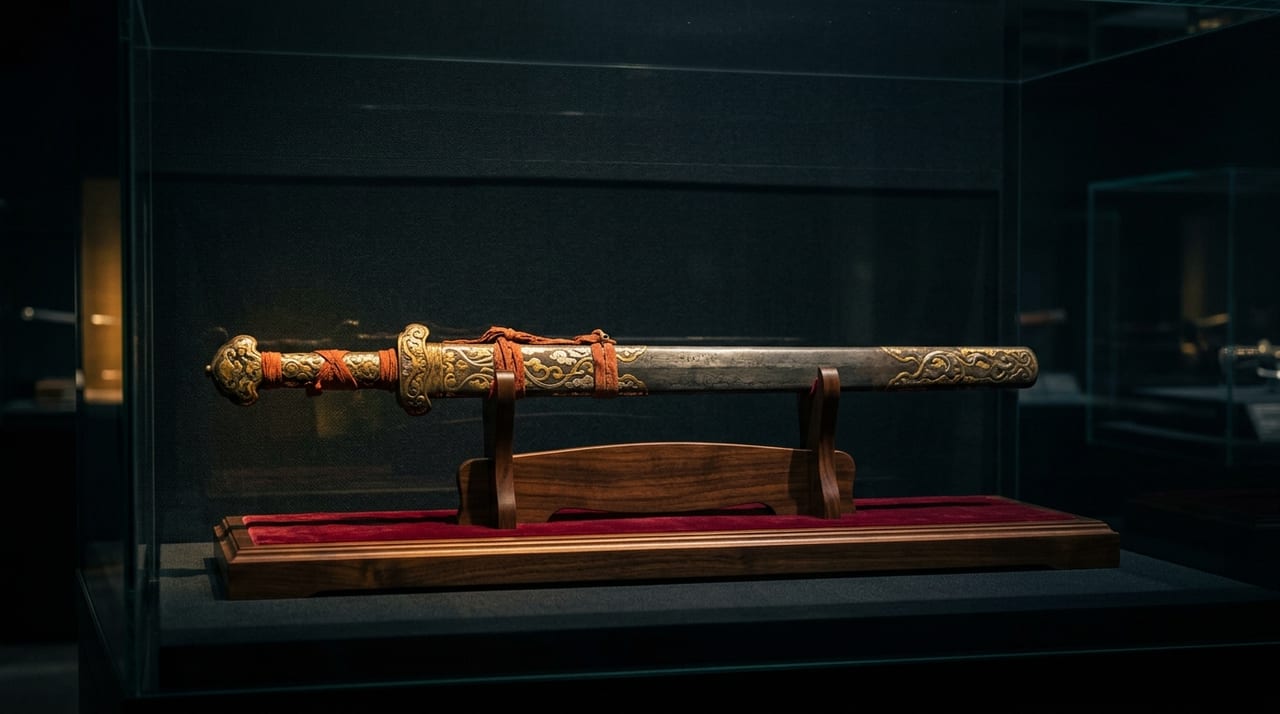
How Japanese sword regulations were established from the Taika Reforms through the formation of the Ritsuryo state. Examining the origins of weapon control through Emishi campaigns and internal conflicts, and the straight sword culture of the Asuka-Nara period as evidenced by Shosoin artifacts.
A comprehensive explanation of the togishi's (sword polisher's) work in revealing the true value of Japanese blades. This article explores the Honami family's history spanning the Muromachi period, the techniques of kesho-togi and shitaji-togi polishing, the cultivation of connoisseurship through polishing, and examines the contemporary world of togishi including the critical issue of finding successors.
From Yayoi-period bronze swords to kofun-era ring-pommel blades and the imperial regalia Kusanagi-no-Tsurugi, this article traces the evolution of Japan's ancient double-edged swords in terms of form, function, and religious significance.
A metallurgical exploration of the yakiire (quenching) process that creates the hamon on Japanese swords. Covers martensite transformation, critical temperature, cooling rate differentials, water vs. oil quenching, and the microscopic reality of nie and nioi in blade patterns.