The Ōnin War (1467–1477) and Japanese Swords — The Impact of the Kyoto Conflict on Bizen and Yamato Smiths
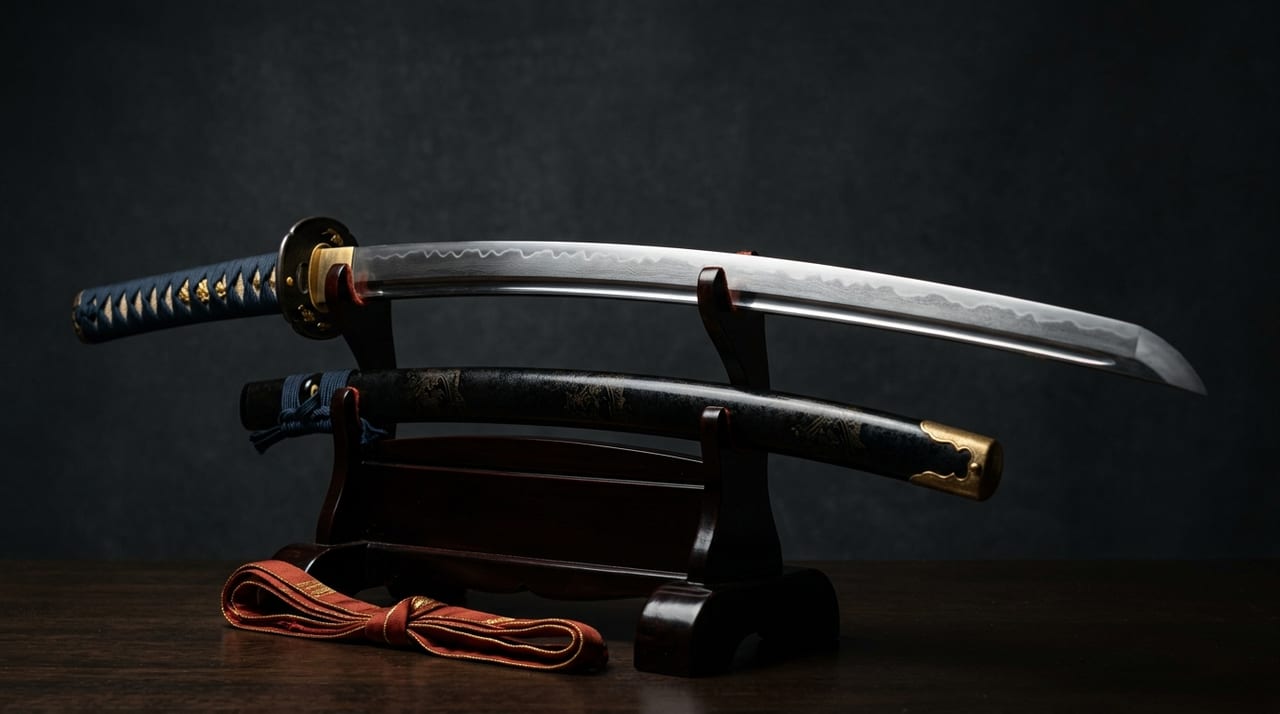
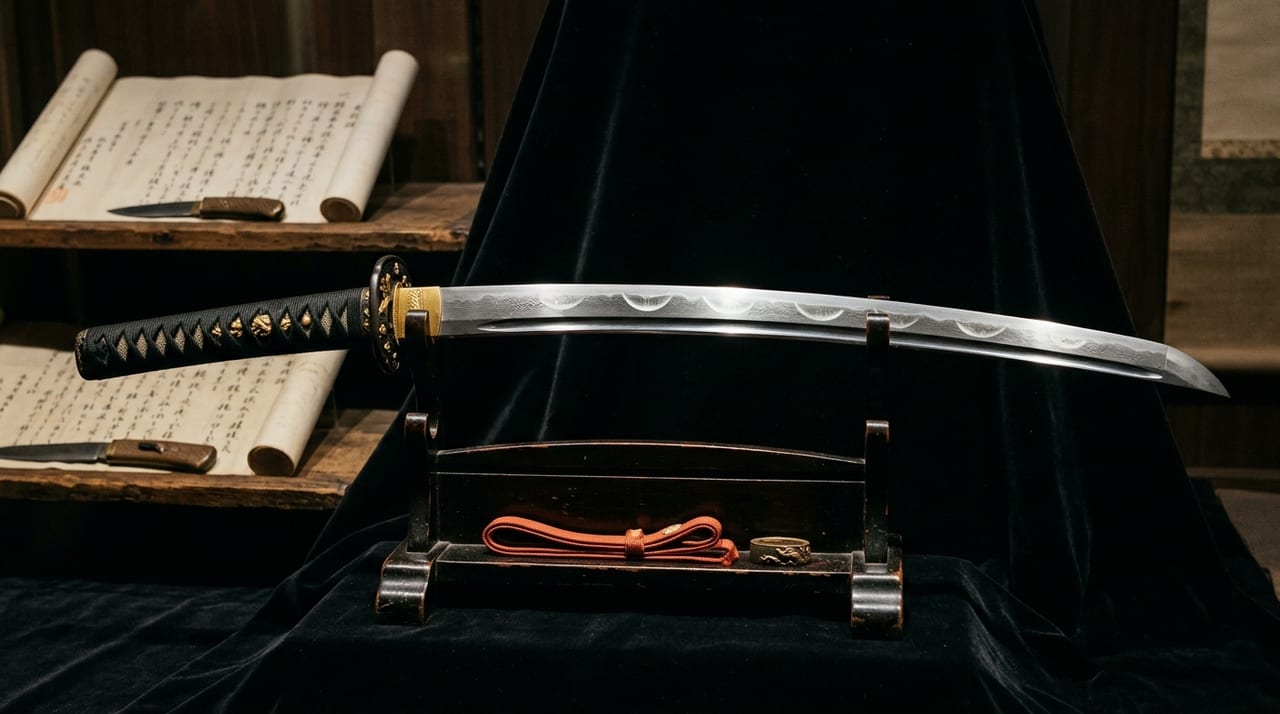
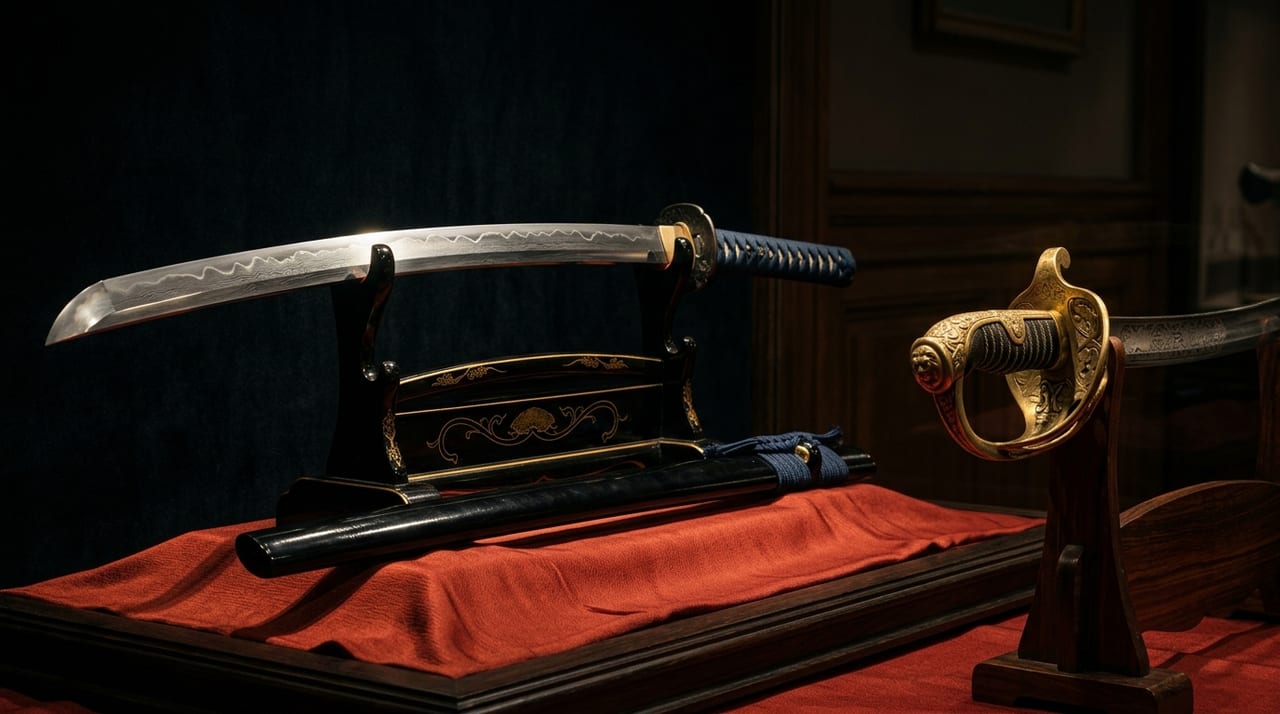
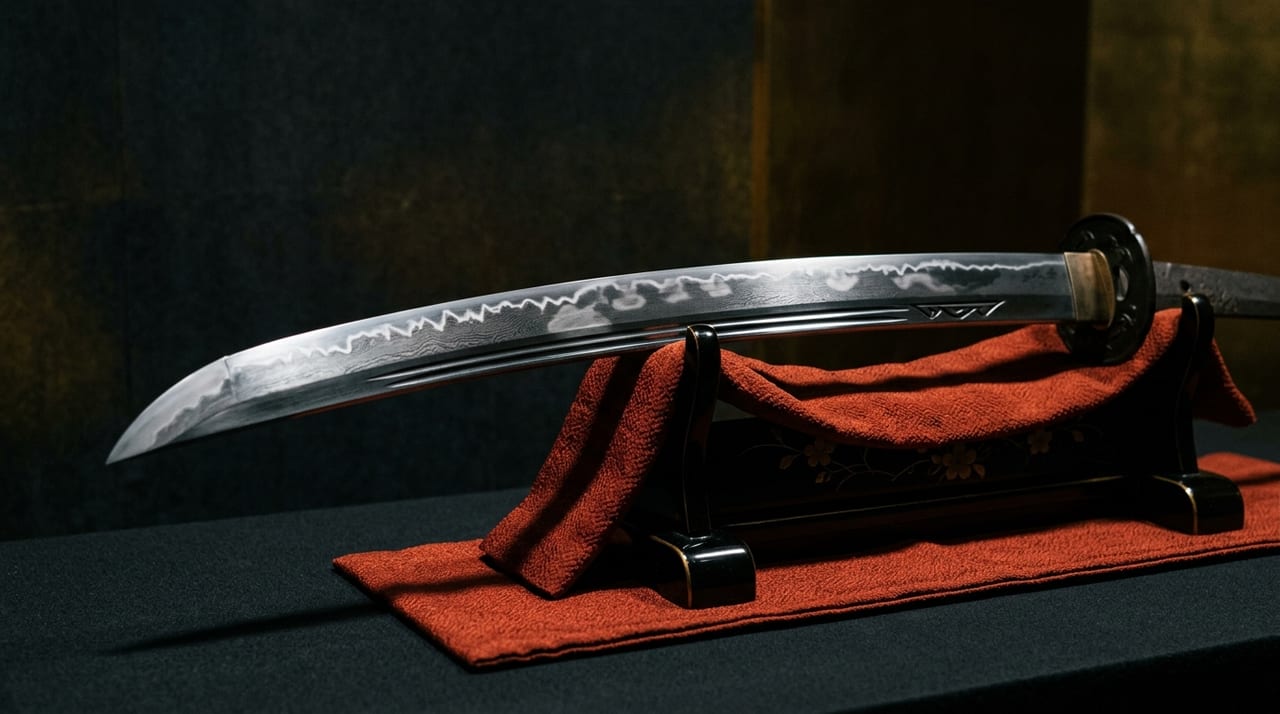 * Image is for illustrative purposes only.
Table of Contents
The Ōnin War — A Major Watershed in Sword History
The Ōnin War, which began in 1467 (Ōnin 1), was a large-scale civil war triggered by the succession dispute within the Ashikaga shogunate family that drew in shugo daimyo from across the country, fought primarily in Kyoto for more than ten years. This conflict became a watershed in Japanese politics, culture, and economics, and is also positioned as an extremely important turning point in the history of swords.
Before the Ōnin War, Kyoto was the center of Japan's sword culture. There was a market for high-quality swords serving the demand of the court nobility, temples and shrines, and the shogunate, and the tōkō of the Kinai region (workshops of the Yamato-den) flourished. However, eleven years of warfare burned Kyoto to the ground, destroying the very urban infrastructure that had supported the culture of sword distribution and appreciation.
The impact of the conflict was not merely temporary; it holds a significance beyond simple "damage to Kyoto" in that it transformed the entire framework governing how swords were made, whose hands they passed into, and how they were evaluated throughout the subsequent Sengoku era. Today, when swords from the period of the Ōnin War through the Sengoku era are handled as antiques or works of art, they are often evaluated with this history of transition in mind.
The Destruction of Kyoto's Sword Culture
In Kyoto, which became the battlefield of the Ōnin War, vast areas of Kamigyō and Shimogyō burned down. Many sword dealers' and tōkō's workshops, as well as the armories of court nobles, temples, and shrines, were also destroyed by fire. The upper-class social networks that had supported sword appreciation alongside the tea ceremony and noh theater collapsed.
The culture of sword connoisseurship — the system of polishing, appraisal, and origami (appraisal certificates) carried out by the Hon'ami family — also suffered a severe blow in this conflict. The Hon'ami family temporarily evacuated to the provinces to escape the fighting and was forced to reduce its activities in Kyoto. With the mechanism for evaluating and distributing high-quality swords rendered nonfunctional, the conditions arose for demand to shift toward mass-produced blades.
What was lost in this period was not only physical facilities such as workshops and storehouses. The invisible foundations — the connoisseurship and technical lineages accumulated over many generations, and the personal networks connecting patrons with tōkō — were severed at the same time. It took a long time for Kyoto's sword culture to be rebuilt after the war, and this period of absence led to regional groups of tōkō finding a stage on which to flourish.
The "War-Demand Bubble" of Bizen Smiths
The Ōnin War and the Sengoku era that followed caused sword demand to expand explosively. The group of tōkō in Bizen (present-day eastern Okayama Prefecture) particularly benefited. The workshops of the Bizen-den's Osafune school had enjoyed high esteem as "Bizen works" throughout the Kamakura to Muromachi periods, but after the Ōnin War they shifted decisively toward a mass-production system. The reason was simple: to meet the demand for swords consumed in large quantities on the battlefield. As shugo daimyo and kokujin lords across the country supplied their soldiers with weapons, orders in lots of dozens to hundreds of blades increased.
The Bizen swords of this period are collectively referred to as Sue-Bizen, and are often described as inferior in quality compared to the Ichimonji of the mid-Kamakura period and Ko-Bizen. It is true that many individual swords are inferior in execution to works by zaimei master smiths. However, given that the demand of the time called for strength and quantity over beauty, this was a rational response.
Among the Sue-Bizen tōkō there were accomplished smiths — Sukesada, Tadamitsu, and Kiyomitsu — and their finest work continued to be highly regarded in later ages. The sword-smith village of Osafune continued to flourish for some time after the Ōnin War, playing an important role as a weapons-supply center during the Sengoku era.
Behind Bizen's ability to transition to mass production, one cannot overlook the geographical conditions: in addition to the region's ease in securing high-quality iron sand and charcoal for fuel, finished blades could readily be transported to various parts of the country by water. These strengths on both the production and distribution sides underpinned the capacity to meet the surge in demand during the period of warfare.
Yamato Smiths — The Decline and Transformation of the Gokaden
The impact of the Ōnin War also reached Yamato (present-day Nara Prefecture), a sword-producing region on a par with Bizen. Yamato was one of the Gokaden (five traditions), and five lineages of tōkō were active there, but they declined rapidly after the Ōnin War.
- Senjuin
- Tegai
- Taima
- Hōshō
- Shikkake
One reason was that Yamato's tōkō operated under the patronage of religious institutions such as Kōfukuji and Kasuga Taisha. The Ōnin War also destabilized the financial foundations of these institutions, and orders and support for tōkō contracted. Yamato was also in a geographical and organizational position less suited to mass-producing swords than Bizen, and there is an aspect in which it was unable to fully meet the large-scale wartime orders.
Some tōkō of Yamato origin fled the conflict and resettled in various regions, establishing local schools at their destinations. This "seeding of the Yamato-den" was, ironically, a phenomenon brought about by the population movement triggered by the Ōnin War, and it led to the diversity of regional sword cultures that came later.
The system of dependence on a single patron in the form of religious institutions brought stable demand in peacetime, but also carried the fragility that when the patron itself was struck down, the orders themselves vanished. While Bizen survived by being supported by multiple customer groups — the warrior class and merchants — Yamato's decline is thought to have been more severe due to this structural difference.
The Transformation of Sword Distribution — From the Court Nobility to Warriors and Merchants
The Ōnin War also greatly changed the distribution structure of swords. Before the war, the dominant pattern was one in which "elite consumers" — the court nobility, temples and shrines, and the shogunate — ordered and purchased expensive high-quality swords. After the Ōnin War, however, middle- and lower-ranking warriors and merchants came to seek swords as practical tools, and the base of the market widened.
This change, which might be called a democratization of the sword market, invigorated the commercial distribution of swords while at the same time intensifying price competition and heralding the arrival of an era of quantity over quality. Some tōkō, seeking differentiation, insisted on being zaimei (cutting the tōkō's name into the nakago) and came to use the mei (signature) as a signal of quality assurance.
Being zaimei was not in itself a guarantee of quality even at the time, but it is significant that it functioned as a clue by which patrons could discern a tōkō's skill and track record. The idea of "choosing by looking at the mei," which took hold in this era, carries through to later approaches to sword appraisal and evaluation.
What the Ōnin War Left Behind
The Ōnin War is positioned in the history of Japanese swords as the turning point "from the golden age of kotō to the mass-produced swords of the Sengoku era." The ancient production centers of Bizen and Yamato were reorganized, and the foundations were laid in this era for the later rise of new production centers such as Satsuma, Echizen, Owari, and Suruga.
Moreover, many famous swords were lost in the warfare of this era, and the rarity of extant swords from before the mid-Muromachi period is not unrelated to these flames of war. The hundred years of the Ōnin War and the Sengoku era that followed are inscribed in sword history as the period of the most intense consumption and most vigorous production of swords.
What to Know When Viewing Sue-Bizen and Yamato-den Swords
Today, when appreciating or collecting swords made from the period around the Ōnin War through the Sengoku era, having a few points of view will deepen one's understanding.
- Individual variation in works: With works by Sue-Bizen tōkō and Yamato-lineage tōkō who relocated to the provinces, zaimei and mumei examples are intermingled even within the same period, and one must engage with them bearing in mind that there is a wide range in the quality of individual pieces. Even from an era that prioritized quantity, the finest work of tōkō such as Sukesada, Tadamitsu, and Kiyomitsu — whose reputations have continued to the present day — has always been treated as in a class apart.
- Kanteisho (appraisal certificates): For objectively understanding the provenance and style of swords from this era, the existence of a kanteisho issued by an official appraisal body is an important clue. The kanteisho of NBTHK (Society for the Preservation of Japanese Art Swords) represents a third-party specialist assessment of the attribution to a tōkō and period, and is helpful when handling swords with the background of the period around the Ōnin War.
- Condition: The condition of the blade — the presence or absence of rust and edge chips, the state of polishing, and the condition of the koshirae (mounting) and shirasaya (plain storage scabbard) — are also points to check in conjunction with the historical background.
Given that each sword has survived many long years, every individual piece has its own provenance befitting its history, and understanding it together with that provenance leads to knowing, through the sword itself, the historical turning point that was the Ōnin War.