The Operations and Management Challenges of Japanese Sword Museums: The Reality of Visitor Numbers, Finances, and Special Exhibitions
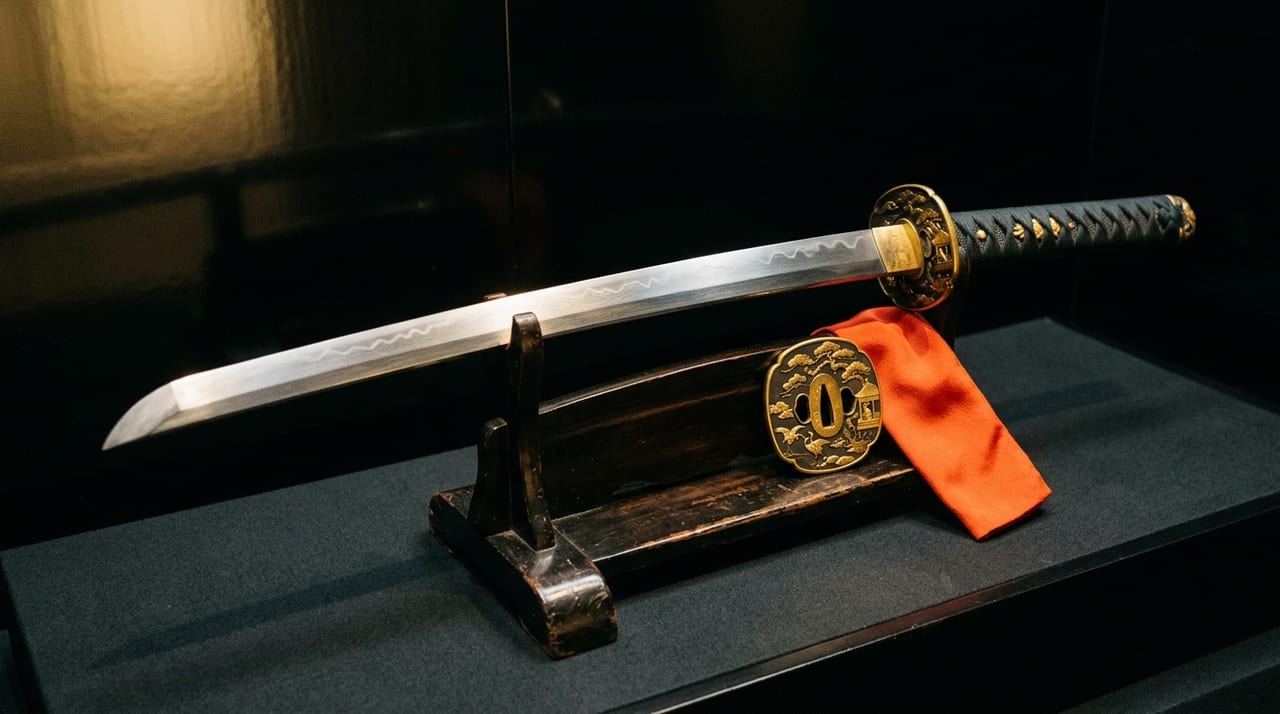 * Image is for illustrative purposes only.
Table of Contents
The Japanese Sword Museum as a "Solitary Presence"
Throughout Japan, more than a dozen museums specialize in exhibiting and housing Japanese swords. The most prominent is the Japanese Sword Museum in Ryōgoku, Tokyo (operated by the NBTHK, Society for the Preservation of Japanese Art Swords), but facilities holding sword collections as branches of prefectural art museums and local history museums are also scattered across the regions. However, many of these facilities face serious management challenges.
The core of the problem is being "too niche." Even for museums and art museums as a whole, securing visitor numbers is not easy, but the specialized genre of Japanese swords limits the audience further. At the same time, the preservation and management of swords involves enormous costs — temperature and humidity control, security equipment, and regular polishing — and these institutions carry a structural deficit where "costs do not decrease even when the collection is small."
The Reality of Visitor Numbers: Light and Shadow of the "Touken Ranbu Boom"
The Touken Ranbu boom that began in 2015 brought dramatic changes to the way Japanese sword museums operate. At the Japanese Sword Museum in Ryōgoku, Tokyo, visitor numbers swelled to several times their pre-boom levels, and many young female fans in their teens to thirties began visiting alongside the traditional middle-aged and older male audience.
However, for many facilities those benefits were only temporary. Museums that did not hold swords featured in Touken Ranbu found it difficult to benefit from the boom, and visitors concentrated at facilities holding famous swords such as Heshikiri Hasebe and Mikazuki Munechika. Even where game fans could be drawn in temporarily, challenges remain from the perspective of "building repeat visitors" and "cultivating the next generation of collectors."
Special exhibitions are important as a catalyst for drawing crowds, but in the case of Japanese sword museums the costs of rotating exhibits run higher than at general art museums. Swords are heavy, and safety measures for display cases are strictly enforced, so the cost of preparing a single sword for exhibition tends to be higher than for paintings and the like. Maintaining three to four special exhibitions per year requires borrowing fees from outside facilities and promotional expenses, and the reality is that for institutions with little financial latitude, holding such exhibitions at all is difficult.
Weak Financial Foundations: A Structure Dependent on Public Subsidies and Donations
Most Japanese sword museums cannot sustain their operations on self-generated revenue alone (admission fees, museum shop sales, and catalogue sales). They are highly dependent on subsidies and grants from the Agency for Cultural Affairs and local governments, and when financial conditions change, their very survival is threatened.
In fact, among regional specialist sword museums, there are cases where institutions have been forced to close temporarily or scale down. For those operating as public interest foundations, membership fees and donations are important revenue sources, but this financial base is also tending to shrink due to the aging of members.
Inbound Strategy: Efforts to Increase Foreign Visitors
Efforts to capitalize on the increase in foreign visitors to Japan are advancing at various museums. The following are specific initiatives that have been undertaken.
- Expanded multilingual guidance: Installation of explanation panels in English, Chinese, and Korean; development of audio guide apps. The names of each part of a sword (hamon, jigane, nakago, etc.) have their own specialist terms even in English, and securing qualified translators remains a challenge.
- Development of hands-on programs: Hands-on experience holding a sword, video displays of the kaji process, and drawing and sheathing a replica sword. Foreign tourists tend to prefer programs where they can "participate" over simply "viewing," and enriching participatory content is directly linked to drawing visitors.
- Use of SNS and video distribution: Distribution of exhibition commentary videos on YouTube; preparation of photography spots for Instagram. The number of museums reinforcing their SNS operations by bringing in young staff and outside consultants is also growing.
The Succession Problem: Generational Change Among Curators
A serious challenge unique to Japanese sword museums is the shortage of successors for curators with specialized knowledge. The knowledge of sword appraisal and preservation requires years of training and carries a level of expertise that general art historians cannot fully handle. Many of the current principal curators are approaching their sixties, and generational change within the next ten to twenty years is a pressing challenge.
Some museums are piloting curator training programs linked to NBTHK appraisal training, but a systematic framework for successor development across the industry as a whole has yet to be established.
Future Outlook: "Experiential Value" Is the Key to Survival
For Japanese sword museums burdened with the triple hardship of financial difficulties, declining visitor numbers, and a shortage of successors, it is essential to expand their role from "merely exhibiting" to becoming hubs for "experience, education, and community." Overseas arms museums — England's Tower of London and Spain's Real Armería (within the Royal Palace of Madrid) — generate high revenue as experiential programs and tourist content, and there is much that Japanese sword museums can learn from them.
Models of "temporary exhibition of external collections" through partnerships with corporations and private collectors, and initiatives combining online 3D exhibitions with in-person displays, will also be important options going forward. As a "stronghold" for passing on the cultural heritage of the nihontō to the next generation, Japanese sword museums carry great significance. What is called for right now, more than anything, is the renewal of the business model that sustains them.