The Work of a Sword Appraiser: How NBTHK Examiners and Connoisseurs Identify the Authentic
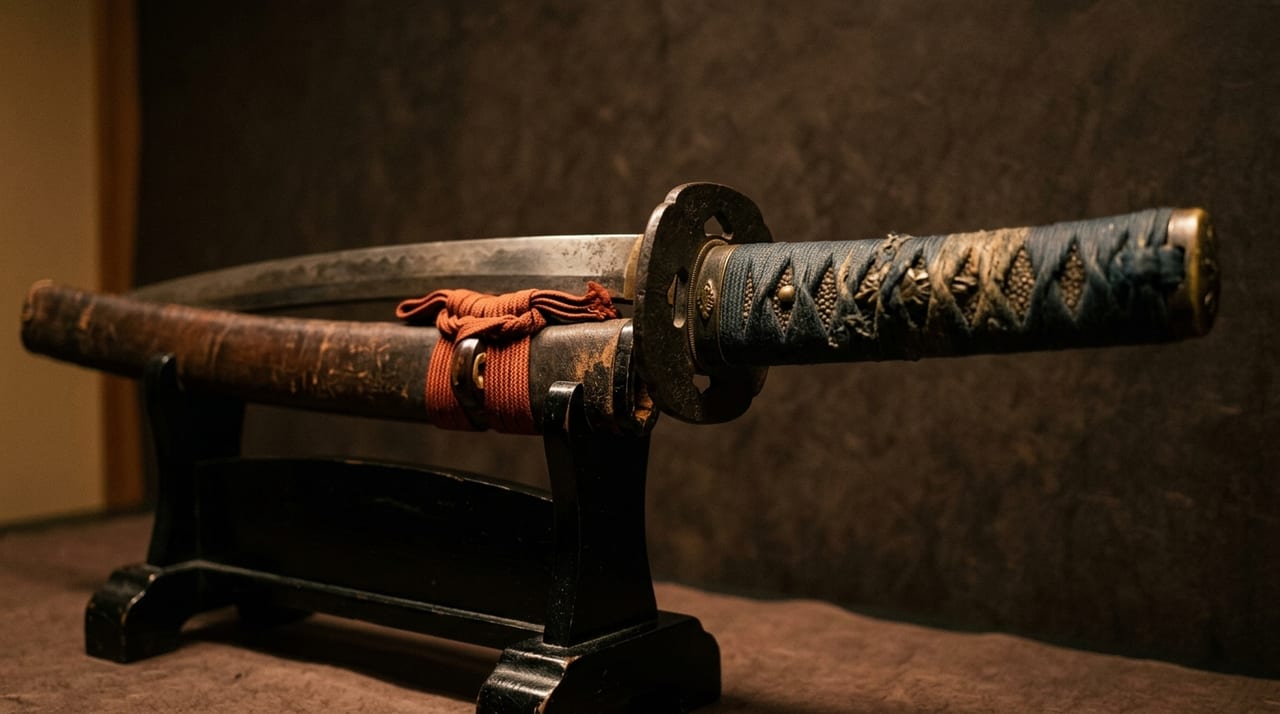 * Image is for illustrative purposes only.
Table of Contents
What Does a Sword Appraiser Do?
The word "appraiser" is familiar from television antiques programs, but nihontō appraisal demands a fundamentally different kind of expertise from the appraisal of other antiques. Unlike ceramics or hanging scrolls, nihontō appraisal requires three pillars: "an understanding of metallurgical principles," "memorization of the morphological characteristics of each school," and "hands-on experience with several thousand actual swords."
The central institution for sword appraisal in Japan is the NBTHK (Society for the Preservation of Japanese Art Swords). NBTHK appraisal sessions are held multiple times a year, and an examining panel reaches its decisions by consensus across four grades: Hozon Tōken, Tokubetsu Hozon Tōken, Jūyō Tōken, and Tokubetsu Jūyō Tōken. The types of kanteisho (appraisal certificate) issued and their reliability are explained in detail at Types and Reliability of Sword Kanteisho.
How an Appraisal Session Actually Works
At an NBTHK appraisal session, swords are evaluated through the following process.
1. Registration and Basic Verification A sword brought in is first checked against its registration certificate (nagasa, sori, and the presence or absence of a mei). The recorded values on the certificate are compared against physical measurements to rule out alteration or substitution at the outset.
2. Disassembly Inspection (Removal from the Shirasaya) The sword is drawn from its shirasaya (plain storage scabbard), the mekugi is removed, and the blade is separated from the tsuka (hilt). The condition of rust on the nakago (tang), the number of mekugi holes, the presence or absence of a mei (signature), and the type of yasurime (file marks) are all examined. This alone is often sufficient to narrow down the period and school.
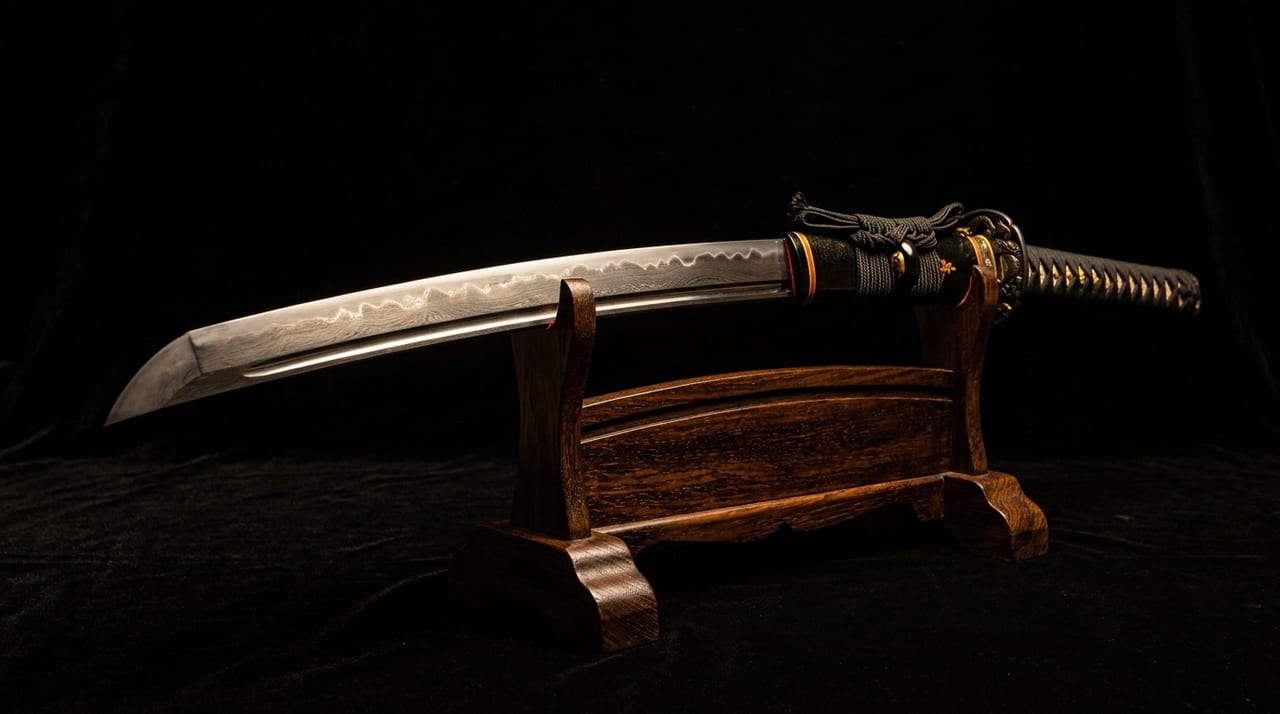
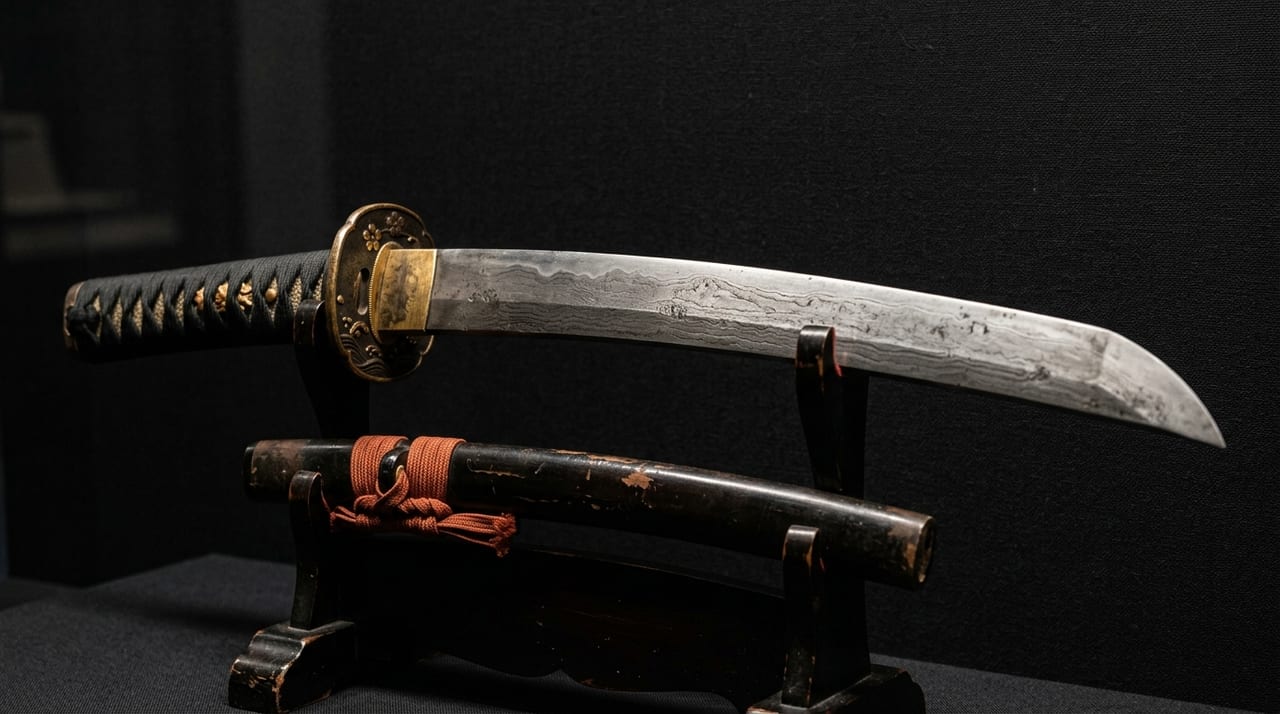
3. Light-Source Inspection: Observing the Hamon and Jigane The most important step is examination under a light source. A dedicated lamp — a strongly directional incandescent-type light rather than a fluorescent one — is used, and the sword is tilted to observe the hamon, jigane, utsuri, and hataraki.
- Hamon (temper line): The type of hamon (suguha, chōji, gunome, or irregular), the condition of nie and nioi, and the hataraki (ashi, ha, sunagashi, etc.)
- Jigane (steel of the blade surface): The type of hada (itame, masame, or mokume) and degree of refinement
- Utsuri: The misty shadow that appears in the jihada (grain pattern of the steel) — such as the "midare-utsuri" characteristic of Bizen-den
- Nie and nioi: The coarseness and density of the metallic particles that appear along the temper boundary
4. Deliberation: The Examiners' Exchange of Views NBTHK assessment is conducted by consensus among multiple examiners. Honma Kunzan (Honma Junji), known as an authority on modern nihontō appraisal, was the second president of the NBTHK (the first president was Hosokawa Moritatsu), and his connoisseurship and research established the foundation for the consensus-based appraisal system that continues today. The principle of "eliminating unilateral judgment and integrating the knowledge of multiple specialists" is upheld. Each examiner observes the sword individually, then brings their views together to narrow down the candidates for school, period, and tōkō (swordsmith). The internal workings of the appraisal committee are outlined at Internal Operations of the NBTHK Appraisal Committee.
When opinions diverge, a detailed examination using a magnifying loupe and stereo microscope is added. A traditional magnifying loupe and a modern high-magnification microscope are used together to examine the fine details of the kitae-hada (forging grain) and the microstructure of the hamon.
5. Final Decision and Issuance of the Kanteisho As a result of the deliberation, it is determined whether the sword qualifies as Hozon Tōken, Tokubetsu Hozon Tōken, Jūyō Tōken, or Tokubetsu Jūyō Tōken, or is deemed "not qualifying." If it qualifies, a kanteisho (appraisal certificate) is issued, with an oshigata (an ink impression of the hamon and nakago) attached.
What the Appraiser Looks For: Three Pillars
An experienced appraiser evaluates a sword primarily from three perspectives.
① Sugata: Determining the Broad Period and School By observing the overall silhouette (sugata) of the sword, one can estimate the approximate period (jōkotō, kotō, shintō, or shinshintō) and provenance (Bizen, Sōshū, Yamato, Yamashiro, or Mino). The position and depth of the sori (curvature), the ratio of nagasa (blade length) to sakihaba, and the shape of the kissaki (point) all have characteristics specific to each period. Experienced appraisers say that "two seconds of looking at the sugata is enough to place the period."
② Jigane: Judging Provenance and Technical Level The type and quality of the jihada (grain pattern of the steel) in the jigane is the most honest indicator of provenance and the tōkō's level of technical mastery. The flowing itame of Bizen-den, the slightly masame-inclined hada of Yamato-den, the rough nie-worked hada of Sōshū-den, and the smooth jigane of Mino-den — these are difficult to convey in words, but by viewing hundreds of actual swords one comes to "know them instinctively."
③ Hamon: The Decisive Factor in Appraisal The hamon is ultimately the decisive factor in appraisal. Each school and each tōkō has a "distinctive hamon," and they can be read "as if written there" — the rough nie-ashi of Masamune, the large chōji of Kanemitsu, the hira-zukuri hamon of Yoshimitsu, for example. However, forgers also possess this knowledge and use it to create fakes, so "judging by the hamon alone" is dangerous; a comprehensive assessment together with the jigane, sugata, and nakago is indispensable.
The Path to Becoming an Appraiser: A Long Road of Learning
There is no clearly defined qualification examination or licensing system for becoming an NBTHK examiner. In the case of the NBTHK, examiners are selected by nomination based on "accomplishments, experience, and standing within the specialist community." The training and apprenticeship path taken by those who aspire to become appraisal specialists is explained at Training Curriculum for Appraisal Specialists.
A typical appraiser's career path looks something like the following.
- Years of practical experience as a sword dealer or enthusiast (at least 10–20 years)
- Continued participation in NBTHK and regional branch appraisal study groups
- Collecting oshigata and studying catalogues in depth — memorizing hundreds of oshigata (ink impression records of the hamon) of historic masterworks
- Apprenticing under a renowned appraiser — a personal master-pupil relationship is important
- Writing papers and presenting at academic gatherings — contributing to sword research journals (such as Tōken Bijutsu, etc.)
Organizations that issue private "sword appraiser certificates" also exist, but authority within the industry is overwhelmingly dominated by NBTHK and Honami-lineage appraisal, and it is difficult to establish oneself as an independent appraiser on a private certificate alone.
The Honami Lineage: Appraisers Since the Edo Period
The Honami family holds a special position in the history of nihontō appraisal. Engaged as sword polishers and appraisers for the Ashikaga shogunate during the Muromachi period, the Honami family established its authority in the Edo period as the shogunate's officially recognized "collective of sword appraisers." The full scope of the appraisal enterprise the Honami family has carried on for 400 years is summarized at 400-Year History of the Honami Family's Appraisal Enterprise.
The origami (appraisal certificate) issued by the Honami family still commands great trust in the antiques market today, and the phrase "with a Honami origami" is used to mean "definitively authentic."
Appraisers who carry on the Honami family tradition remain active today, and particularly in the appraisal of kotō (swords from before the Muromachi period), they function as an authoritative evaluating body alongside the NBTHK.
Appraisal in the Digital Age: The Supplement of Technology
In recent years, technologies such as 3D scanning, X-ray fluorescence analysis, and metallographic analysis have attracted attention as supplementary tools for sword appraisal.
- X-ray fluorescence analysis: The iron-to-carbon ratio of the blade is measured non-destructively, providing evidence for determining whether tamahagane was used.
- 3D scanning: Precise measurement of blade geometry makes the comparison of dimensional features against period characteristics more objective.
- Digital oshigata databases: Research into digitizing the hamon of known masterworks and using AI for comparative matching has begun.
Appraisers unanimously say, however, that "technology is no more than a supplementary tool." The hataraki of the hamon that becomes visible with a single shift in the angle of light, and the balance of the center of gravity when the sword is held in the hand, are sensory elements that cannot be reproduced in digital data — and it is precisely those elements that are the product of decades of training. Even as technology advances, the final judgment continues to rest with the eye of an appraiser who has accumulated years of experience.