Training Courses for Appraisal Specialists — The Path of Apprenticeship and Study for Those Pursuing Nihontō Appraisal
 * Image is for illustrative purposes only.
Table of Contents
How an "Appraiser" Is Made
How are the specialists who determine the authenticity, period, and maker of nihontō trained? This question might bring to mind a national licensing examination for nihontō appraisers, but the reality is somewhat more complex. As of 2026, Japan has no single national examination system that certifies nihontō appraisers.
So how are genuine appraisal specialists actually trained? The path involves a long and demanding combination of discipleship, study, practical experience, and participation in assessments conducted by public-interest foundations. This article offers a systematic explanation of the main routes to becoming a nihontō appraisal specialist.
An Overview of the Knowledge Required for Nihontō Appraisal
To become an appraisal specialist, one must comprehensively acquire the following knowledge and skills.
1. Knowledge of Sword History, Schools, and Tōkō
The characteristics of the Gokaden (five traditions) — Yamashiro, Yamato, Bizen, Sōshū, and Mino — the genealogies of the various schools, and the stylistic traits of the major tōkō. Grasping these by period and region forms the foundation. What is required is not simply memorizing a "list of master smiths," but understanding them together with the cultural and historical background of why a particular style emerged in a particular period and region.
2. Appraisal Technique — Reading the Jigane, Hamon, and Form
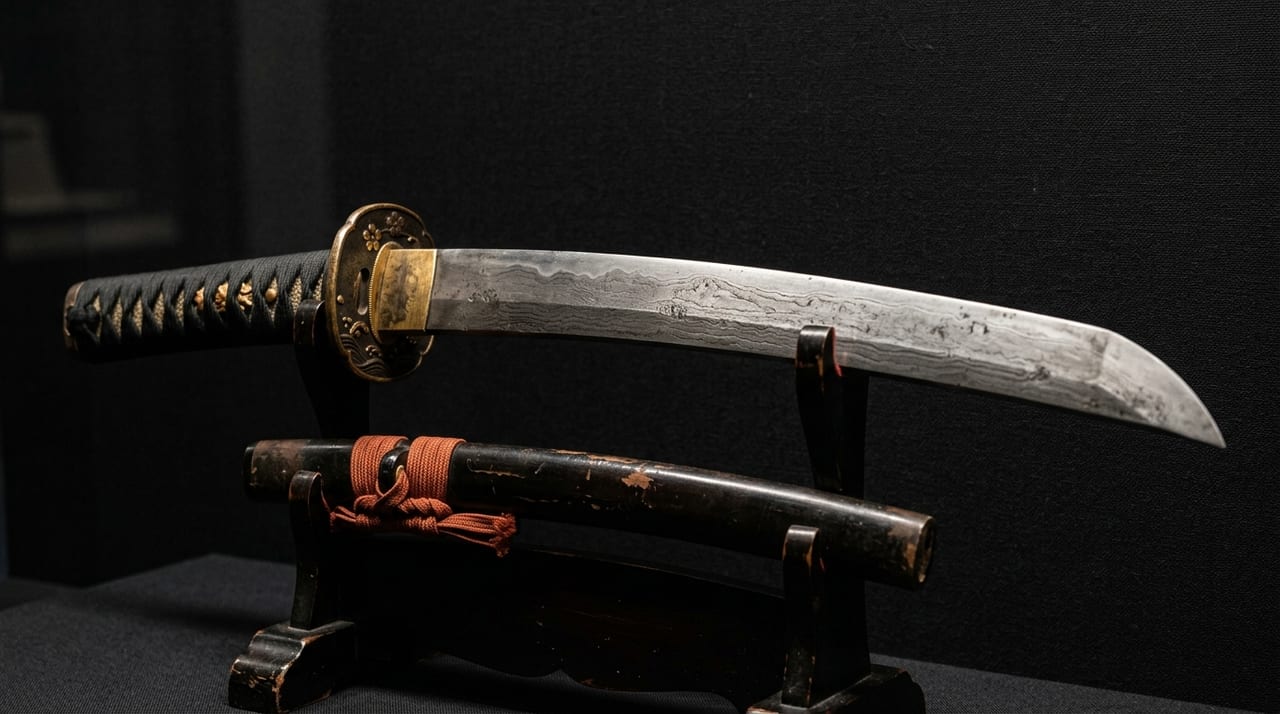
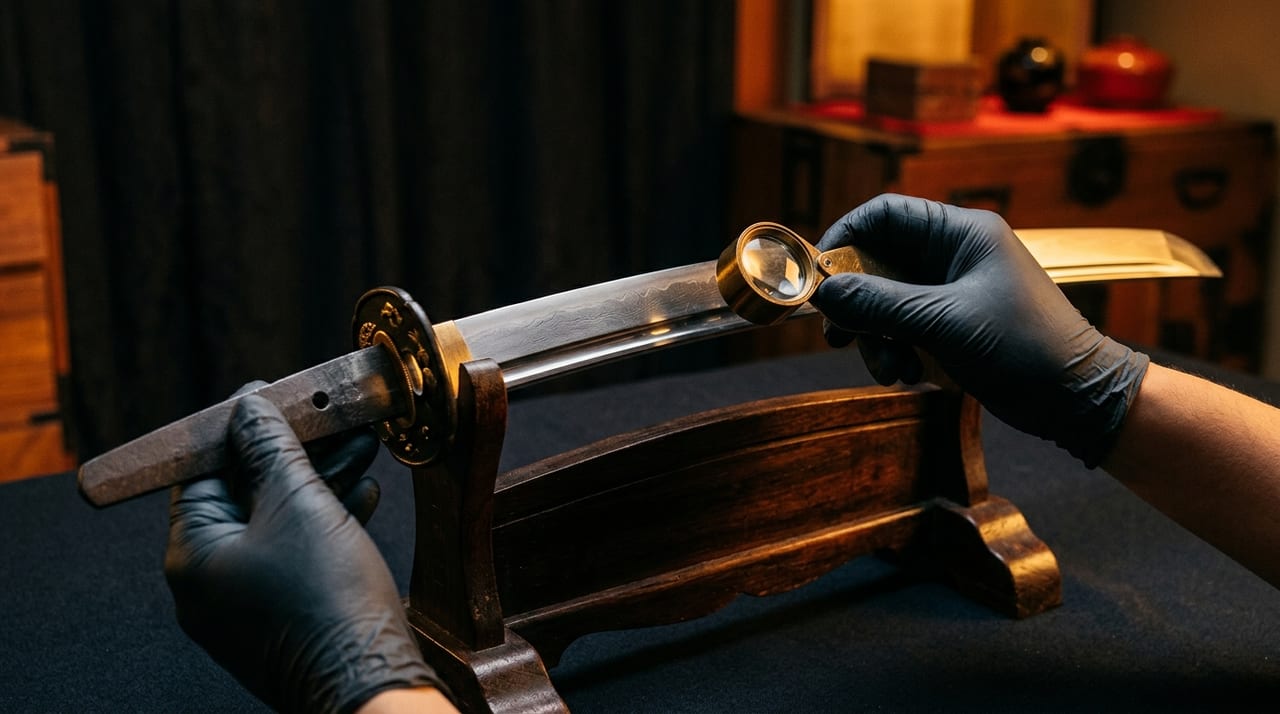
This is the technique of examining an actual sword and estimating "which period, which school, and which tōkō" from such features as the grain and utsuri of the jigane (steel of the blade surface), the characteristics of the hamon (temper line), and the shape of the sori (curvature) and kissaki (point) in the overall form. Known as "the eye" (ganryoku), it cannot be acquired from books alone.
3. Understanding of Forging Technique
How a tōkō selects tamahagane, performs orikaeshi tanren (folding), and applies tsuchioki (applying the clay coating) and yaki-ire (quenching). Understanding the manufacturing process makes possible a deeper interpretive reading in appraisal — such as "why does this sword have that particular hamon?" or "what does this characteristic of the jigane signify?"
4. Practical Knowledge of Registration Certificates, Kanteisho, and Laws
An understanding of the legal framework surrounding swords — including the Firearms and Swords Control Act (Jūtōhō), the Act on Protection of Cultural Properties, and the Foreign Exchange and Foreign Trade Act — is indispensable for appraisal specialists working in practice. Knowledge of how to read a kanteisho (appraisal certificate) and of the NBTHK's assessment standards is also required.
Discipleship (the Master-Apprentice System) — The Most Traditional Route
Apprenticing Under a Sword Dealer or Appraiser
The most traditional training route is to apprentice under an experienced sword dealer or appraiser and accumulate experience through practical work. The apprentice learns through the following kinds of tasks under the master:
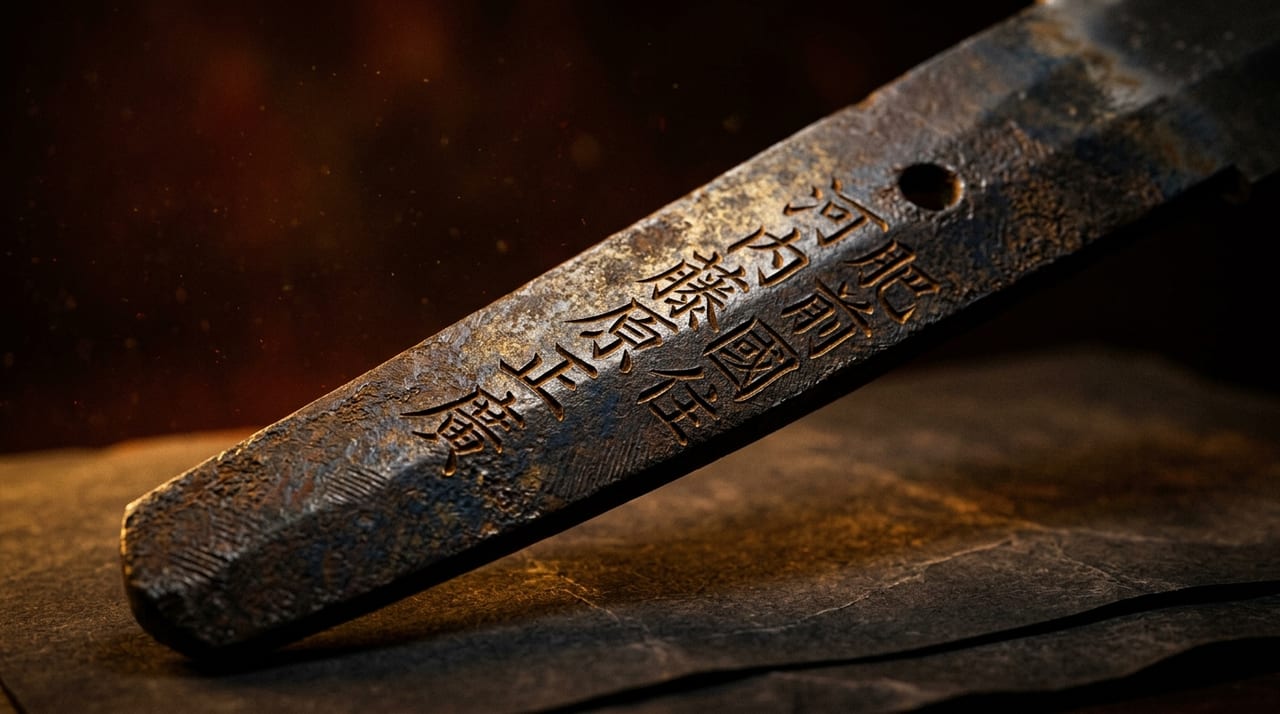
- Receiving and recording incoming swords (measuring and recording nagasa (blade length), sori (curvature), kasane (blade thickness), and mei (signature))
- Practical work in maintaining, storing, and displaying swords
- Explaining swords to customers and serving them (training oneself to put the characteristics of a sword into words)
- Attending and assisting the master's appraisals (learning from the master "why it is viewed this way")
- Assisting with the preparation of documentation for NBTHK submissions
Because this master-apprentice system has no systematic curriculum, what can be learned and to what degree depends greatly on the master's teaching style, the apprentice's dedication, and the quality of the swords handled. It is premised on a long period of training — spanning several to more than ten years — with the goal of acquiring "an eye equal to the master's."
Apprenticing Under a Tōkō
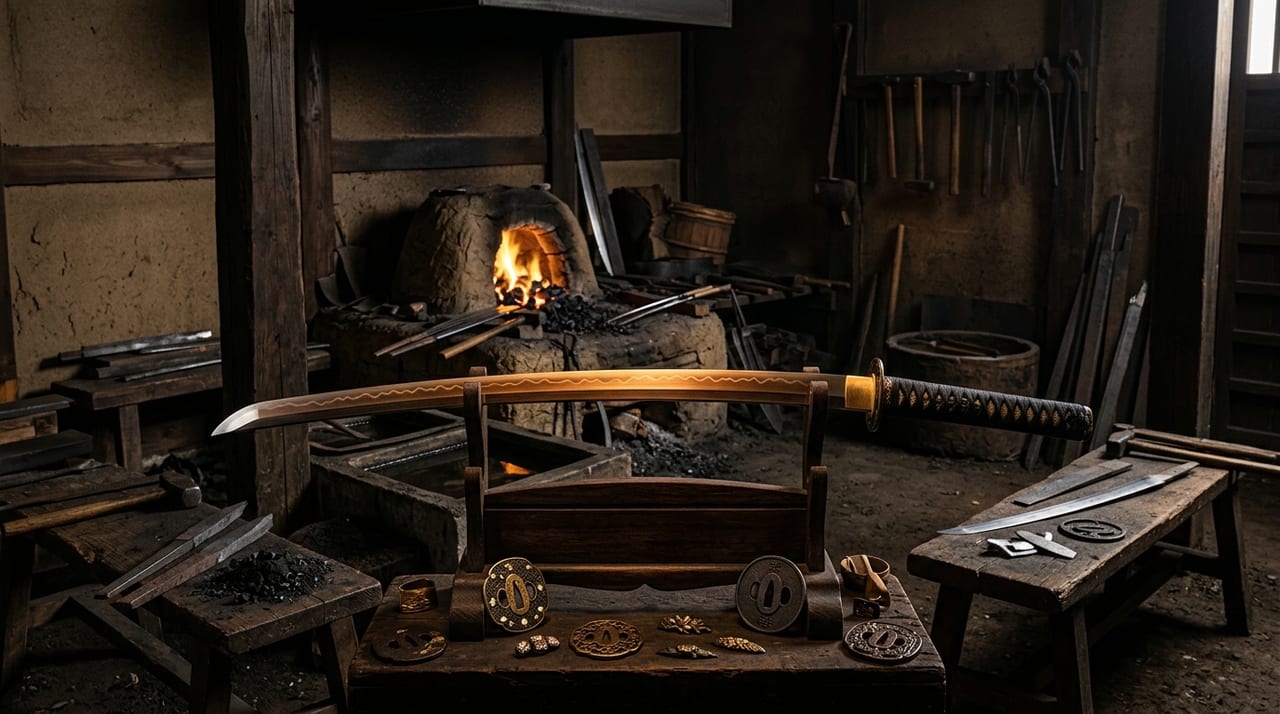
There is also a route of apprenticing under a kaji (smith) to acquire forging technique. By understanding swords from the maker's perspective, one can gain a hands-on grasp of how jigane and hamon are formed. An understanding of forging technique becomes a significant asset in deepening one's appraisal eye.
However, becoming a tōkō is itself one profession. To become independent as an appraisal specialist, practical experience in the sword trade or appraisal industry is also required after acquiring forging technique.
Educational Activities Related to the NBTHK
The NBTHK (Society for the Preservation of Japanese Art Swords), a public-interest foundation, not only conducts appraisal assessments but also engages in activities to promote and educate people about nihontō culture.
Sword Appreciation Meetings and Appraisal Study Groups
The NBTHK holds sword appreciation meetings and appraisal study groups through its branches around the country. The typical format has participants take up several swords in turn and make their own judgment on "which school and tōkō," after which they receive commentary from specialists.
Such appreciation meetings are a valuable opportunity to handle swords of different periods, schools, and quality, and are used as a venue for sharpening one's appraisal eye.
Auxiliary Participation in Assessment Sessions
There are also opportunities to participate as an assistant or observer in NBTHK assessments and to observe the actual appraisal process at close range. However, this is based on trust and personal connections with the assessment committee members, and access for the general public is limited.
The Academic Route — Nihontō Research at Universities and Research Institutions
Although it does not lead directly to appraisal practice, there is also an academic route of choosing nihontō as a research theme in university departments of archaeology, art history, cultural property studies, and the like.
At institutions such as the Tokyo National Museum and the Japanese Sword Museum (Yokoami, Sumida-ku, Tokyo), researchers and curators are responsible for the investigation, analysis, and display of swords. There are cases in which researchers with such an academic knowledge base later become active in the appraisal industry as well.
There are also researchers who analyze nihontō from the perspective of metallurgy and materials science. Scientific analysis of iron structure, carbon distribution, heat treatment traces, and so forth is attracting attention as a means of supporting appraisal.
The Authority Structure Seen from the Perspective of Kanteisho-Issuing Organizations
As noted above, the NBTHK is the most authoritative institution in nihontō appraisal, but other organizations and individuals are also involved in appraisal.
- The Hon'ami lineage: Appraisers who carry on the lineage of the Hon'ami family, which served as sword appraisers to the shogunate for approximately 400 years from the Muromachi period. Today, the emphasis is placed on the transmission of technique and knowledge rather than on succession by blood.
- Regional sword dealer associations: Experienced members belonging to industry associations such as the All Japan Sword Dealers Cooperative Association may take on the practical work of valuation and appraisal.
- Individual appraisers: There are individual appraisers with extensive experience and personal connections, but the issuance of a documentary kanteisho (appraisal certificate) is limited to the framework of NBTHK certification.
The Realistic Path to Independent Practice as an Appraisal Specialist
Reaching the point of independent practice as an appraisal specialist generally requires 10 to 20 or more years of experience. The stages of that path are as follows.
- Entry (Years 0–3): Apprenticing under a sword dealer or appraiser. Acquiring basic knowledge of swords, measurement, and maintenance.
- Training period (Years 3–10): Cultivating the eye to identify period, school, and tōkō by viewing a large number of actual swords. Attending the master's appraisals and sharpening one's judgment.
- Practical participation (Years 5–15): Gaining experience with NBTHK submission paperwork, assisting with client appraisals, and conducting one's own assessments. Beginning to develop an independent "eye of one's own" apart from the master.
- Independent practice as a specialist: Opening one's own sword shop or working as an independent appraiser.
Appraisal is not "something with a single correct answer" but rather "something estimated through consensus and experience." The integrity to honestly say "I do not know" even after accumulating experience is also demanded of a specialist.
Conclusion — The Path to Becoming an Appraisal Specialist Is a "Long Journey"
There is no shortcut — no examination one can pass in a single attempt — to becoming a nihontō appraisal specialist. One must learn under a master, observe countless swords, and absorb the characteristics of periods and schools into one's very body. The accumulation of long years of training is the only way.
But for that very reason, the value of specialists who possess a genuine appraisal eye is high, and they are sought after across fields including the sword market, cultural property protection, and museum curatorship. For those captivated by the world of nihontō, the path to becoming an appraisal specialist is a difficult one — yet it can be said to offer a deeply fulfilling choice.