Japanese Sword Education and Outreach — The Current State and Future of Sword Schools, Taiken-kaji, and Workshop Visit Programs
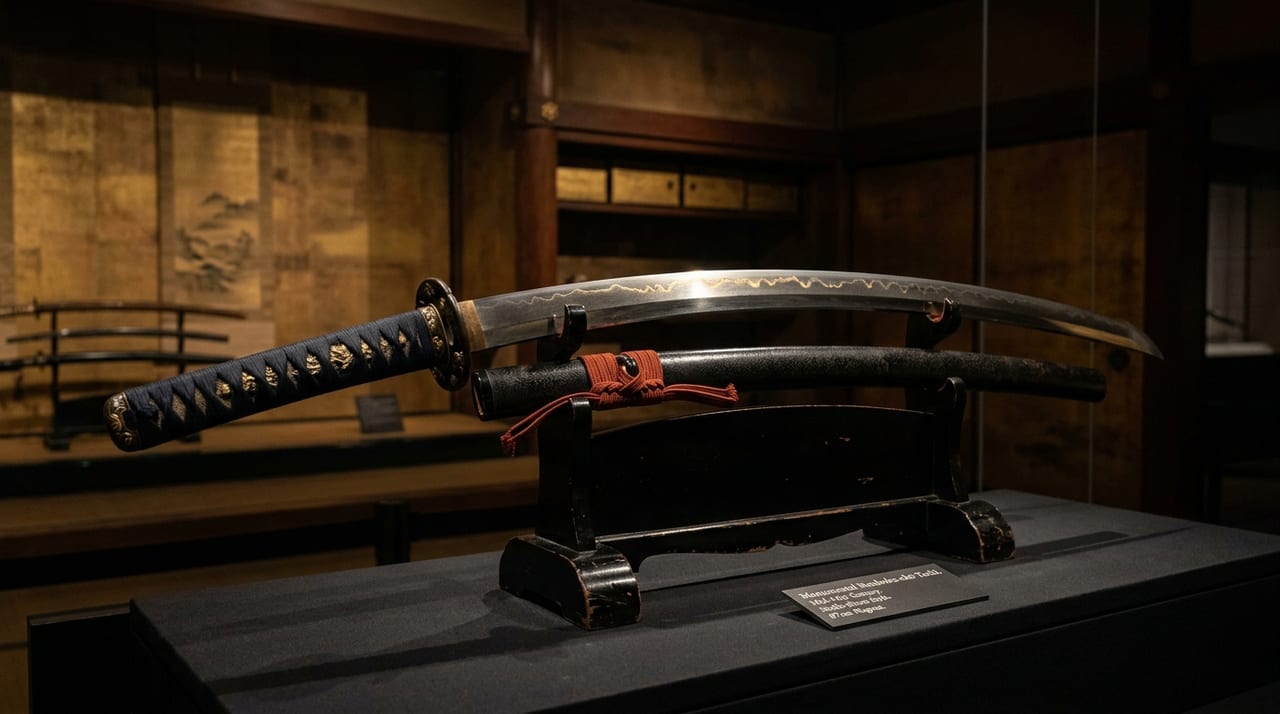 * Image is for illustrative purposes only.
Table of Contents
Introduction — The Importance of Learning About Japanese Swords "Through the Body"
The Japanese sword is not merely a work of fine art and craft but a crystallization of skills and spirituality cultivated over a long history. The understanding has been spreading rapidly in recent years that learning from books and exhibitions alone is insufficient to grasp its true essence, and that visiting a kaji workshop in person to witness the craftsman's technique — and in some cases experiencing striking a sword oneself — is extremely effective.
"Taiken-kaji" refers to hands-on sword-forging experience programs open to the general public. Participants stand before an actual kaji furnace, strike tamahagane under the guidance of a tōshō, and observe the yaki-ire process up close. Through this direct experience, they come to understand — not theoretically but through physical sensation — the profound depth of the skills and knowledge that tōshō have accumulated over hundreds of years.
This kind of learning also holds meaning for those who wish to own a Japanese sword. By gaining an understanding of the immense effort and concentration upon which a tōshō's work rests, one comes to appreciate more deeply the value a single sword carries and the significance of having a kanteisho accompany it.
Background and Current State of Taiken-kaji Programs
Japanese sword tanren has traditionally been a closed world of craftsmen's training, inaccessible to outsiders. It was perceived as an extremely high barrier for ordinary people: kaji workshops were seen as insular and even difficult to visit, so that even those with an interest in swords had little opportunity to learn the details of the manufacturing process.
From the 2000s onward, however, tōshō across the country began actively launching experience programs open to the public, with the aim of preserving traditional craft and promoting regional revitalization. In particular, workshops in the heartland regions of Bizen (Okayama Prefecture), Mino (Gifu Prefecture), and Echizen (Fukui Prefecture) regularly hold experience courses. The range of participants has grown diverse: not only sword enthusiasts but also foreign tourists and school-trip students now visit in large numbers, and the reach of Japanese sword education has expanded greatly.
The Workshop Visit Program as an Option
Alongside taiken-kaji, in which participants swing the hammer themselves, a growing number of workshops also offer "workshop visit programs" consisting solely of watching the craftsman's work up close. Because no hands-on work is required, these are accessible even to people with physical or time constraints, and they are often chosen as the entry point for a first encounter with the Japanese sword production process. Some participants take a graduated approach: they first get a sense of the overall workflow through a visit and then sign up for taiken-kaji at a later date.
Sword Schools — Courses for Learning Appraisal and History
In recent years, educational programs known as "sword schools" have been opened around the country — courses through which participants can systematically study not just the process of forging the blade itself but also the history, styles, and appraisal of Japanese swords. These are typically organized by sword-related associations, museums, and enthusiast groups, and follow a format that combines classroom instruction with hands-on observation of actual swords, covering differences in style by period, how to read the hamon and jigane, and the basics of sword maintenance.
These courses serve as a bridge between the "maker's perspective" gained through taiken-kaji and the "viewer's perspective" required for appraisal. Participants have noted that learning the appraisal viewpoint after the experience of actually striking the blade allows them to understand, with genuine conviction, that each feature of the hamon arises not by chance but through the deliberate intention of the craftsman.
The Essence of Sword-Making — The Fusion of "Craftsmanship" and "Spiritual Discipline"
What participants in taiken-kaji find most striking is the meticulous care of the tōshō's movements and the spiritual strictness with which he approaches his work. One can see the craftsman's professional pride expressed in every single gesture of his daily practice.
When striking the sword, the tōshō brings down the hammer each time with the same rhythm and the same degree of force. Hidden within this repetition are minute and subtle adjustments. From the temperature, color, and brilliance of the tamahagane, he instantaneously judges the appropriate strength of each blow, achieving the sori and thickness of the blade. This is not mere physical labor but a highly refined art requiring an extraordinarily developed "craftsman's eye" and sensitivity of hand.
In the experience courses, participants too share for a brief time a part of this "craftsman's sense." The heat of the tamahagane glowing red as it is drawn from the furnace, the sensation of the impact transmitted up the arm when the hammer is swung, the steam and sound that rise violently at the moment of yaki-ire — through these sensations, participants come to feel viscerally that sword-making is not mere manufacturing work but an act of ascetic practice in which the craftsman commits body and mind entirely. Many participants report that after this experience their way of looking at swords changed fundamentally.
As of 2026, such experiences are highly valued as an extremely effective means of conveying the cultural value of sword-making to the public at large.
Educational Impact and Growing International Interest
The educational effects of taiken-kaji have begun to be recognized not only as a tourism resource but academically as well. Reports continue to emerge that learning the Japanese sword production process "using one's own body" not only increases knowledge but fundamentally heightens participants' aesthetic sensibility and interest in traditional crafts.
International interest in particular is remarkably pronounced. As Western art museums and media outlets have begun to feature the Japanese sword as a subject, foreign tourists have started visiting Japan in search of an "authentic sword-forging experience." Workshops around the country have begun offering service in English and Chinese, rapidly advancing the internationalization of their experience programs. This has in turn produced a virtuous cycle in which interest in swords within Japan itself is heightened.
Practical Points to Check When Participating in Taiken-kaji
Below is a summary of points to confirm in advance when considering participation in taiken-kaji or a workshop visit program.
- Reservation requirements: Most workshops operate on an advance reservation system, and walk-in participation on the day is often not possible. Schedules and reservation methods vary by workshop, so checking in advance is essential.
- Clothing and what to bring: As the work involves fire and high-temperature metal, clothing that allows free movement and covers as much skin as possible tends to be recommended. Specific requirements differ by workshop, so it is advisable to follow the workshop's instructions.
- Duration and cost: The time required and fees vary greatly depending on the program content (visit only, hands-on striking experience, etc.). Details must be confirmed in each workshop's information.
- Safety considerations: As participants work with potentially hazardous tools such as the furnace and hammer, safety instructions from the tōshō or instructor are customarily explained before participation. Participants are required to follow those instructions without exception.
- Treatment of finished items: Whether or not an item produced during the experience can be taken home as a finished art sword varies by workshop and program, so it is worth confirming in advance.
The following table summarizes the broad characteristics of each program format.
| Format | Main content | Best suited for |
|---|---|---|
| Workshop visit program | Watching the craftsman's work process up close | Those encountering the Japanese sword production process for the first time |
| Taiken-kaji | Swinging the hammer under guidance | Those who want to fully experience the technique firsthand |
| Sword school / course | Learning about history, styles, and appraisal through classroom instruction | Those who want to deepen their knowledge systematically |
The Significance as a Point of Contact Between Craftsmen and Society
Taiken-kaji is not merely a tourism program but an important point of contact linking tōshō with society. As kaji workshops that were once insular open their doors, understanding of craftsmen's skills and spirituality deepens rapidly, and this experience has also become the starting point for young people developing an interest in sword-making.
Conclusion — Transmission to the Future and Cultural Outreach
Taiken-kaji holds the potential to transform Japanese sword culture from a "culture of viewing" into a "culture of participation." In an era when tōshō struggle to pass on their skills to successors, it has become an important gateway for conveying the value of sword tanren to the public at large and for nurturing the bearers of the next generation. Combined with learning through workshop visit programs and sword schools, one's understanding of Japanese swords becomes more three-dimensional, and the experience will lend greater depth to the perspective one brings when choosing a sword.