Sashigane and Sori Measurement — The Traditional Measurement Art by Which Tōshō Design the Form of a Sword
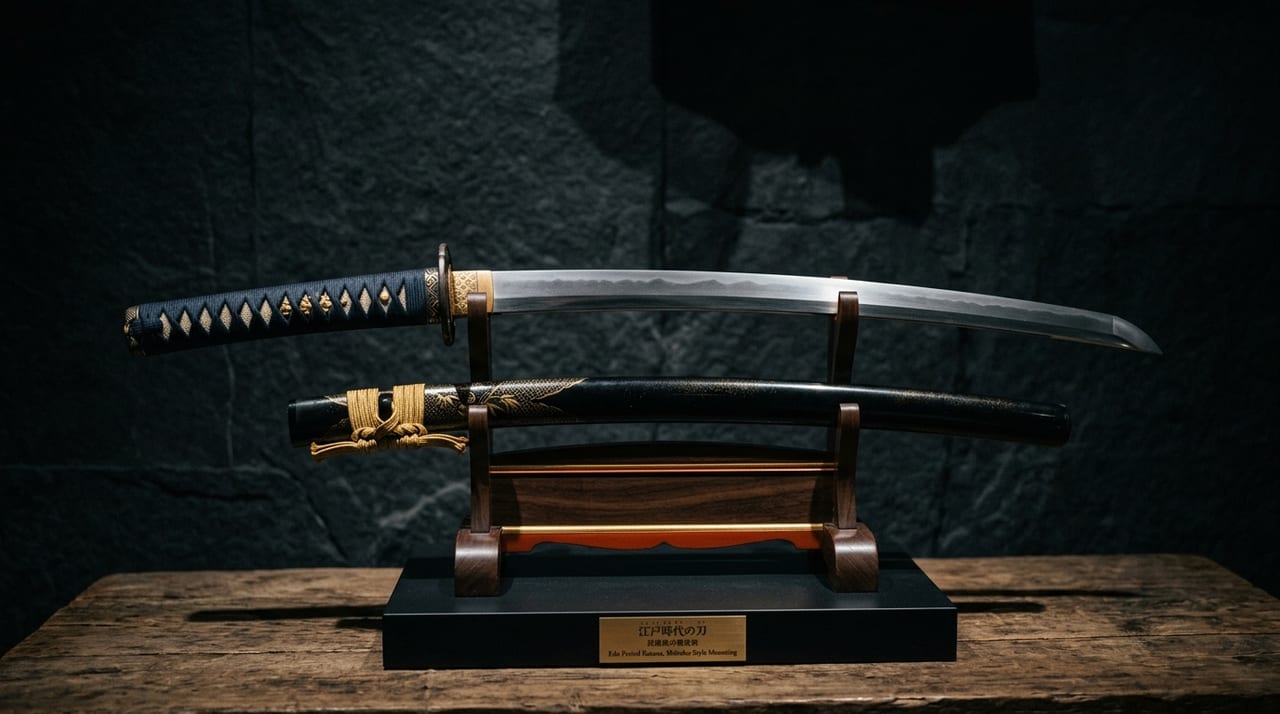 * Image is for illustrative purposes only.
Table of Contents
What Is the Sashigane — A Tōshō's Design Tool
The sashigane is an L-shaped metal try square. While carpenters and woodworkers also use this tool today, for a tōshō the sashigane is more than a mere measuring instrument — it is the "language of design."
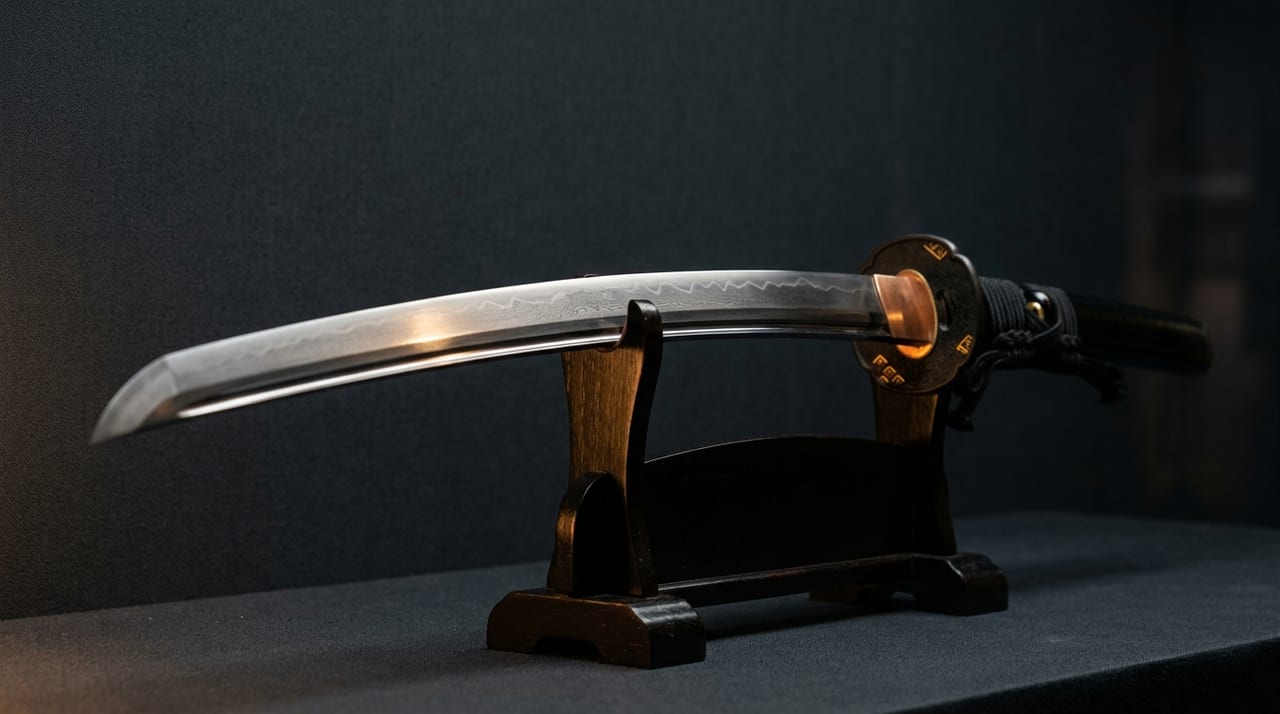
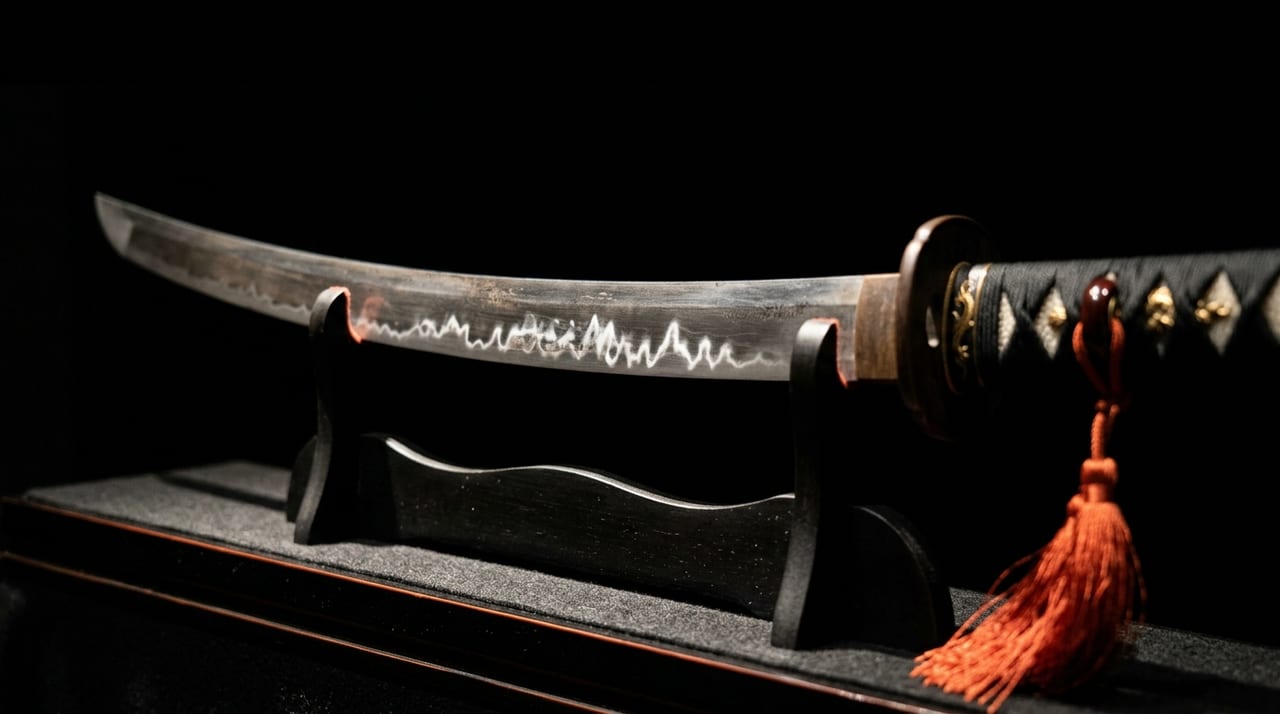
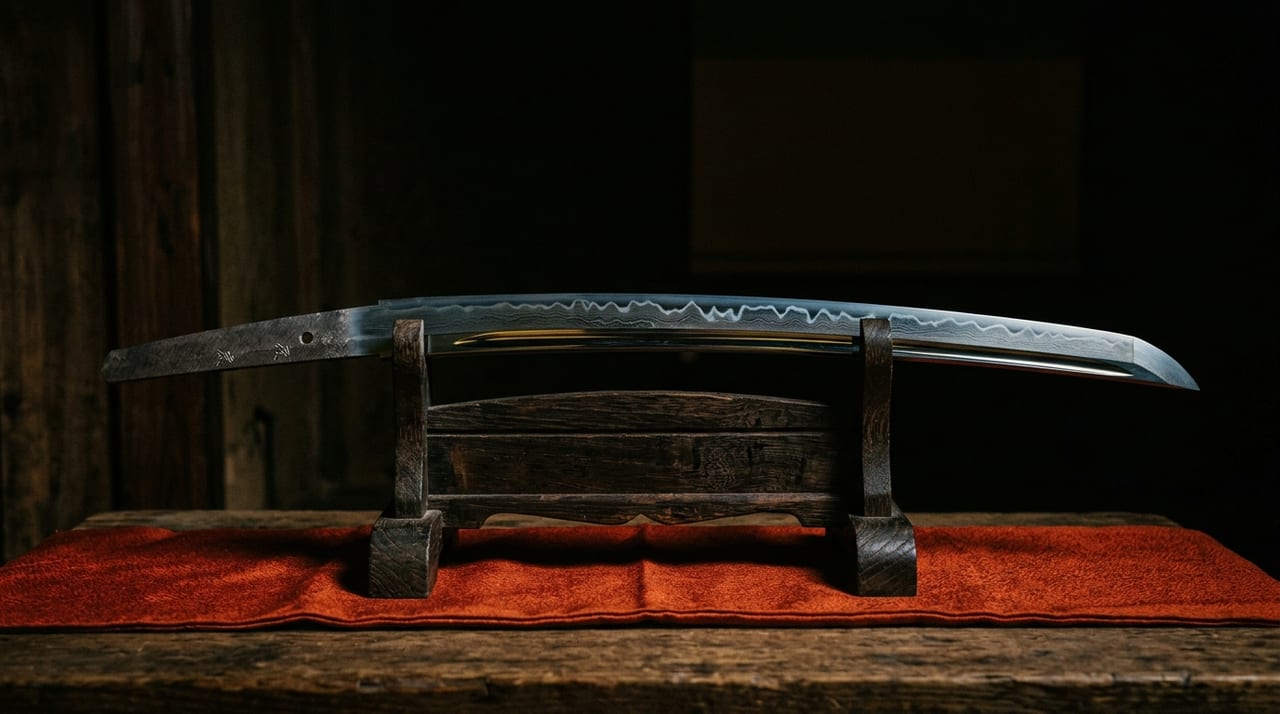
Japanese swords have a distinctive curve called sori (curvature), and the shape, depth, and position of this curve determine the character and beauty of the sword. Sori is produced not through modern numerical design (CAD/CAM) but through the sashigane and the craftsman's intuition.
The longer arm of the sashigane is called the nagate, and the shorter arm the tsumade; they are used to measure the dimensions of each part of the sword and to verify the degree of sori.
The Dimensional System of Japanese Swords — Names of the Parts Measured with the Sashigane
To accurately measure the dimensions of a Japanese sword, one must know the names of the parts to be measured and the methods of measurement.
Nagasa (hawatari / hacho) The most fundamental dimension indicating the "length" of a sword. It refers not to the straight-line distance from the mune-machi (the base of the mune) to the kissaki (the tip) but to the length along the curve of the mune. The traditional method of measurement involves placing the sashigane as though drawing a bowstring. Today, dedicated measuring instruments (caliper-type) are also used, but the standard for appraisal remains the "shaku, sun, bu" notation based on sashigane measurement.
Sori (curvature) A dimension indicating the depth of the sword's curve. The measurement method involves drawing a straight line connecting the mune-machi (the base) and the kissaki of the sword, then measuring the maximum distance between that line and the mune (the back of the blade). The depth of sori is measured using the nagate and tsumade of the sashigane while confirming right angles.
Sori is classified into three types based on position. For detailed classification and historical trends, see A Complete Comparison of Japanese Sword Sori Types.
- Koshi-zori: The maximum curve occurs near the lower third of the nagasa — common in tachi of the early Kamakura period
- Naka-zori: The maximum curve occurs near the center — from the mid-to-late Kamakura period through the Nanbokuchō period
- Saki-zori: The maximum curve occurs near the upper third — common in the large, powerful swords of the Nanbokuchō to Muromachi periods
Motohaba and Sakihaba The motohaba is the width of the blade near the mune-machi, and the sakihaba is the width near the yokote (the boundary between the kissaki and the body of the blade). The ratio of sakihaba to motohaba determines the impression of "funbari." When the motohaba is wide and the sakihaba is narrow, the overall sword takes on a sense of "strength at the base" and "composure." Dimensional changes due to machi-okuri and period determination are explained in detail in Machi and Machi-okuri.
Kasane (blade thickness) A dimension indicating the thickness of the blade. The thickness at the mune (back) is called "mune-gasane," and the thickness near the center of the blade is called "naka-gasane." If the kasane is too thin, the sword is prone to breaking; if too thick, it becomes heavy and difficult to handle.
The Tōshō's Design Process — Dimensional Design Using the Sashigane
Let us trace how a modern tōshō uses the sashigane when designing a new sword.
1. Confirming Order Specifications and Determining Basic Direction When a client requests specifications such as "uchigatana, nagasa 2 shaku 3 sun, koshi-zori, motohaba 1 sun or more," the tōshō first confirms with the sashigane whether "those dimensions are feasible as a sword." The relationship between nagasa and sori, and the balance between motohaba and kasane, have empirically established valid ratios, and by applying the sashigane the tōshō makes judgments such as "with this sori, this width is too wide."
2. Creating the Kata Many modern tōshō create a kata — a template of the sword's profile traced onto a wooden board or thick paper — and shape the material (split tamahagane) to match it. The sashigane plays its most active role at the kata-creation stage, accurately transferring the position and depth of the sori.
3. Dimensional Verification During Forging During the forging process (suno-be → agase → kozukuri), the shape of the blade changes with each cycle of heating and hammering. The sashigane is used to verify whether the sori, nagasa, and motohaba are approaching the design values. Because the sori of a Japanese sword changes before and after yaki-ire (quenching), knowledge is required to calculate the "correct pre-yaki-ire values" that account for the amount of contraction after yaki-ire.
4. Final Measurement After Yaki-ire After yaki-ire (water quenching), the sori of the blade changes subtly due to temperature variations. This change is measured with the sashigane and the final form before togi (polishing) begins is recorded. The measurements recorded in the kanteisho (appraisal certificate) after completion are the final measurements taken by the togishi (polisher) after polishing.
Dimensional Management Tools Other Than the Sashigane
Here are some measuring tools used by tōshō in combination with the sashigane.
Monosashi A dedicated bamboo or iron ruler for measuring nagasa. It is graduated in shaku, sun, and bu, where 1 shaku = 30.303 cm, 1 sun = 3.03 cm, and 1 bu = 3.03 mm. Modern tōshō also use the metric system in millimeters, but the shakkanho notation remains standard for kanteisho.
Sori-jōgi A dedicated tool for measuring the depth of sori. It combines a straight section placed against the back (mune) of the sword with a dial gauge that indicates the deepest point of the sori, allowing measurement to ±0.1 mm.
Calipers A tool for precisely measuring motohaba, sakihaba, and kasane. Many modern tōshō use digital calipers, enabling measurement to 0.01 mm.
The Art of Oral Tradition — The "Intuition" That Cannot Be Quantified
Measurement technique is an important pillar of Japanese sword design, but what tōshō prize most is "intuitive judgment that cannot be expressed in numbers."
"The feel when measuring sori with the sashigane," "the sense of balance when holding a sword after yaki-ire," "the beauty of the 'flow' in the form of a fully polished sword" — none of these can be reduced to numbers. Secret texts from the Edo period contain statements such as "a sori of X bu is best," yet the reason "why that sori is good" could only be conveyed through intuition.
Prominent modern tōshō attempt to "quantify their master's intuition" by measuring hundreds of their master's works with the sashigane and analyzing the averages and deviations in their own way. Yet ultimately, it is said that more than ten years are required before one can hold the conviction that "this is the correct form."
The sashigane is a simple tool, but behind its use lies the condensed experience and observation of craftsmen spanning hundreds of years.