The Apprenticeship System of the Sayashi — The Life and Reality of Technical Training for Apprentice Saya Makers Learning Kiji, Lacquer, and Metal Fittings
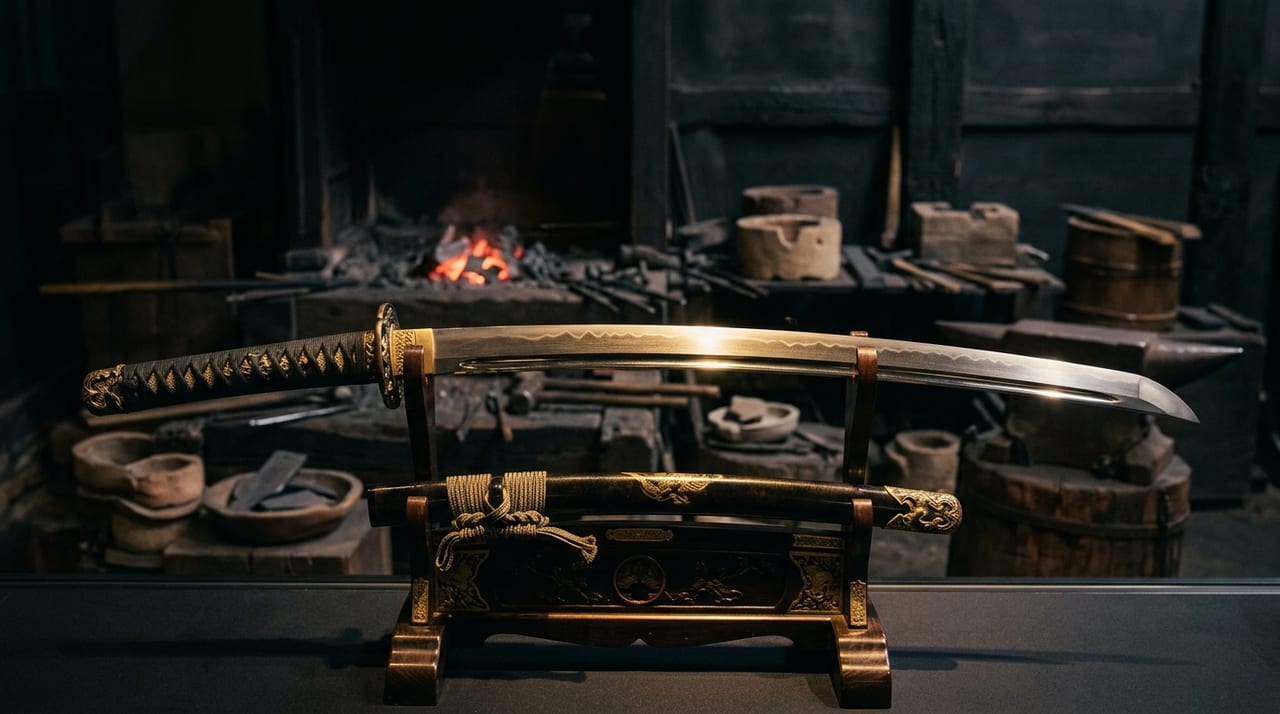 * Image is for illustrative purposes only.
Table of Contents
What Is a Sayashi — The Craftsman Who Protects the Japanese Sword
After a Japanese sword is completed, it is the sayashi (scabbard craftsman) who makes the saya to house and protect the blade. The work of the sayashi is a composite craft that integrates three skills — those of a "woodworker," a "lacquer craftsman," and a "metal fitting craftsman" — and its level of completion greatly influences the artistic value of the sword as a whole koshirae.
It is said that there are only several dozen sayashi currently working independently across Japan. While tōkō have a system requiring approval for each sword they produce, there is no unified certification system for sayashi, and techniques are transmitted only through oral instruction and practical skill passed from master to apprentice.
The Three Techniques of the Sayashi — Kiji, Lacquer, and Metal Fittings
The techniques a sayashi must master fall broadly into three categories.
1. Kiji (Wood Base) Processing
The body of the saya is made by carving down wood (primarily hōnoki [Japanese bigleaf magnolia]).
Why hōnoki is chosen: appropriate hardness and resilience (does not damage the blade and is resistant to splitting), moisture-absorbing properties (prevent the blade from rusting), relatively uniform grain (excellent workability)
The sayashi first cuts the outer shape from a thick plank with a saw, then uses chisels and carving knives to precisely hollow out the interior, creating a cavity in which the blade fits perfectly. This internal precision is the very core of the craftsman's skill.
The pursuit of "good fit": the blade slides smoothly into the saya, comes to a light stop at the koiguchi, does not fall out when turned upside down, and comes out without resistance when drawn — this adjustment of "fit" is a craftsman's art that cannot be achieved by machine. A clearance precision of approximately 0.1–0.3 mm is required.
2. Lacquer Coating
After the kiji is complete, the lacquering process begins. Finishes such as black lacquer, red lacquer, makie, and raden are applied according to the order.
The lacquering process: base coating (raw lacquer is absorbed into the kiji), sabi undercoat (a layer mixing kawarako powder, tonoko powder, and lacquer), middle coats (repeated several times), top coat (final finish)
Lacquer takes time to dry (temperature and humidity management is essential), and the risk of a rash is also high. Full mastery requires several years.
The real problem with materials: Due to the high cost of authentic lacquer coating, "substitute finishes" that achieve a lacquer-like appearance using chemical paints can also be seen in modern times. While authentic lacquered saya have a durability of over 100 years, chemical paints deteriorate within several decades. There are craftsmen who wish to insist on authentic lacquer, but in reality many are compelled to compromise due to cost constraints.
3. Metal Fitting (Kanagu) Assembly
The saya has metal components attached to it, such as the kurikata (the protrusion through which the sageo is threaded) and the kaeri-tsuno (the fitting that hooks onto the belt). The metal fittings themselves are made separately by tōsōgu craftsmen (metalworkers), but it is the sayashi who attaches them at the correct positions and achieves unity with the saya.
The position of the metal fittings directly affects the balance when wearing the sword, the ease of drawing, and the aesthetic appearance, so delicate adjustment taking into account the sword's overall specifications and the client's wishes is required.
The Sayashi's Apprenticeship — From Apprenticeship to Independence
How to Become an Apprentice
In modern times, becoming an apprentice to a sayashi is accomplished mainly through the following methods.
Direct apprenticeship with a master: One consults directly with an existing sayashi and applies to study under them. The personal network of the sword industry is important, and an introduction from a tōkō or tōsōgu craftsman is the most common path.
Through sword organizations: Groups such as the Zen Nihon Tōshō-kai and regional sword societies sometimes support matching between aspiring sayashi and masters.
Gradually, starting as an assistant: There are also cases where people learn saya making while working as assistants at sword-related workshops or shops.
Training Period and Technical Acquisition
Mastering the techniques of a sayashi generally requires a training period of 5 to 10 years. The gradual process of acquisition goes something like this:
Early stage (years 1–2): Fundamentals of kiji processing. Understanding the characteristics of hōnoki, handling saws and chisels, repeated practice of basic shape creation. The techniques are absorbed into the hands through repeated experience of failure and correction.
Middle stage (years 3–5): Concurrent acquisition of lacquering. Understanding the processes of black and red lacquer coating, drying management, and accurately executing repeated coats. At the same time, the basics of metal fitting assembly are also learned.
Later stage (years 6–10 and beyond): Handling complex custom orders. Advanced lacquer work such as makie and raden, adjustment according to the type of sword and the client's aesthetic requirements. Reaching a level where one can independently handle all processes on one's own.
The Reality After Independence — Prospects as a Craftsman
After establishing themselves as an independent sayashi, the majority of work consists of custom orders from tōkō, sword dealers, and private collectors. Orders received at sword exhibitions and tōsōgu exhibitions, and the credit network of the tōsōgu industry, form the customer base.
Monthly income is greatly affected by the volume of orders received, and stable management requires securing multiple clients and building credibility through the provision of high-quality work. In the digital age, introducing one's work through websites and social media is also gradually becoming more important.
There are also challenges in training the next generation. The number of aspiring sayashi is decreasing year by year, and the transmission of techniques is at risk. Some sayashi take on apprentices themselves and are making efforts to pass on the techniques.