Nouveautés — Découvrez les dernières arrivées dans notre catalogue. Voir →
Aperçus sur les connaissances et la culture du sabre japonais
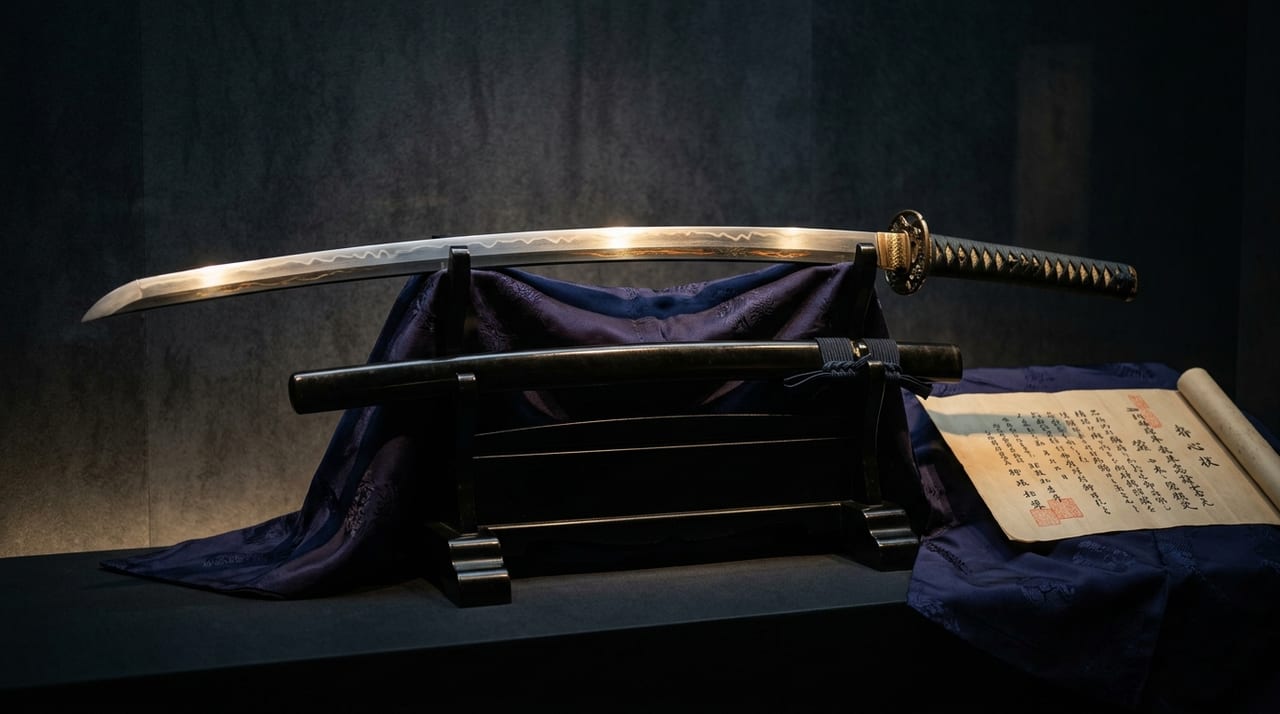
A comprehensive exploration of the history of the Honʼami family (本阿弥家), which reigned as the supreme authority in Japanese sword authentication. Covering their role as official examiners spanning from the Muromachi (室町) shogunate to the Tokugawa (徳川) shogunate, the system of authentication certificates known as shōshin-gaki (正真書), the transmission of technical knowledge through the iemoto (家元) system, and the contemporary positioning of Honʼami-ryū (本阿弥流) authentication.
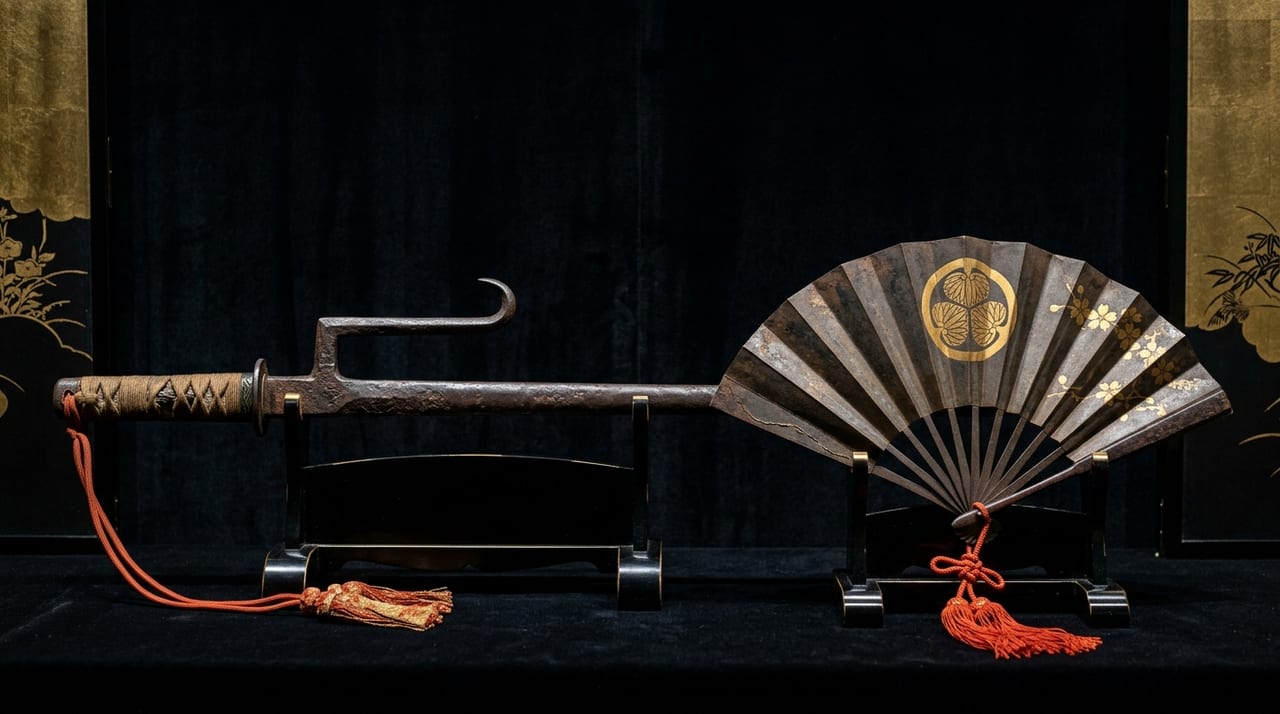
A comprehensive guide to Japanese metal weapons and arrest tools that complemented the sword: the tessen (iron war fan), jitte (the hook-armed truncheon carried by police officers), manriki-kusari, and tekko-kagi. Examines their structure, function, and role in Edo-period law enforcement from the perspective of Japanese sword culture.
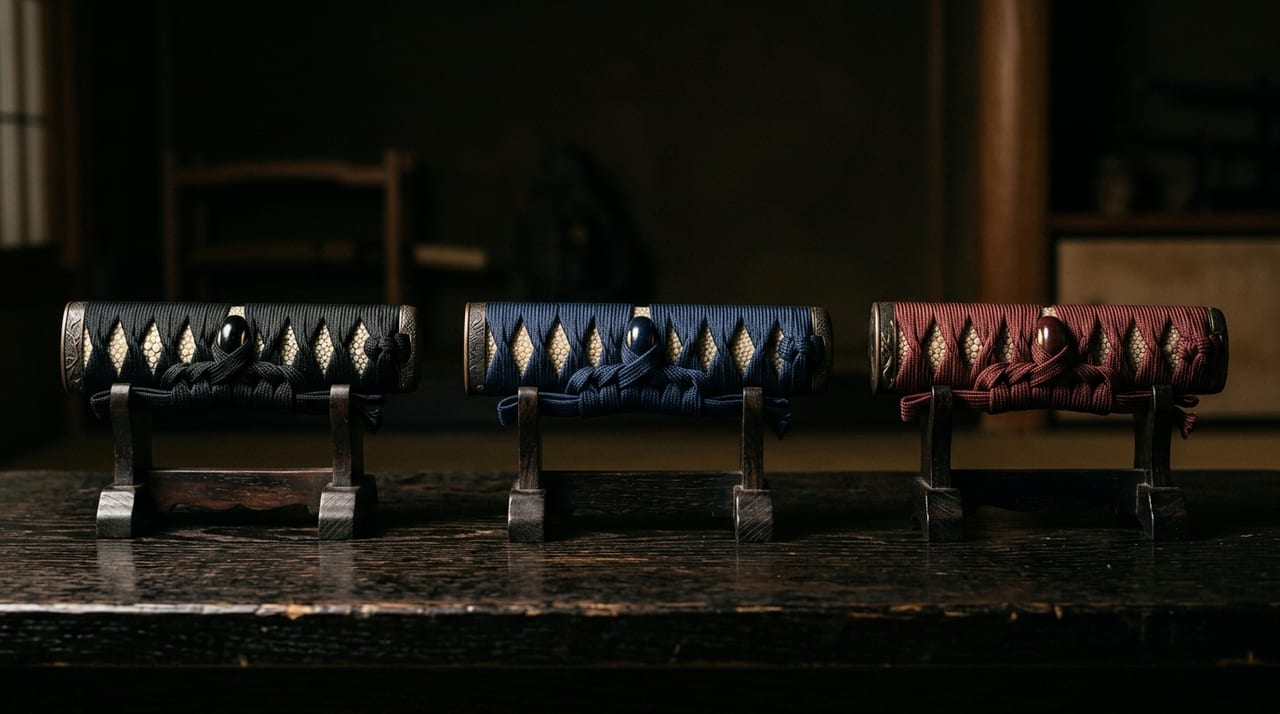
A detailed examination of the technical system of the tsukamakishi (柄巻師), artisans specializing in the creation and restoration of Japanese sword handles (tsuka). Covers the materials used—ray skin (鮫皮), silk thread (絹糸), cotton thread (綿糸), and leather (革)—and the criteria for their selection; wrapping methods such as moro-hineri maki (諸捻り巻き), jabara maki (蛇腹巻き), and hira maki (平巻き) and their functional distinctions; the master-apprentice transmission system and training process; and the contemporary state and challenges of the tsukamakishi profession.
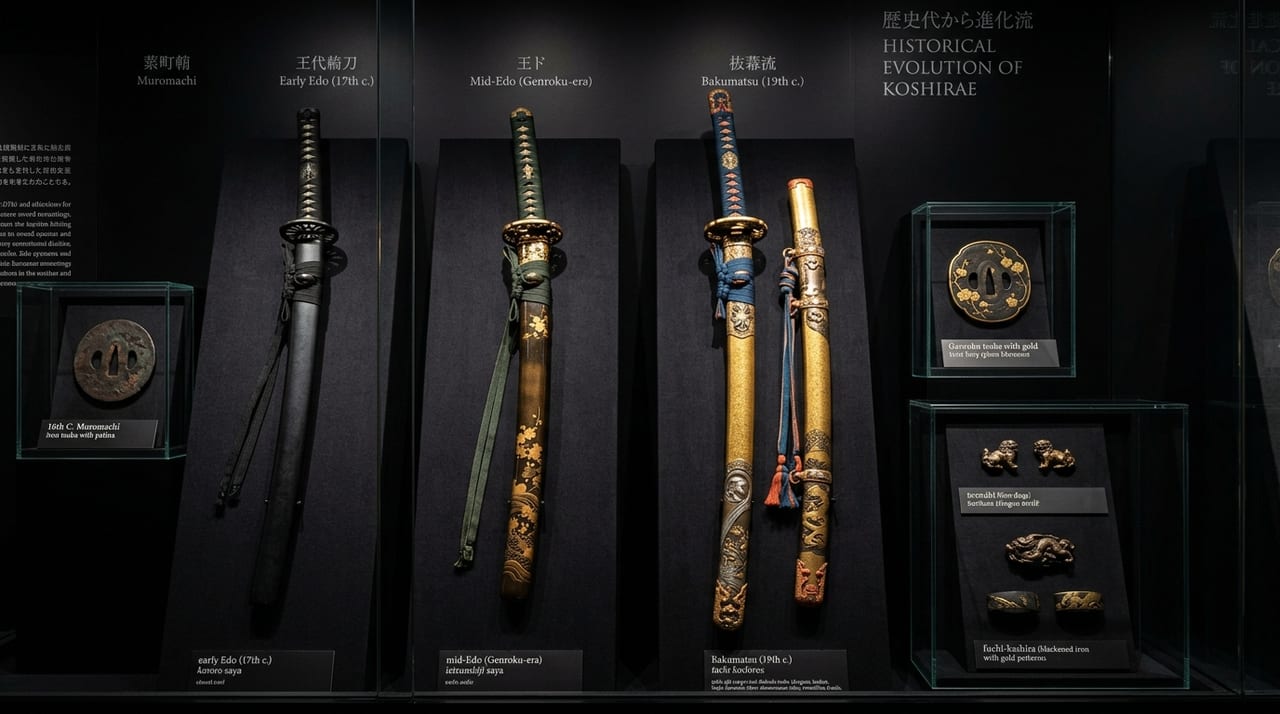
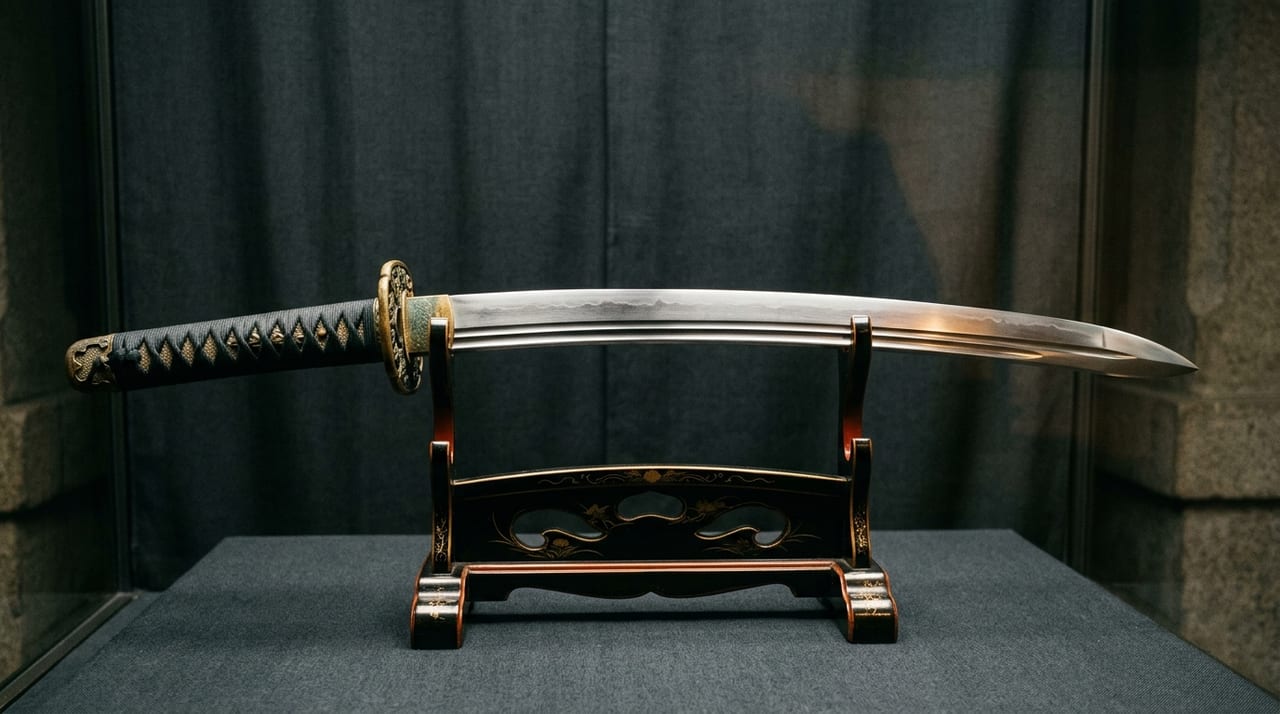
A detailed examination of how the koshirae (拵え) of the uchigatana (打刀)—established during the Muromachi period—evolved through the Edo (江戸) period and into the bakumatsu. Discusses the structural differences between uchigatana and tachi (太刀) koshirae, design characteristics across the Muromachi, Momoyama, early Edo, Genroku, and bakumatsu periods, the selection of materials (lacquer, metal fittings, and scabbard wood) and their hierarchical distinctions, and the distinguishing features of representative named koshirae styles including Higo (肥後) koshirae, Edo koshirae, and jin-tachi (陣太刀) koshirae.
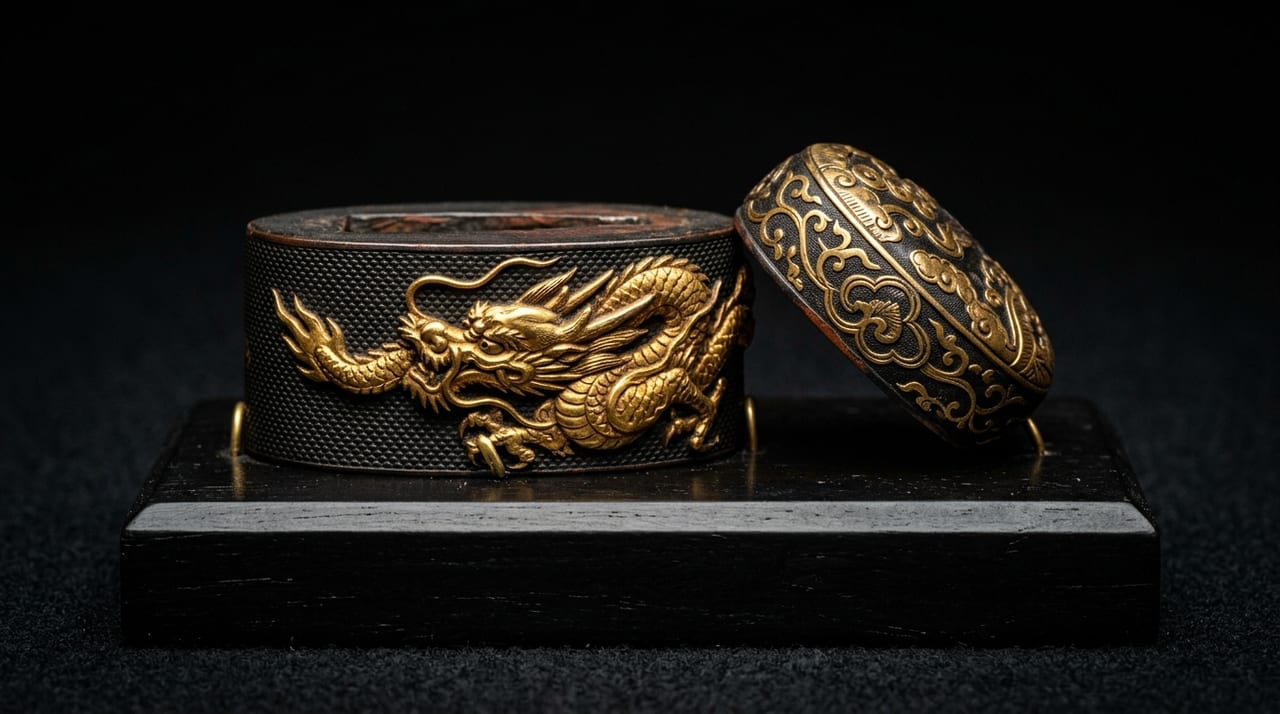
A detailed exploration of fuchigashira craftsmen, specialist artisans who create the handle fittings (fuchi: the pommel collar, kashira: the pommel cap) for Japanese swords. Covers materials, carving techniques, and the distinctive styles of Edo-period schools including the Goto school, Nara school, and Higo metalworkers.
An exploration of how the Hogen Rebellion (1156) and Heiji Rebellion (1159) shaped Japanese sword culture and the rise of the warrior class. Covers blade forms of the late Heian period, documented swords of the participants, and how warrior sword culture began to influence court society.
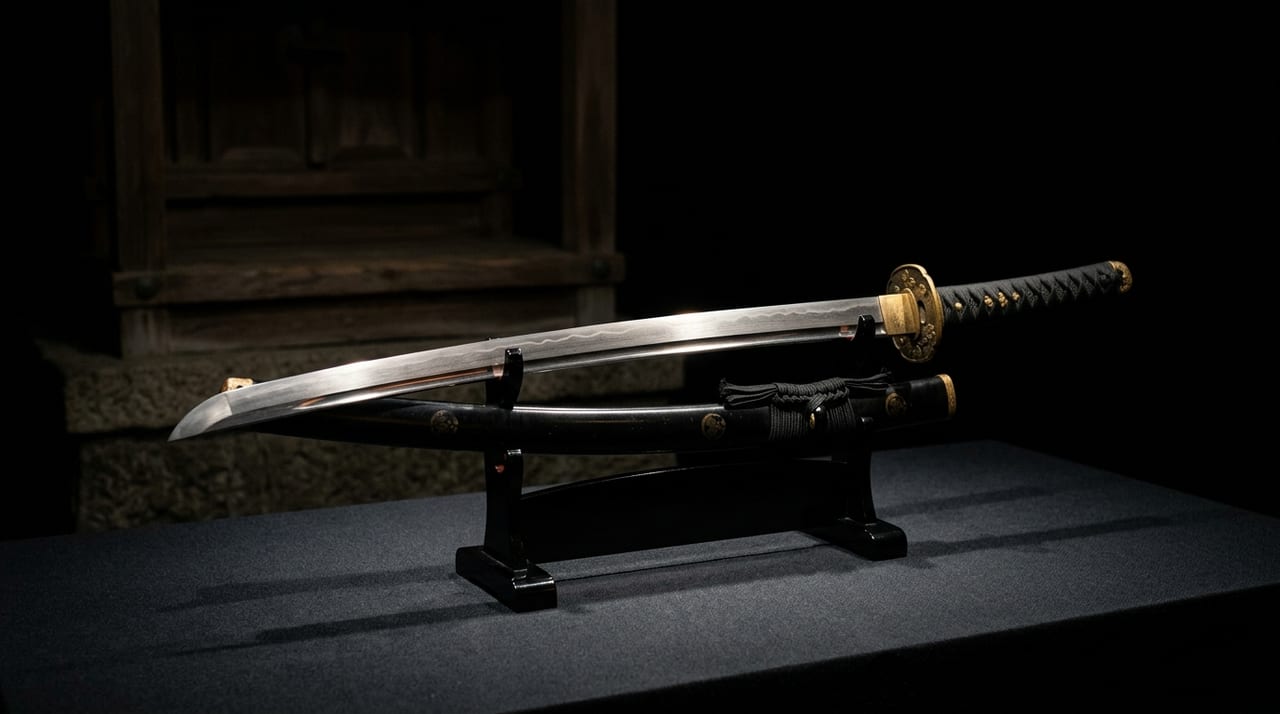
An explanation of the history, form, and transmission of the famous blade "Kogarasumaru" crafted in the early Heian period. Explores its unique blade structure as an intermediate form between double-edged (morohashira) and single-edged (kataha) designs, its lineage as a transmitted treasure of the Kanmu Heishi clan, its current location at the Imperial Household Agency's Sanomaru Shozo-kan, its cultural heritage value, and its crucial position in the history of Japanese blade formation.
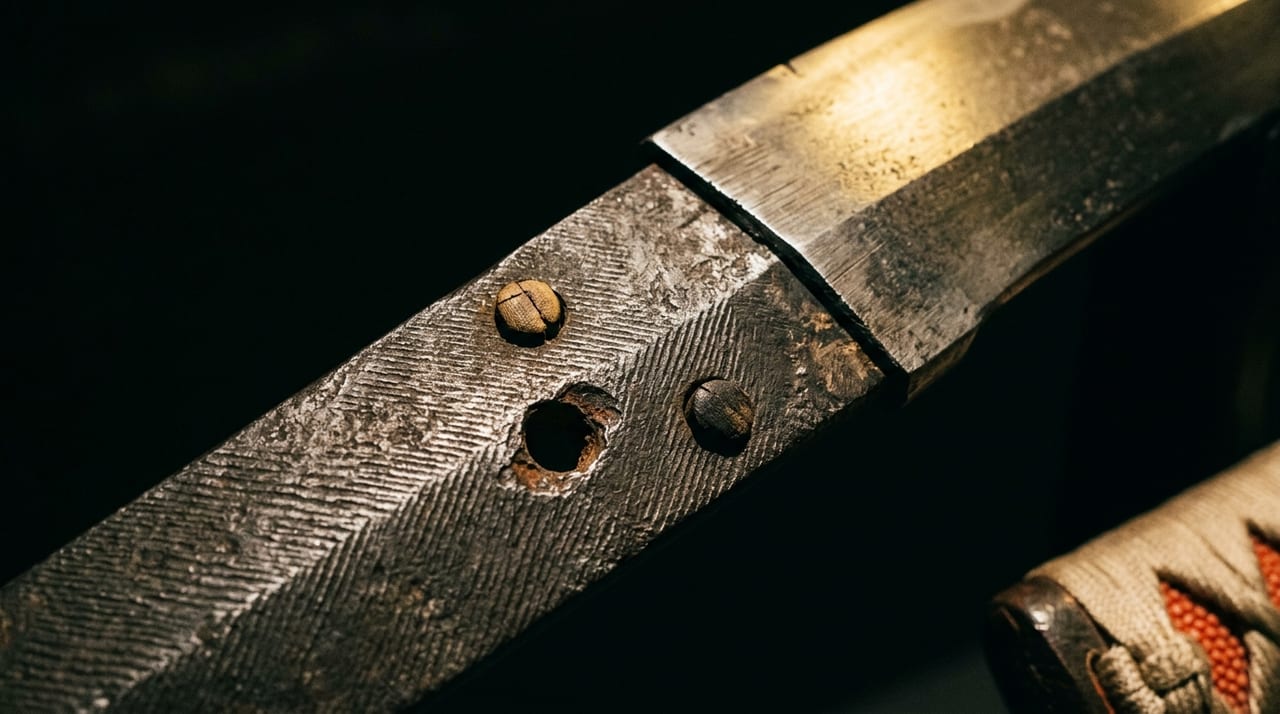
A technical deep dive into the mekugi-ana (peg hole) drilling process on the nakago (tang) of Japanese swords. Covers positioning, drilling tools, hole shapes, the meaning of multiple holes, and how nakago finishing details including yasuri-me file marks and machi cutouts inform blade function, authentication, and provenance research.
Explains the morphological characteristics and battlefield deployment of large odachi and nodachi created during the Nanboku-chō upheaval. Also introduces existing cultural properties and key authentication points.
A detailed look at how consignment sales work in the Japanese sword market. Covers the commission structure, advantages and risks for both dealers and sword owners, and practical knowledge that consignors need before entrusting their swords to dealers.
Explains the relationship between the number of folding cycles and steel's layered structure and carbon distribution. Scientifically examines the risk of brittleness from over-forging and the mechanism of "skin" pattern formation in sword steel.
An explanation of the techniques, processes, and material selection of the shirasaya maker who specializes in creating white scabbards essential to sword conservation. Also addresses succession issues and the role in cultural property restoration.