Nouveautés — Découvrez les dernières arrivées dans notre catalogue. Voir →
Aperçus sur les connaissances et la culture du sabre japonais
In the Boshin War that sparked the Meiji Restoration, samurai of the former shogunate clashed with modern rifles while bearing swords. This article traces the swords of the Shinsengumi, the last stand at Aizu, and the path to the eventual sword ban.
An overview of the life and techniques of Echizen Yasutsugu, the favored swordsmith of the Tokugawa shogunate in the early Edo period. Covers his experimental use of nanban iron (Dutch steel), his receipt of the Tokugawa hollyhock crest, and the full lineage of the Yasutsugu school.
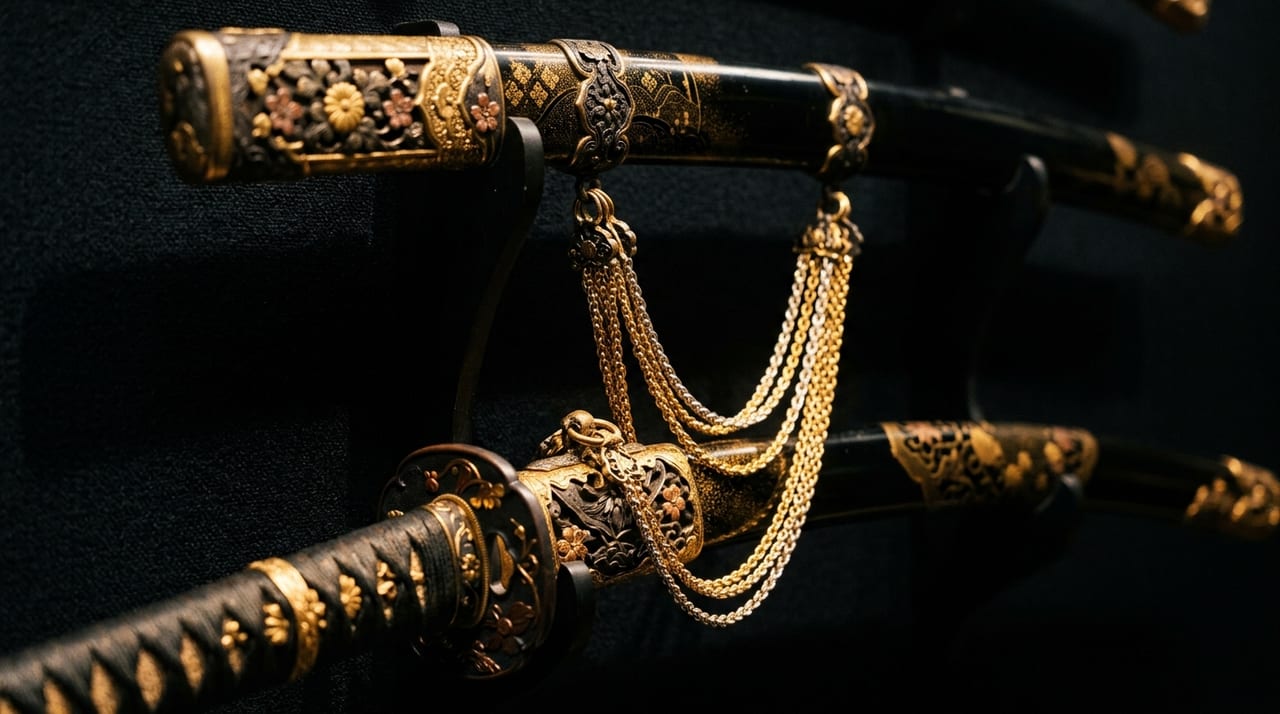
The hyogo-gusari tachi was the supreme formal sword mounting used by aristocrats and warriors from the Heian through Kamakura periods. Suspended by gold or silver chains and adorned with elaborate metalwork, it represents the apex of nihonto as decorative art. This article examines surviving National Treasure examples alongside the form's structure, significance, and history.
A complete history of the Ichimonji school that flourished in Bizen (present-day Okayama) during the Kamakura period. Covers the characteristics of sub-schools including Fukuoka Ichimonji, Yoshioka Ichimonji, and Katayama Ichimonji, their mastery of clove pattern blade tempering, and surviving national treasures and important cultural properties.
The Kannō Disturbance, the civil conflict between Ashikaga Takauji and his brother Tadayoshi, added another layer to the Nanbokucho era's complexity. This article examines how sword demand shifted during this turbulent period and which regional smiths thrived.
A detailed explanation of the design principles of kasane (thickness), motohaba (base width), and sakihaba (tip width) that determine the cross-sectional shape of Japanese swords. Covers period-specific and use-specific dimensional design, the physical effects of taper on cutting performance, balance, and strength, and how craftsmen achieve design values through forging.
Toyotomi Hideyoshi's second invasion of Korea (Keicho Campaign) sent vast numbers of Japanese swords overseas. This article examines wartime sword demand, battlefield losses, and the 'wato' (Japanese swords) that remain in Korea and China to this day.
How are nihonto selected as National Treasures or Important Cultural Properties? This article examines the Agency for Cultural Affairs review process, designation criteria, tax benefits for owners, and post-designation restrictions.
The Satsuma Rebellion of 1877, which erupted just one year after the sword-ban edict, was Japan's last major conflict fought with swords. This article examines sword usage by Satsuma samurai, supply shortages in government forces, and the post-war transformation of sword demand.
An exploration of the real Senjyo Muramasa, feared as the demon sword during the Edo period. Covers the fateful connection with the Tokugawa clan, the technical characteristics of high-quality swords mass-produced during the Muromachi and Sengoku periods, and how political taboos created the demon blade legend.
A shikomizue is a sword concealed within a walking staff, used for self-defense and assassination. Born from Edo-period hidden weapon culture and favored by Bakumatsu swordsmen, this article covers its structural features, historical uses, famous users, and modern legal status under Japan's Firearms and Swords Control Law.
A comprehensive guide to major Japanese sword industry organizations including the All-Japan Sword Dealers Cooperative, covering their roles, activities, membership requirements, and business benefits.