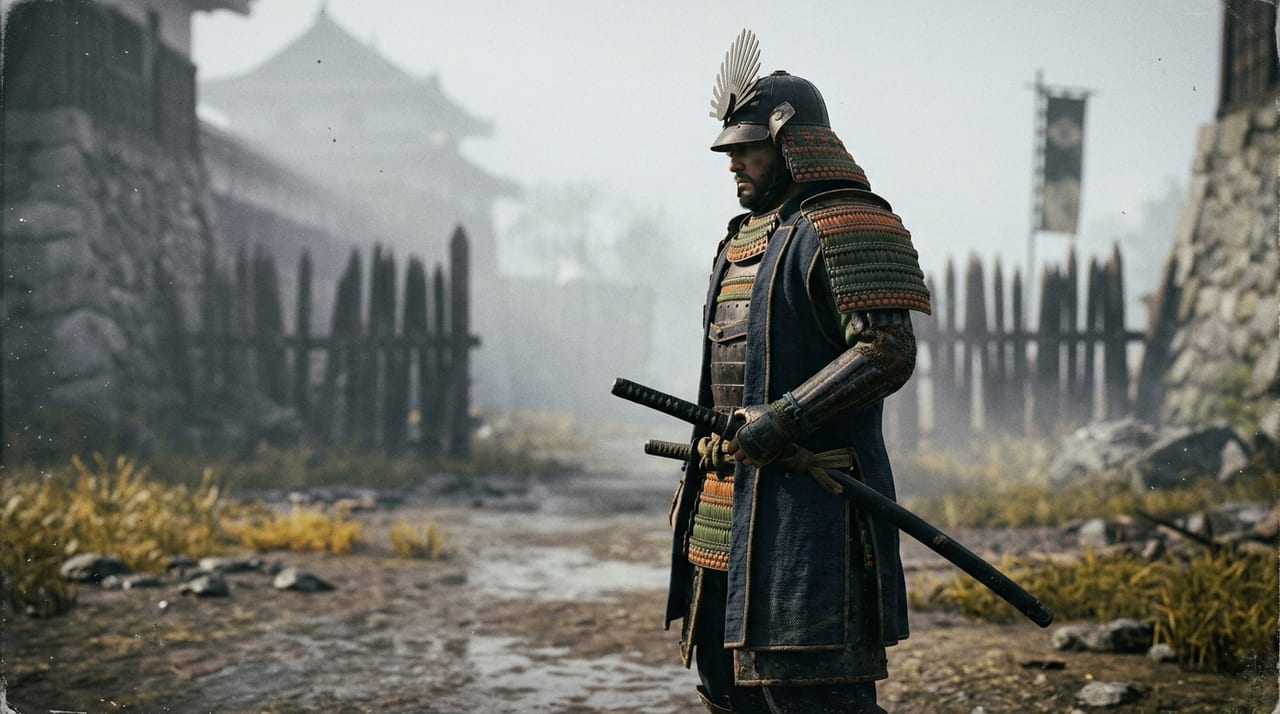
 * Image is for illustrative purposes only.
Kondō Isami
近藤勇
Commander of the Shinsengumi
Description
Becoming Commander
Kondō Isami (born Miyagawa Katsugorō) was born in 1834 (Tenpō 5) in Kami-Ishiwara Village, Tama District, Musashi Province, the third son of a farming family. He inherited the fourth headship of the Tennen Rishin-ryū and reigned as commander of the Shinsengumi in late-Bakumatsu Kyoto, a swordsman who rose from farmer's son to the pinnacle of the samurai class. His life was a dramatic one that symbolizes the turbulent Bakumatsu era.
Inheriting Tennen Rishin-ryū
At the age of fifteen, Kondō entered the Shieikan of Kondō Shūsuke, the third head of the Tennen Rishin-ryū. The Tennen Rishin-ryū was founded by Kondō Kuranosuke in the late Edo period and spread through the Tama region and elsewhere. It is a practical swordsmanship school, characterized by a steady style that values reliability in actual combat over flashy techniques. As if embodying the spirit of this school, Kondō distinguished himself with rare courage and steady swordsmanship, and was adopted as Shūsuke's son and inherited the fourth headship.
Shieikan and the Shinsengumi
In 1863 (Bunkyū 3), Kondō joined the Rōshigumi, which had been recruited to guard the shogun's journey to Kyoto. After remaining in Kyoto, he founded the Mibu Rōshigumi (later the Shinsengumi). With Kondō as commander and Hijikata Toshizō as vice-commander, the Shinsengumi made a name for itself by suppressing sonnō jōi activists, beginning with the Ikedaya Incident. Its name resounded throughout the land as the strongest armed group of the late Bakumatsu period.
Beloved Sword: Nagasone Kotetsu
The story surrounding Kondō's beloved sword, the “Nagasone Kotetsu,” is an indispensable episode when discussing sword culture in the late Bakumatsu period. Nagasone Okisato (Kotetsu) was one of the most renowned master smiths of the Edo period, and his swords are ranked as Saijō Ō-wazamono (swords of the highest cutting ability). Kotetsu's blades are distinguished by powerful nie-deki hamon and a unique pattern called juzuba (rosary-bead hamon). They are supreme works that combine sharpness and beauty.
Authenticity of the Kotetsu
However, regarding Kondō's Kotetsu, there has long been a persistent theory that he actually purchased a work by Minamoto Kiyomaro as a Kotetsu. In other words, it was a forgery. Minamoto Kiyomaro was a renowned master smith of the late Bakumatsu period, and his works are praised for a skill rivaling that of Kotetsu. The sword polisher Inuzuka Tokutarō holds that Kondō's Kotetsu was a work by Kiyomaro with a false Kotetsu signature inscribed on it. In any case, it is said that Kondō treasured this sword as a “Kotetsu” and used it in actual combat, including the Ikedaya Incident.
“The Kotetsu Thirsts for Blood Tonight”
The line “The Kotetsu thirsts for blood tonight” is widely known as a phrase symbolizing Kondō's attachment to his beloved sword. However, it is not based on any letter written by Kondō himself. It is a fictional line created by later novels and dramas. Even so, the fact that this sentence has taken root as an image symbolizing the exhilaration before battle and absolute trust in one's sword speaks to the strength of the bond between Kondō and the Kotetsu. For Kondō, the Kotetsu was not merely a weapon but a testament to himself as a samurai.
The Commander's Final Days
Apart from the Kotetsu, a sword made in 1865 (Keiō 1) by the Awa swordsmith Yoshikawa, is preserved at the Ryōzen Museum of History as the sword Kondō carried until the end.
After the shogunate forces were defeated in the Toba-Fushimi battles, Kondō was also defeated at the Battle of Kōshū-Katsunuma and surrendered to the new government forces at Nagareyama, Shimōsa Province. He used the alias Ōkubo Yamato, but his identity was exposed. On 17 May 1868 (Keiō 4/4/25), he was beheaded at an execution ground near Itabashi-juku. He was thirty-five years old.
A farmer's son who sought the samurai's soul, made his name known throughout the land, and then perished. Kondō Isami's life, like the debate over the authenticity of the Kotetsu, poses the question “What is genuine?” to us. For Kondō, who transcended the barriers of social status and stood at the pinnacle of the samurai through his sword alone, whether the Kotetsu was genuine or a forgery was probably a matter of little concern. What mattered was what he accomplished with that sword.
Notable Swords
- Nagasone Kotetsu (There is debate over its authenticity. Nagasone Okisato was a renowned master smith of the Edo period, ranked among the Saijō Ō-wazamono. Characterized by powerful nie-deki hamon and juzuba. Various theories exist, including that it was a work by Minamoto Kiyomaro with a false Kotetsu signature; in the modern day, the view that it is a forgery is the mainstream)