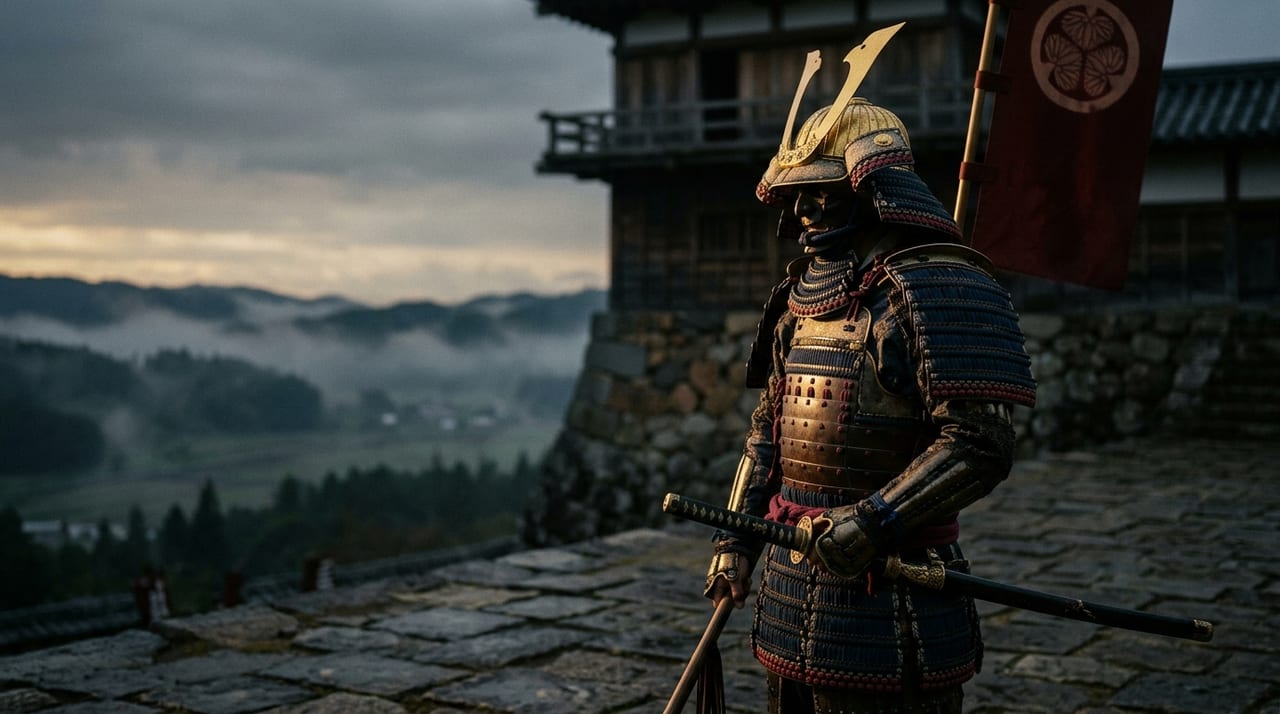
 * Image is for illustrative purposes only.
Akechi Mitsuhide
明智光秀
Mastermind of the Honnoji Incident, Pacifier of Tamba
Description
Akechi Mitsuhide (birth year given as 1528 or 1516 depending on the theory; died 1582) was a Sengoku-period warlord who carried out the Honnō-ji Incident, considered one of the greatest mysteries in Japanese history. He was a rare figure who excelled in learning, military strategy, and administrative skill alike. Although there are various theories about his origins, he is said to have come from the Akechi clan of Mino Province, and it is also said that in his youth he was a wanderer.
Mitsuhide first appears on the stage of history after serving the Asakura clan of Echizen and then, in 1568, entering the service of Oda Nobunaga. Rising to prominence under Nobunaga's tutelage, Mitsuhide faithfully carried out the harsh assignments his lord ordered, such as the burning of Mount Hiei (Enryaku-ji) in 1571 and the suppression of Araki Murashige's rebellion. His aptitude as a diplomat was also high. He served as intermediary between shogun Ashikaga Yoshiaki and Nobunaga, and became an indispensable senior retainer within the Oda regime.
The pacification of Tanba Province (1575-1579) was the undertaking that demonstrated Mitsuhide's true worth as a military commander. He took the castles of Tanba, reputed to be impregnable, one by one, including Hatano Hideharu's Yakami Castle and the Akai clan's Kuroi Castle, and was granted all of Tanba Province by Nobunaga. Through this achievement, Mitsuhide established a firm position as a great daimyō of the realm.
Mitsuhide was also a man of culture, well versed in waka poetry, renga (linked verse), and the tea ceremony. From 1568 onward he frequently took part in renga gatherings led by renga master Satomura Jōha and others. In Tanba he built Kameyama Castle and Shūzan Castle, and he also renovated Yokoyama Castle and renamed it Fukuchiyama Castle, thus attending to the management of his domain.
On the early morning of the 2nd day of the 6th month of Tenshō 10 (1582), Mitsuhide suddenly launched a surprise attack on his lord Nobunaga at Honnō-ji. As for the true motive behind this historic event, the Honnō-ji Incident, no definitive conclusion has been reached to this day. Theories include a grudge-based theory of personal resentment, a theory of conspiracy with the imperial court or the shogun, and a theory of ambition to seize the realm. Having defeated Nobunaga, Mitsuhide, as the successor to 'Tenka Fubu', experienced the 'three-day reign' (mikka tenka). However, he was defeated at the Battle of Yamazaki by Hashiba (Toyotomi) Hideyoshi, who had rapidly returned from the 'Chūgoku Ōgaeshi' (great return from Chūgoku), and he fell to the hunt for fleeing warriors while on the run.
Mitsuhide's life, including that brief reign, has also been depicted in the NHK Taiga drama 'Kirin ga Kuru' (2020) as a story condensing the contradictions of the Sengoku period, in which loyalty and rebellion, culture and violence, and rationality and passion intersect. It continues to draw the interest of many people today. The multifaceted nature of Akechi Mitsuhide and the mystery of the Honnō-ji Incident will remain a theme passed down forever in Japanese history.