Nouveautés — Découvrez les dernières arrivées dans notre catalogue. Voir →
Aperçus sur les connaissances et la culture du sabre japonais
Traveling swordsmiths (tabikaiji) were swordmakers who left their production centers and journeyed across various regions. Their movements dispersed the techniques of the Five Great Traditions throughout Japan, creating diverse local sword-making cultures. This article explains the historical reality of traveling smiths and the mechanisms of technical transmission.
Tachi and uchigatana (katana) are the two primary Japanese sword classifications, but their differences go far beyond length. This article examines the fundamental distinctions — blade orientation, wearing method, curvature type, and historical context — that define each category.
Tanto (blades under 30cm) encompass a rich variety of forms — hira-zukuri, moroha-zukuri, kikuchi-yari style — differentiated by function (personal defense, ritual, ceremonial), geometry (straight, uchi-zori, double-edged), and school (Soshu, Awataguchi, Rai). This article provides a systematic classification.
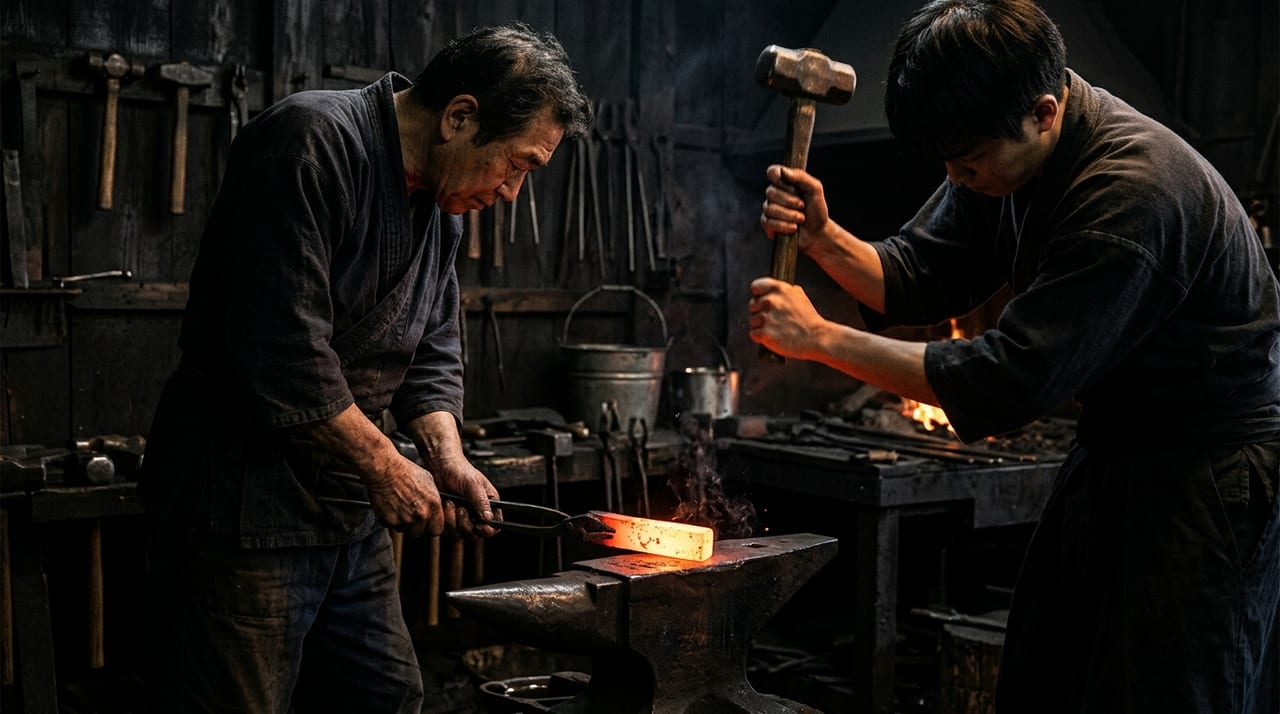
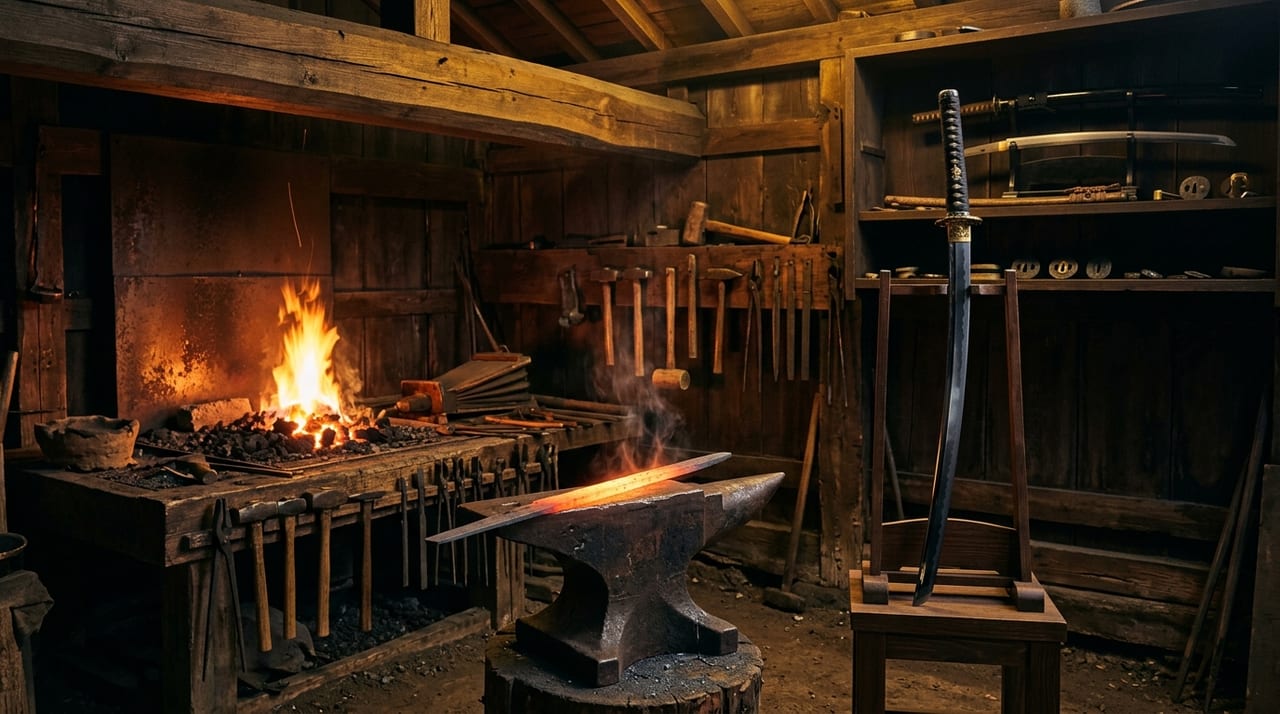
A comprehensive explanation from the tatara smelting process to the birth of tamahagane. Explaining furnace structure, iron sand selection, temperature management, and karai-splitting techniques from a scientific perspective.
This article explains kumihada, the technique of combining multiple steel types in Japanese sword forging. It details the structure of shihozume, honsammai, koubuse, and sanmaiawase, and their respective performance characteristics.
The uchigatana (katana) emerged in the mid-Muromachi period and evolved through Sengoku combat demands into the Edo period's peacetime dress sword. This article traces how blade length, curvature, and cross-sectional thickness changed across periods and explains the social forces driving each shift.
The wakizashi — a Japanese sword with a blade between 30 and 60cm — completes the daishō pairing with the katana as the samurai's formal dress. Serving as personal defense weapon, indoor blade, and ritual instrument, the wakizashi held a distinct role from the main sword. This article covers its varieties, uses, and historical significance.
Explaining the quenching process of Japanese swords through materials science. Detailed explanation of the transformation from austenite to martensite, how quenching temperature is determined, the meaning of Ms and Mf points, and the necessity of tempering.
Before the curved tachi emerged, Japan used straight-bladed swords derived from continental Asia. This article traces the evolution from Kofun-period iron swords through the律令 legal codes' standardized weapons to the mysterious emergence of the curved blade in early Heian Japan.
The swords wielded by the patriots and warriors of the Bakumatsu period (1850–1868) and their historical context. From Sakamoto Ryoma's Mutsu-no-kami Yoshiyuki to Kondo Isami's Nagasone Kotetsu, exploring how the blades of this turbulent era connect to the men who carried them.
During the Edo period, sword fittings (kodogu) — tsuba, menuki, fuchi-kashira — became independent art collecting categories, separate from swords. This article examines the kodogu collecting culture embraced by daimyo, wealthy merchants, and scholars, the major artistic schools, and how this tradition plays out in today's market.
How did Edo-period samurai wear, draw, and handle their swords? The codes of sword etiquette went far beyond practical rules, encoding the spirit and hierarchy of samurai culture. Drawing on historical etiquette manuals and the Laws of Military Households, this article explains the samurai's sword codes.